Nvidia Pitches AI Platform to Cut Model Training Costs
Synopsis
Nvidia on June 16, 2026, urged AI model builders to adopt its integrated platform and ecosystem to launch frontier models faster, lower training costs, and accelerate revenue generation — reinforcing its dominant position in global AI infrastructure.
Key Takeaways
Nvidia's official account on June 16, 2026 promoted its AI platform to frontier model builders, emphasising faster launches, lower training costs, and earlier revenue.
Nvidia's CUDA platform (2006) and H100 GPUs (2022) form the backbone of its dominant AI infrastructure stack.
The pitch targets AI startups, cloud providers, and research labs facing rising frontier model development costs.
Nvidia's integrated hardware-software ecosystem lowers entry barriers for new AI model builders while reinforcing its market lead.
Adoption of next-generation architectures beyond Blackwell and new ecosystem partnerships remain the key metrics to watch.
Chip giant Nvidia on Tuesday, June 16, 2026, promoted its integrated AI platform and ecosystem, urging AI model builders to use its infrastructure to launch frontier models faster, reduce training costs, and begin generating revenue sooner.
The post, shared from Nvidia's official corporate account, directed developers to a resource outlining how the Nvidia platform enables builders to 'launch frontier models faster, minimize training costs, and start generating revenue early.' The message is squarely aimed at AI startups, cloud providers, and research labs competing in the rapidly expanding generative AI space.
Context
Nvidia has spent nearly two decades building the foundational software and hardware stack for AI workloads. Its CUDA platform, introduced in 2006, established GPU-accelerated computing as the backbone of modern AI development. The company's Hopper architecture and H100 GPUs, launched around 2022, subsequently became the de facto standard for training large-scale AI models globally.
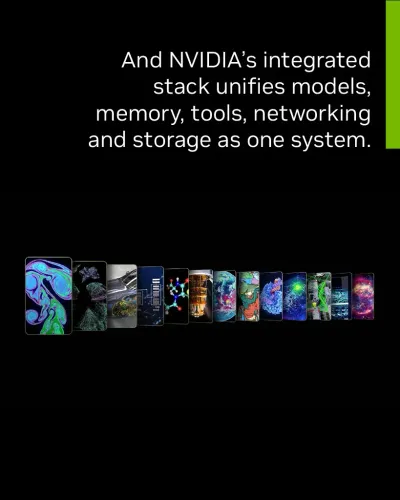
The company's integrated approach — combining chips, software libraries, and an extensive developer ecosystem — has allowed it to dominate the AI accelerator market. For new entrants, this lowers the barrier to building and deploying frontier-scale models without building infrastructure from scratch.
Policy Backdrop
The global semiconductor industry has undergone a significant structural shift since 2022, pivoting toward specialised AI infrastructure amid surging demand from generative AI applications. Nvidia sits at the centre of this shift, supplying the core compute layer to major cloud providers, AI labs, and governments building sovereign AI capabilities.
The emphasis on 'minimizing training costs' and 'generating revenue early' reflects a maturing market dynamic: as frontier model development grows more expensive, builders face mounting pressure to demonstrate commercial returns faster. Nvidia's pitch is calibrated to address precisely this tension.
Stakeholders and Impact
The primary audience for this message is AI model builders — from well-funded frontier labs to early-stage startups — alongside cloud providers that resell GPU compute capacity. For Indian technology companies and AI startups, which are increasingly investing in home-grown large language models and AI products, access to Nvidia's platform ecosystem carries direct implications for development speed and cost efficiency.
Nvidia's dominant market position means that its platform choices — which frameworks it supports, which cloud partnerships it deepens — effectively shape the trajectory of the broader AI industry. Competitors in the AI accelerator space, including challengers building alternative chip architectures, face the compounding difficulty of matching both Nvidia's hardware performance and its mature software ecosystem.
What's Next
Market watchers will track adoption metrics for Nvidia's next-generation architectures following the Blackwell series, as well as any new ecosystem partnerships with major AI laboratories. The company's ability to sustain its platform advantage will depend on whether new entrants find the integrated stack compelling enough to build on, rather than exploring alternative accelerator options.
As AI model development costs continue to climb and the race to commercialise frontier AI intensifies, Nvidia's infrastructure pitch is likely to grow louder — and more consequential for the global AI supply chain.
Point of View
This framing matters: it lowers the psychological and financial barrier to adopting Nvidia infrastructure. The broader implication is that Nvidia is actively working to make switching costs prohibitive, deepening ecosystem lock-in precisely as alternative accelerator challengers begin to gain traction.
NationPress
15 Sept 2026
Frequently Asked Questions
What is the Nvidia AI platform for model builders?
The Nvidia AI platform is an integrated stack of GPU hardware, software libraries such as CUDA, and an ecosystem of developer tools designed to help AI model builders train, fine-tune, and deploy large-scale models more efficiently and at lower cost.
How does Nvidia help reduce AI model training costs?
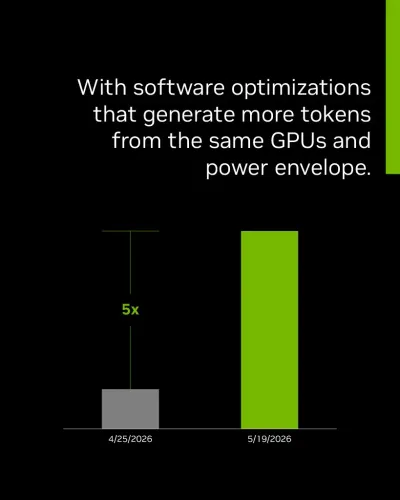
Nvidia's platform combines high-performance GPUs like the H100 with optimised software frameworks, allowing developers to complete training runs faster and with fewer compute resources, which directly reduces the cost per training cycle.
What is Nvidia's Blackwell architecture?
Blackwell is Nvidia's GPU architecture that succeeded the Hopper series (H100). It represents the next generation of AI accelerator hardware, with adoption metrics and ecosystem partnerships being closely watched by the industry.
Why is Nvidia important for Indian AI startups?
Nvidia's GPUs and software ecosystem are the global standard for AI model development. Indian startups building large language models or AI products typically rely on Nvidia infrastructure, making the company's platform pricing and accessibility directly relevant to India's AI industry.
Who is Jensen Huang?
Jensen Huang is the chief executive of Nvidia Corporation , the US-based semiconductor company that leads the global market for AI accelerator chips and GPU-based computing infrastructure.