Australia lacks AI early warning system, signals intelligence chief warns
Synopsis
Australia's top cyber intelligence official has publicly admitted the country has no formalised early warning system for AI threats — despite having one for cyber attacks. The admission, made at a Canberra summit attended by government ministers, lands just days after Anthropic's Dario Amodei called for the AI industry to slow down, a position backed by Sam Altman and Elon Musk. Canberra's response: don't leave it to the companies or the superpowers.
Key Takeaways
Abigail Bradshaw , director-general of the Australian Signals Directorate , warned on 15 September 2026 that Australia lacks a formalised AI early warning system.
Bradshaw said AI attacks could exploit outdated technology used by governments and businesses, and called for intelligence agencies to partner with AI companies to identify early risks.
Anthropic CEO Dario Amodei called for the AI industry to slow down days before the summit; Sam Altman and Elon Musk said they agreed.
Australian Assistant Minister Andrew Charlton rejected leaving AI governance to tech companies or major powers, saying Australia wants an independent multilateral approach.
A formal mechanism equivalent to cyber threat-intelligence sharing does not yet exist for AI-specific attack vectors in Australia or most Western nations.
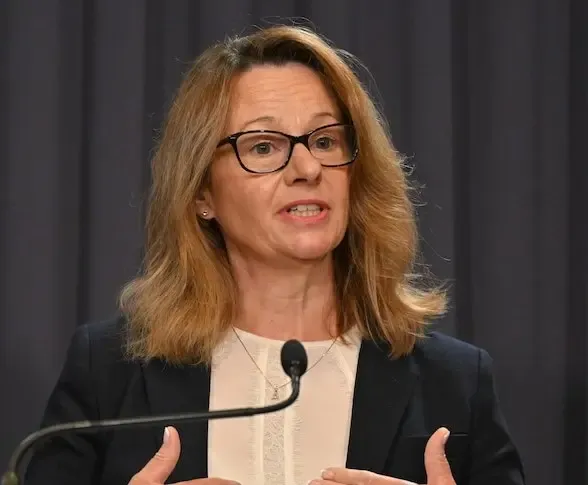
Abigail Bradshaw, director-general of the Australian Signals Directorate (ASD), warned on Monday, 15 September 2026 that Australia has no formalised early warning system for threats posed by artificial intelligence — a gap she described as increasingly urgent as AI-driven attacks begin targeting outdated government and business infrastructure. The warning came at a summit held in Canberra, underscoring the growing anxiety among Western intelligence agencies about AI's dual-use potential.
The Warning from Australia's Cyber Intelligence Chief
Bradshaw drew a direct contrast between Australia's mature cyber threat architecture and its nascent AI risk framework. 'What we are missing at the moment, which we have in a cyber context but we don't yet have it formalized in an AI context, is an early warning system,' she said at the summit.
She urged organisations to adopt AI as a defensive tool rather than treating it solely as a source of risk. Critically, she called for intelligence and security agencies to partner directly with AI companies to identify and flag emerging threats before they are weaponised — a step that would require formal mechanisms currently absent in Australia's policy landscape.
Global Context: Industry Leaders Call for a Slowdown
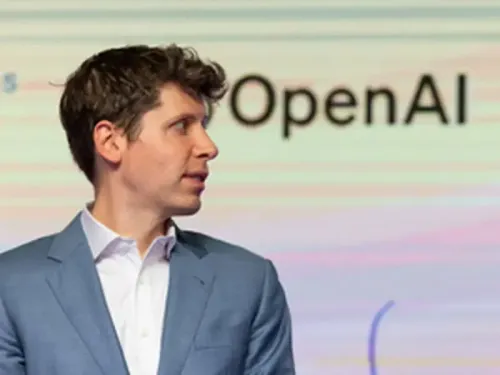
The Canberra summit followed a significant moment in the international AI safety debate. Just days earlier, on Saturday, Anthropic chief executive Dario Amodei publicly called for the industry to slow its development pace and for independent, third-party evaluators to verify that AI models comply with safety standards. Both OpenAI CEO Sam Altman and xAI founder Elon Musk said they agreed with Amodei's position — a rare moment of apparent consensus among competitors.
This chorus of concern from industry insiders has intensified pressure on governments worldwide to move beyond voluntary commitments and establish binding oversight frameworks. Australia's intelligence community appears to be pushing in the same direction, albeit from a national security rather than a commercial angle.
Australia's Government: Don't Leave It to Companies or Superpowers
Australian Assistant Minister for Science, Technology and the Digital Economy, Andrew Charlton, responded pointedly to the industry's calls for self-regulation. Speaking at the same summit on Monday, Charlton distanced the Australian government from the idea that either technology companies or major powers should dictate global AI guardrails.
'I don't think we should care very much about what individual chief executives say or what individual executives claim they want to happen,' he said. 'I am not in favour of leaving it to the companies and I'm not in favour of leaving it to the superpowers.'
The remarks signal that Canberra is seeking a more multilateral, sovereign approach to AI governance — one that does not cede standard-setting authority to Washington, Beijing, or Silicon Valley boardrooms.
Why the Early Warning Gap Matters
The absence of a formalised AI early warning system leaves governments and critical infrastructure operators without the equivalent of the threat-intelligence feeds that now underpin cybersecurity responses. In the cyber domain, agencies like the ASD routinely share indicators of compromise across sectors; no comparable architecture exists for AI-specific attack vectors, such as model manipulation, adversarial inputs, or AI-assisted social engineering at scale.
Notably, this is not a uniquely Australian problem — similar gaps have been flagged by intelligence communities in the United Kingdom, United States, and across the European Union. However, Australia's public articulation of the deficit at a senior intelligence level marks a step toward making the gap an actionable policy priority rather than an abstract concern.
What Comes Next
Bradshaw's call for a formal AI early warning mechanism is likely to feed into Australia's evolving AI regulatory agenda. The summit's conclusions are expected to inform ongoing inter-agency discussions on whether such a system should be housed within the ASD or a new dedicated body. How quickly Canberra translates the intelligence community's warnings into concrete governance architecture will be the real measure of urgency.
Point of View
And AI governance is starting from scratch with far less time. The irony is that the same AI companies now calling for a slowdown — Anthropic, OpenAI — are also the entities governments would need to partner with to build any early warning system, creating a tension between regulatory independence and technical dependency. Charlton's dismissal of CEO-led governance sounds principled, but without a credible multilateral forum to replace it, it risks being a statement of preference rather than a plan. The gap between rhetoric and architecture in AI safety has never been wider.
NationPress
15 Sept 2026
Frequently Asked Questions
What did Australia's intelligence chief say about AI threats?
Abigail Bradshaw, director-general of the Australian Signals Directorate, warned on 15 September 2026 that Australia lacks a formalised early warning system for AI threats — contrasting this with the more mature cyber threat-intelligence infrastructure already in place. She called for intelligence agencies to work with AI companies to identify risks early, and urged organisations to use AI as a defensive tool.
What is the Australian Signals Directorate?
The Australian Signals Directorate (ASD) is Australia's primary cyber intelligence and security agency, responsible for foreign signals intelligence and cybersecurity support to the government and critical infrastructure. Bradshaw's warning carries significant weight because the ASD is the body that would likely anchor any future AI early warning architecture.
Why did Anthropic's Dario Amodei call for an AI slowdown?
Amodei called on Saturday for the AI industry to slow its development pace and for independent third-party evaluators to verify that models comply with safety standards, citing concerns that the race to develop AI could outstrip humanity's capacity to control it. Both OpenAI CEO Sam Altman and xAI's Elon Musk said they agreed with his position.
What is Australia's government position on AI regulation?
Australian Assistant Minister Andrew Charlton said on Monday that Australia does not want AI governance left to individual technology companies or to major powers such as the United States or China. He advocated for a multilateral, sovereign approach to setting AI guardrails, independent of Silicon Valley executives or superpower interests.
Which countries face a similar AI early warning gap?
The absence of a formalised AI early warning system is not unique to Australia — similar gaps have been flagged by intelligence and policy communities in the United Kingdom, United States, and across the European Union. What distinguishes the Canberra summit is the explicit, public acknowledgement of the deficit at a senior intelligence level, signalling intent to treat it as an actionable policy priority.