Dr PK Mishra urges AI-driven early warning systems at UN disaster risk meet
Synopsis
India's top bureaucrat told a UNDRR high-level meeting that AI and machine learning must power the next generation of disaster early warning systems — and that warnings without financing and action are worthless. With the Sendai Framework's 2030 clock ticking and economic losses from disasters still rising despite better life-saving outcomes, Dr PK Mishra's three-point agenda signals India is pushing for a hard pivot from reactive emergency response to proactive risk governance.
Key Takeaways
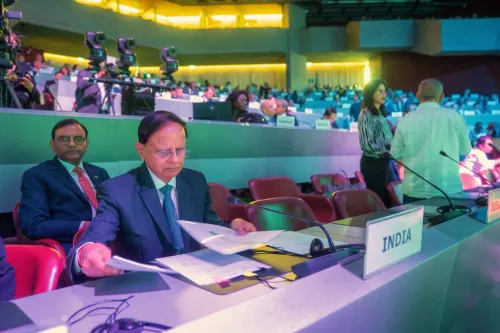
Dr PK Mishra , Principal Secretary to the Prime Minister, addressed a UNDRR meeting co-chaired by India and the UK on 27 October 2026 in New Delhi .
He called for AI , machine learning and multi-hazard early warning systems to drive the next phase of disaster risk reduction.
Dr Mishra stressed that while early warning has saved lives, economic losses from disasters remain high and must be addressed.
He called for accelerated implementation of the Sendai Framework for Disaster Risk Reduction through 2030 .
India's domestic milestones cited include the Ten-Point Agenda (2016) , Disaster Management Act amendments (2025) , and the G20 Working Group on Disaster Risk Reduction (2023) .
Three global priorities outlined: understanding interconnected risks, investing in resilience, and strengthening institutions through practical international cooperation.
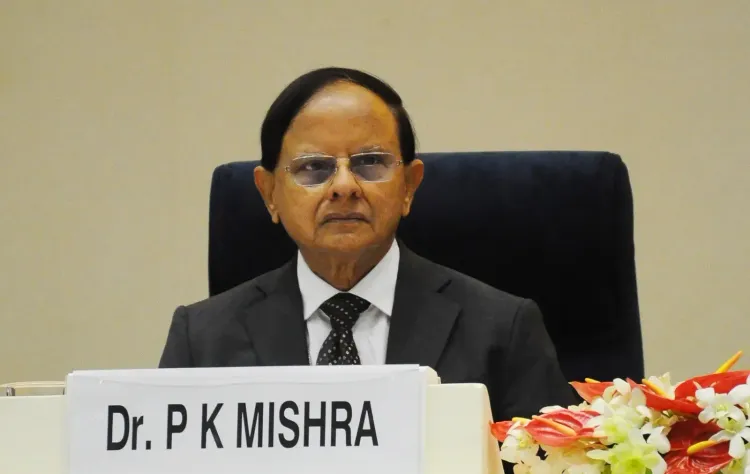
Dr PK Mishra, Principal Secretary to the Prime Minister, on Tuesday, 27 October 2026, called for a sweeping overhaul of global disaster risk reduction strategies, stressing that the coming decade must prioritise protecting development gains and curbing economic losses — not just saving lives. He was addressing a high-level meeting of senior officials on disaster risk reduction convened by the United Nations Office for Disaster Risk Reduction (UNDRR) in New Delhi, co-chaired by India and the United Kingdom.
The Case for AI and Multi-Hazard Warning Systems
Dr Mishra placed particular emphasis on the transformative potential of artificial intelligence (AI), machine learning, and multi-hazard early warning systems. He stressed that warnings alone are insufficient — they must reliably trigger timely action and unlock financing. He also called for advance planning of recovery mechanisms so that post-disaster reconstruction reduces existing vulnerabilities rather than reproducing them.
Notably, the call aligns with a broader global push to have every person on Earth covered by an early warning system by 2027, a target championed by the World Meteorological Organization (WMO). India's geography — prone to cyclones, floods, earthquakes and heatwaves — makes it one of the highest-stakes laboratories for such systems.
Economic Losses Remain the Unresolved Challenge
Dr Mishra acknowledged that progress in early warning, preparedness and emergency response has measurably saved lives in recent years, but warned that economic losses from disasters remain stubbornly high. He called for moving beyond departmental silos toward a holistic understanding of cascading risks — a reference to how disasters in one sector routinely destabilise others, from agriculture and infrastructure to public health and fiscal stability.
He urged stronger investment in prevention, mitigation and institutional capacity, and called for the accelerated implementation of the Sendai Framework for Disaster Risk Reduction through 2030 — the global blueprint adopted in 2015 that set four priority areas and seven targets for reducing disaster risk worldwide.
India's Domestic and Global Track Record
Dr Mishra highlighted India's own policy trajectory under Prime Minister Narendra Modi, citing the Ten-Point Agenda on Disaster Risk Reduction launched in 2016 and the landmark amendments to the Disaster Management Act in 2025. The 2025 amendments are widely seen as a significant legislative update, expanding the institutional architecture for risk governance at the national level.
On the international front, he pointed to India's establishment of the G20 Working Group on Disaster Risk Reduction during its G20 Presidency in 2023 and its continued efforts to strengthen global collaboration through its current BRICS Chairship. This positions India not merely as a recipient of global frameworks but as an active architect of them.
Three Priorities for the Next Phase
Dr Mishra outlined three concrete priorities for the global community. First, a better understanding of emerging and interconnected risks, particularly the nexus between climate change, urbanisation, infrastructure expansion and environmental degradation. Second, more effective investment in resilience across public finance, infrastructure, cities and natural systems. Third, stronger institutions backed by practical international cooperation rather than declaratory commitments alone.
With the Sendai Framework's 2030 deadline drawing closer and global disaster losses continuing to mount, the meeting underscores the urgency of converting policy consensus into operational capacity — a gap that India, through its domestic record and diplomatic engagement, is increasingly seeking to help close.
Point of View
And that asymmetry is increasingly a development-finance problem as much as a humanitarian one. India's push to embed AI in early warning is credible given its domestic track record on cyclone preparedness, but the harder question is whether international cooperation frameworks will fund this capacity in the most vulnerable low-income nations, or simply endorse it in communiqués. With the Sendai Framework entering its final five years, the gap between declaration and delivery has never been more visible — or more consequential.
NationPress
27 Oct 2026
Frequently Asked Questions
What did Dr PK Mishra call for at the UNDRR meeting?
Dr PK Mishra called for the deployment of AI, machine learning and multi-hazard early warning systems to strengthen disaster risk reduction globally. He also stressed the need for advance recovery planning and accelerated implementation of the Sendai Framework through 2030.
What is the Sendai Framework for Disaster Risk Reduction?
The Sendai Framework is a global blueprint adopted in 2015 that outlines four priority areas and seven targets for reducing disaster risk through 2030. Dr Mishra called for its accelerated implementation and greater investment in prevention, mitigation and institutional capacity.
What domestic disaster risk policies did India highlight?
India cited Prime Minister Narendra Modi's Ten-Point Agenda on Disaster Risk Reduction launched in 2016 and the amendments to the Disaster Management Act in 2025. India also pointed to its establishment of the G20 Working Group on Disaster Risk Reduction during its G20 Presidency in 2023.
Who co-chaired the UNDRR meeting addressed by Dr Mishra?
The meeting of senior officials on disaster risk reduction, convened by the United Nations Office for Disaster Risk Reduction (UNDRR), was co-chaired by India and the United Kingdom.
Why does Dr Mishra say economic losses from disasters remain a concern?
Despite improvements in early warning and emergency response that have saved lives, Dr Mishra noted that economic losses from disasters remain high. He called for moving beyond departmental silos to understand cascading risks across agriculture, infrastructure, public health and fiscal systems.