CM Fadnavis Urged to Use AI in Maharashtra Disaster Management
Synopsis
The Chief Minister's Office of Maharashtra on 23 May 2026 highlighted a public appeal urging CM Devendra Fadnavis to integrate artificial intelligence into the state's disaster management operations ahead of the monsoon season, reflecting a broader national push for tech-driven governance.
Key Takeaways
The Chief Minister's Office of Maharashtra posted a call on 23 May 2026 urging CM Devendra Fadnavis to adopt AI in disaster management.
The Marathi phrase आपत्ती व्यवस्थापना'त एआय वापरा translates directly to 'Use AI in disaster management.' India's National Disaster Management Plan (2016) already mandates technology adoption for early-warning and response systems.
Maharashtra is one of India's most flood-prone states, with its coast and river basins regularly impacted during the June–September monsoon.
AI integration with India Meteorological Department data is considered critical for reducing emergency response times.
Pilot rollouts of AI-based tools ahead of the 2026 monsoon are the immediate policy watch-point.
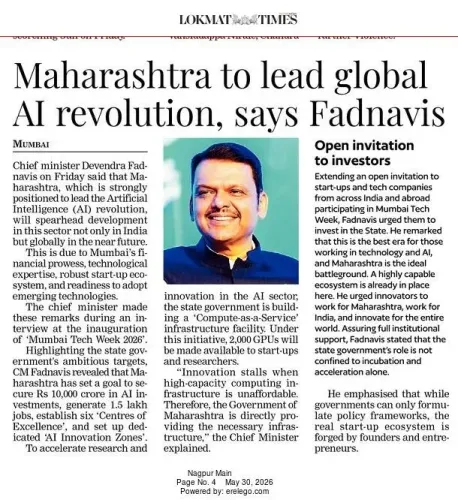
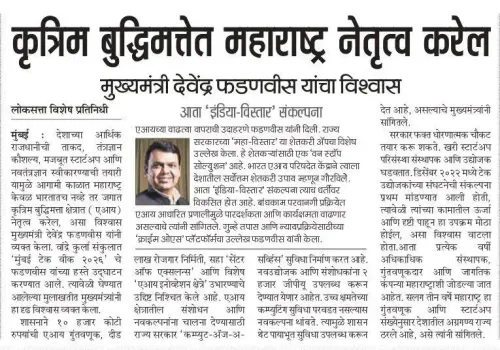
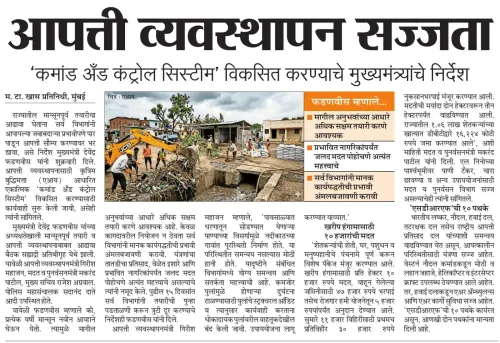
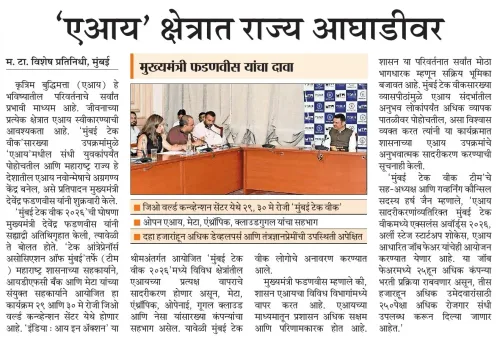
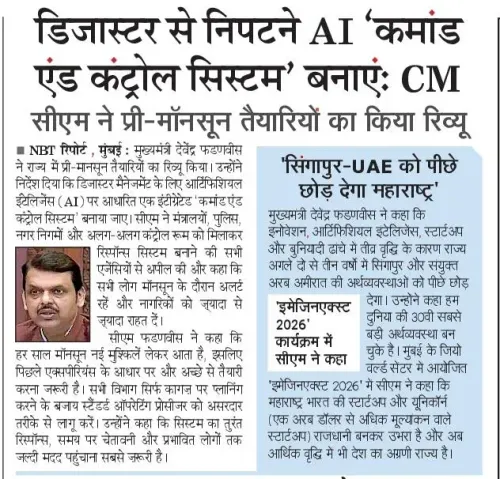
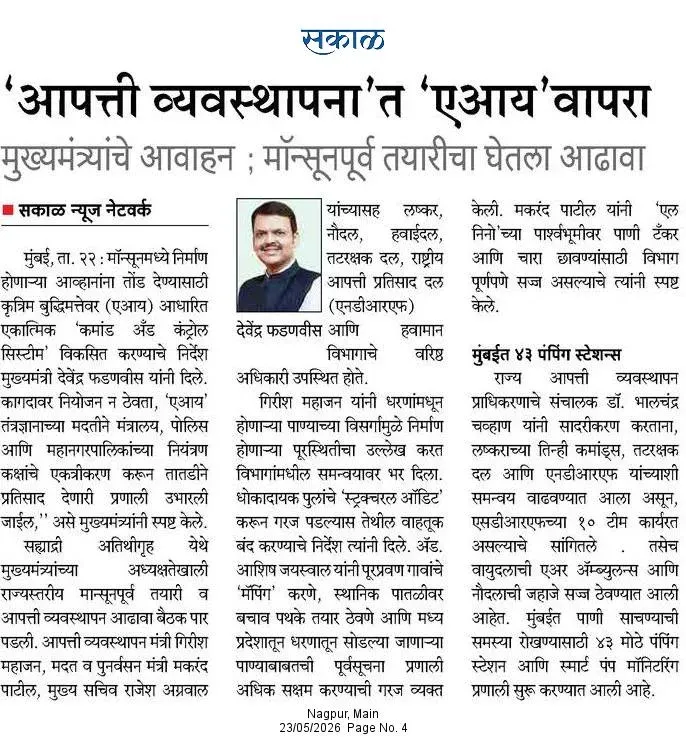
The Chief Minister's Office of Maharashtra flagged a public call on Saturday, 23 May 2026, urging Chief Minister Devendra Fadnavis to deploy artificial intelligence in the state's disaster management framework ahead of the monsoon season. The post, directed at @Dev_Fadnavis, was tagged under #MonsoonPreparedness and accompanied by two images.
Context
The Marathi-language post reads: 'आपत्ती व्यवस्थापना'त 'एआय'वापरा — meaning 'Use AI in disaster management.' The appeal comes as Maharashtra enters the pre-monsoon window, a period when state agencies ramp up flood-response planning. Maharashtra is among India's most flood-vulnerable states, with its western coast and river basins regularly battered by heavy rainfall between June and September.
Policy Backdrop
India's National Disaster Management Plan (2016) explicitly called for technology adoption in early-warning and emergency-response systems, laying a formal foundation for AI integration at the state level. Since then, Indian states have progressively piloted AI and data-analytics tools for flood forecasting and resource allocation. Maharashtra's interest aligns with the national push for digital governance tools articulated under India's National Strategy for Artificial Intelligence.
Chief Minister Devendra Fadnavis has previously championed technology-driven governance initiatives during his tenures leading the state. Integrating AI with real-time data from the India Meteorological Department (IMD) is seen as a key step toward cutting emergency response times and improving early warnings for vulnerable communities.
Stakeholders and Impact
The communities most directly affected are those in Maharashtra's flood-prone districts — including parts of the Konkan coast, the Vidarbha region, and low-lying urban areas of Mumbai and Pune. State disaster response agencies, including the Maharashtra State Disaster Management Authority (MSDMA), would be the primary operational units tasked with implementing any AI-based system. Faster, more accurate forecasting could reduce evacuation delays and enable pre-positioning of relief resources.
The broader pattern across Indian states shows that AI-assisted flood management can sharpen prediction accuracy and streamline coordination between district administrations and central agencies — provided the tools are integrated with live IMD feeds and local sensor networks.
What's Next
With the 2026 monsoon season weeks away, the practical question is whether pilot rollouts of AI-based forecasting tools can be operationalised in time to meaningfully support this year's response cycle. Watchers will look for announcements from the Chief Minister's Office or MSDMA on specific technology partnerships or procurement decisions. Any integration with IMD's data infrastructure would require coordination at both state and central government levels.
Point of View
Especially with the monsoon imminent. For Fadnavis, acting on this publicly surfaced demand would reinforce his administration's technology-forward brand while addressing a genuine governance gap. The timing — weeks before the monsoon — narrows the window for meaningful action this season, making any announcement more likely a commitment to a structured pilot than an immediate full-scale rollout. Nationally, this mirrors a competitive dynamic where states are racing to demonstrate AI adoption in public safety, partly to attract central funding and partly to differentiate their governance credentials.
NationPress
7 Oct 2026
Frequently Asked Questions
What did Maharashtra's CMO post about AI on 23 May 2026?
The Chief Minister's Office of Maharashtra shared a public appeal urging CM Devendra Fadnavis to use artificial intelligence in the state's disaster management system, tagged under #MonsoonPreparedness.
How can AI help in disaster management in Maharashtra?
AI can improve flood forecasting accuracy, enable faster early warnings by processing real-time data from weather agencies, and help pre-position relief resources — reducing response times for flood-prone communities.
What is Maharashtra's current disaster management framework?
Maharashtra operates through the Maharashtra State Disaster Management Authority (MSDMA), working within the national framework set by India's National Disaster Management Plan of 2016, which already calls for technology-based early-warning systems.
Has Devendra Fadnavis supported technology in governance before?
Yes. Devendra Fadnavis has overseen multiple technology-integration initiatives in Maharashtra's administration during his tenures as Chief Minister, making AI adoption in disaster response consistent with his governance approach.
Which parts of Maharashtra are most at risk during the monsoon?
The Konkan coast, Vidarbha region, and low-lying urban areas including Mumbai and Pune are among the most flood-vulnerable zones in Maharashtra during the June-to-September monsoon season.