BRICS Nations Adopt Guwahati Declaration on Drug Trafficking
Synopsis
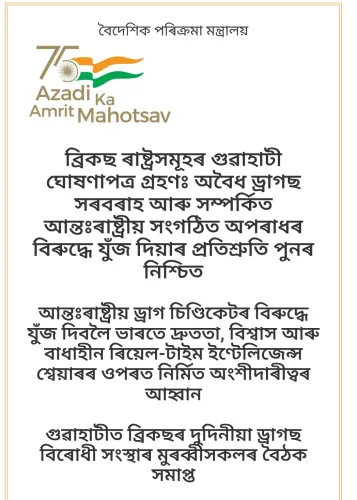
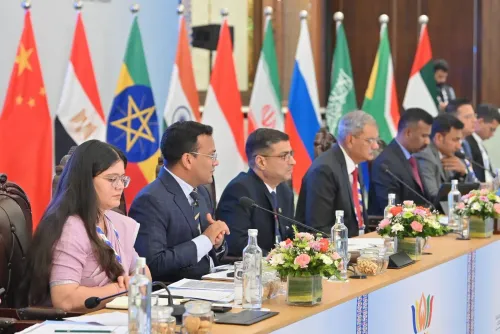
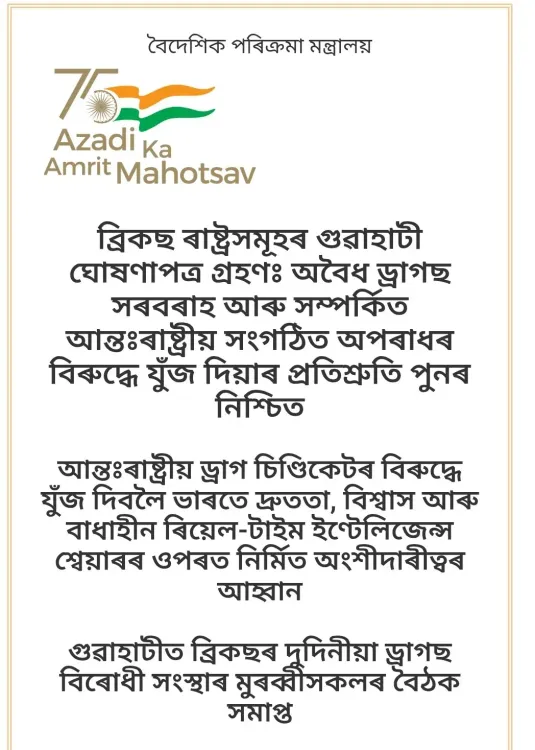
BRICS drug-control agency heads concluded a two-day meeting in Guwahati, Assam, adopting the Guwahati Declaration — a collective pledge to fight illegal drug trafficking and transnational organised crime through real-time intelligence sharing, as announced by the Chief Minister's Office of Assam on 8 July 2026.
Key Takeaways
The Guwahati Declaration was adopted by BRICS drug-control agency heads at the conclusion of a two-day meeting in Guwahati, Assam on 8 July 2026 .
India called for partnerships grounded in 'speed, trust and unhindered real-time intelligence sharing' to combat international drug syndicates.
The declaration reaffirms BRICS members' commitment to jointly fight illegal drug trafficking and related transnational organised crime.
Hosting the meeting in Guwahati reflects India's strategy of highlighting Northeast India's frontline exposure to narcotics routes linked to Southeast Asia.
Follow-up ministerial and agency-level meetings will be needed to operationalise the declaration into binding intelligence protocols.
The outcome builds on BRICS leaders' 2023 commitment at the Johannesburg Summit to deepen cooperation on non-traditional security threats.
The Chief Minister's Office of Assam announced on Wednesday, 8 July 2026 that BRICS drug-control agency heads concluded a two-day meeting in Guwahati, adopting the Guwahati Declaration — a joint commitment to combat illegal drug trafficking and related transnational organised crime.
Context
The meeting brought together the heads of anti-narcotics agencies from BRICS member nations in Guwahati, the largest city in Assam and a strategic hub in Northeast India. The outcome document — the Guwahati Declaration — reaffirms the bloc's collective pledge to fight international drug syndicates and the organised crime networks that sustain them.
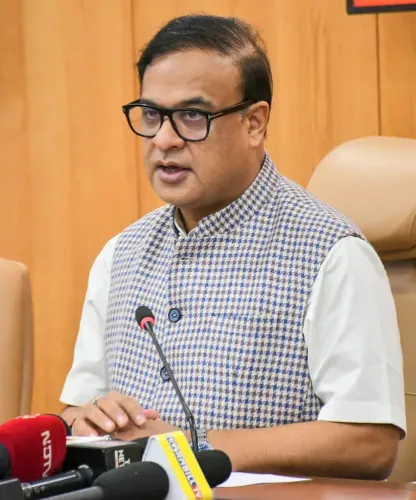
India used the occasion to call for partnerships built on 'speed, trust and unhindered real-time intelligence sharing' to take on international drug syndicates, according to the official post from the Chief Minister's Office of Assam.
Policy Backdrop
BRICS nations first foregrounded transnational organised crime — including drug trafficking — as a shared security concern at the 2023 Johannesburg BRICS Summit, where leaders committed to deeper cooperation on non-traditional security threats. India's Narcotics Control Bureau has pursued multilateral intelligence-sharing frameworks since the 2010s, embedding them within bilateral and regional formats.
Hosting the meeting in Guwahati carries deliberate strategic weight: the city sits close to trafficking corridors linked to Southeast Asia's Golden Triangle, making Northeast India a frontline zone for narcotics interdiction. India has consistently used its BRICS hosting opportunities to elevate these non-traditional security concerns alongside traditional economic agendas.
Stakeholders and Impact
The declaration directly affects law enforcement and drug-control agencies across all BRICS member states, which together represent a significant share of the world's population and border some of the most active narcotics supply routes. For Northeast India in particular, any operationalised intelligence-sharing protocol could translate into faster interdictions along porous borders with Myanmar and beyond.
Border state administrations, including Assam, Manipur, and Mizoram, stand to benefit most directly, as they bear the frontline burden of drug flows entering India from the east. Civil society groups working on drug rehabilitation in the region have long called for stronger cross-border enforcement cooperation.
What's Next
The adoption of the Guwahati Declaration is a political commitment; its operational value will depend on follow-up at ministerial and agency levels to translate pledges into binding intelligence protocols. Observers will watch whether India concludes new bilateral data-sharing agreements with fellow BRICS members in the months ahead.
The broader BRICS security agenda — which has grown more complex following the bloc's expansion — will likely see the Guwahati outcomes referenced at the next BRICS summit as evidence of progress on non-traditional threats. For Assam and the wider Northeast, the declaration signals that the region's geographic vulnerabilities are being acknowledged in multilateral forums.
Point of View
Lending diplomatic weight to a challenge that has long been treated as a domestic law-enforcement problem. The Guwahati Declaration follows a pattern of India using BRICS hosting rights to expand the bloc's security agenda beyond economics, reflecting New Delhi's broader push to frame transnational crime as a collective threat requiring real-time, trust-based cooperation. Whether the declaration moves from rhetoric to operational protocols will test the cohesion of an expanded BRICS grouping whose members do not always share intelligence comfortably. The outcome will also be watched as a benchmark for India's ability to translate regional security concerns into multilateral commitments.
NationPress
8 Jul 2026
Frequently Asked Questions
What is the Guwahati Declaration adopted by BRICS?
The Guwahati Declaration is an outcome document adopted by BRICS drug-control agency heads in Guwahati, Assam, committing all member nations to joint action against illegal drug trafficking and related transnational organised crime, with a focus on real-time intelligence sharing.
Why was the BRICS drug-control meeting held in Guwahati?
Guwahati was chosen as the venue because it is a key administrative hub in Northeast India, a region that sits close to narcotics trafficking corridors linked to Southeast Asia's Golden Triangle, making it strategically relevant to the meeting's agenda.
What did India propose at the BRICS anti-drug meeting?
India called for partnerships built on speed, trust and unhindered real-time intelligence sharing among BRICS members to effectively combat international drug syndicates and organised crime networks.
Which countries are part of BRICS drug-control cooperation?
BRICS is an intergovernmental grouping of major emerging economies — originally Brazil, Russia, India, China and South Africa — that has since expanded. All member nations' drug-control agency heads participated in the Guwahati meeting.
What happens after the Guwahati Declaration is adopted?
The declaration is a political commitment; its real impact depends on follow-up ministerial and agency-level meetings to turn the pledges into binding intelligence-sharing protocols and bilateral agreements among BRICS members.