Assam drug crackdown to continue, CM Himanta Sarma vows to protect youth

Synopsis
On the International Day Against Drug Abuse, Assam CM Himanta Biswa Sarma doubled down on the state’s zero-tolerance stance against narcotics — a commitment backed by hundreds of arrests and large seizures. With Assam sitting on a Golden Triangle transit route, this is more than political signalling: it is a structural law-enforcement challenge the state cannot afford to ease up on.
Key Takeaways
CM Himanta Biswa Sarma reaffirmed Assam’s anti-narcotics drive on 26 June , the International Day Against Drug Abuse and Illicit Trafficking .
The state has arrested hundreds of drug traffickers and seized large quantities of heroin, methamphetamine tablets, ganja , and other contraband in recent years.
Assam’s shared borders with Bhutan and Bangladesh and its role as a Northeast gateway make it a key transit point for Golden Triangle trafficking networks.
The government has adopted a zero-tolerance policy combining enforcement, awareness campaigns, and rehabilitation initiatives.
Protecting youth from substance abuse is cited as a top government priority , with operations set to continue.
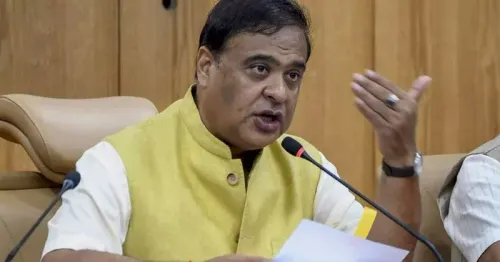
Assam Chief Minister Himanta Biswa Sarma on Friday, 26 June reaffirmed his government's resolve to sustain and intensify its campaign against narcotics, declaring that the state would pursue a relentless crackdown on drug abuse and illicit trafficking to secure the future of its youth. The pledge came on the occasion of the International Day Against Drug Abuse and Illicit Trafficking, observed globally on 26 June each year.
What the Chief Minister Said
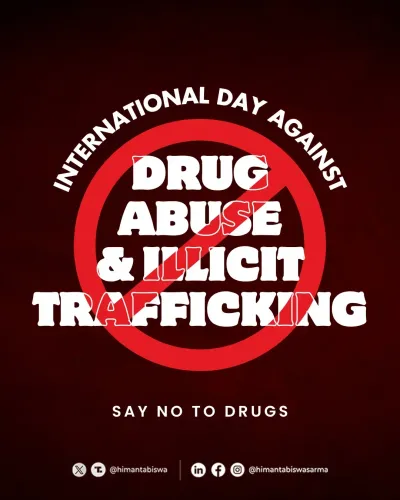
“Today, we mark the International Day Against Drug Abuse and Illicit Trafficking, a subject which our government is working on very closely with a relentless crackdown against drugs,” CM Sarma said in a post on social media platform X. He added: “We remain committed to preserve the future of our youth and save them from this social destruction.”
Sarma stressed that shielding the younger generation from the harmful effects of substance abuse remains among the government’s highest priorities, and that dismantling drug networks operating in the state is a core policy objective.
Scale of Enforcement Operations
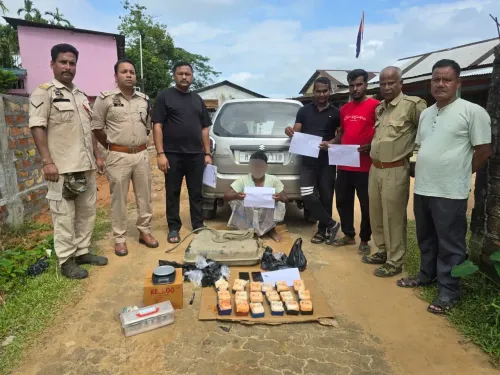
Over the past several years, the Assam Police and allied security agencies have conducted coordinated operations across the state, resulting in the arrest of hundreds of drug traffickers. Large quantities of narcotic substances — including heroin, methamphetamine tablets, ganja, and other contraband — have been seized in these drives.
The government has combined strict enforcement with awareness campaigns and rehabilitation initiatives, adopting what it describes as a zero-tolerance policy against narcotics.
Why Assam Is Particularly Vulnerable
Assam’s geographical position makes it especially susceptible to drug trafficking. The state shares international borders with Bhutan and Bangladesh and serves as a critical gateway to the Northeast, placing it in the transit corridor of trafficking networks that originate from the notorious ‘Golden Triangle’ region — the highland area spanning Myanmar, Laos, and Thailand that remains one of the world’s largest opium-producing zones.
This strategic vulnerability has long compelled successive state governments to treat narcotics as a law-and-order priority, though the current administration has escalated the tempo of operations considerably.
The Significance of 26 June
The International Day Against Drug Abuse and Illicit Trafficking, designated by the United Nations, aims to strengthen global cooperation towards a world free of drug abuse. The day draws attention to the devastating impact of illicit drugs on individuals, families, and communities, and calls on governments and civil society to collaborate on prevention, treatment, and rehabilitation.
Assam’s public reaffirmation on this date signals that the state intends to align its domestic enforcement agenda with broader international anti-narcotics commitments. With border management and youth welfare both at stake, the government’s next steps in expanding rehabilitation infrastructure will be closely watched.
Point of View
But the underlying challenge is structural, not rhetorical. Assam sits astride one of South Asia’s most active narcotics corridors, and enforcement alone — however aggressive — cannot substitute for border management reform and regional coordination with Myanmar, Bangladesh, and Bhutan. The state’s rehabilitation infrastructure remains underpublicised relative to its arrest numbers; if the crackdown is to be judged on outcomes rather than seizure statistics, that gap needs to close. The real test of zero-tolerance is not how many traffickers are caught, but whether youth drug-use rates in Assam are actually falling.
NationPress
24 Sept 2026
Frequently Asked Questions
What did Assam CM Himanta Biswa Sarma announce on 26 June 2025?
CM Himanta Biswa Sarma reaffirmed his government’s commitment to a relentless crackdown on drug abuse and illicit trafficking in Assam, speaking on the occasion of the International Day Against Drug Abuse and Illicit Trafficking. He said protecting the youth from substance abuse remains a top government priority.
Why is Assam particularly vulnerable to drug trafficking?
Assam shares international borders with Bhutan and Bangladesh and serves as a gateway to India’s Northeast, placing it in the transit corridor of trafficking networks linked to the ‘Golden Triangle’ region spanning Myanmar, Laos, and Thailand. This geography makes the state a key route for narcotics moving into the rest of India.
What action has the Assam government taken against narcotics so far?
The Assam Police and allied security agencies have arrested hundreds of drug traffickers and seized large quantities of heroin, methamphetamine tablets, ganja, and other contraband in coordinated operations. The government has also combined enforcement with awareness campaigns and rehabilitation programmes.
What is the International Day Against Drug Abuse and Illicit Trafficking?
It is a United Nations-designated observance held every year on 26 June to strengthen global cooperation against drug abuse. The day raises awareness about the impact of illicit drugs on individuals, families, and communities, and encourages governments and civil society to collaborate on prevention, treatment, and rehabilitation.
What is Assam’s stated policy on narcotics?
The Assam government has adopted a zero-tolerance policy against narcotics, combining strict law enforcement with public awareness campaigns and rehabilitation initiatives. CM Sarma has described dismantling drug networks and preserving the future of the youth as core objectives of his administration.