CM Himanta Unveils Guwahati's Twin-Tower Gov Complex
Synopsis
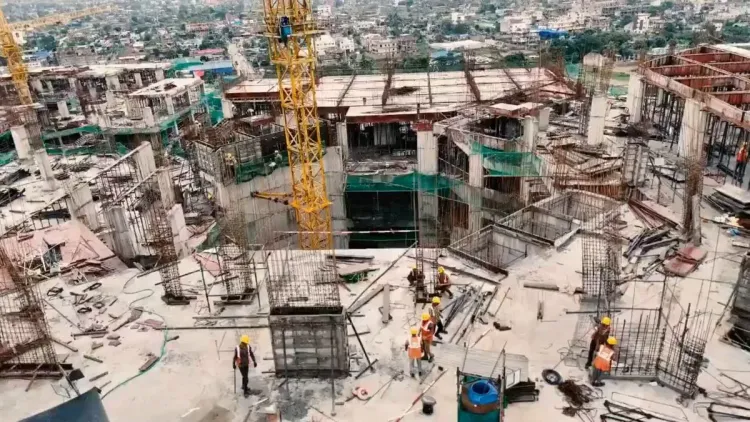
Assam Chief Minister Himanta Biswa Sarma has announced the Integrated Directorate Complex in Guwahati — twin 17-storey towers that will consolidate multiple state departments, directorates and commissionerates, aiming to deliver faster, more coordinated public services at scale.
Key Takeaways
CM Himanta Biswa Sarma announced the Integrated Directorate Complex in Guwahati on 24 May 2026 .
The complex will comprise two towers of 17 storeys each , making it one of the largest government office facilities in the North-East.
Multiple Assam state departments, directorates and commissionerates will be consolidated under a single roof.
The project aims to deliver faster public services and improve inter-departmental coordination for both citizens and government employees.
The initiative aligns with a broader national trend of integrated government complexes in states such as Gujarat and Karnataka under the Digital India framework.
Key details including project timeline, department list and inauguration date are yet to be officially announced.
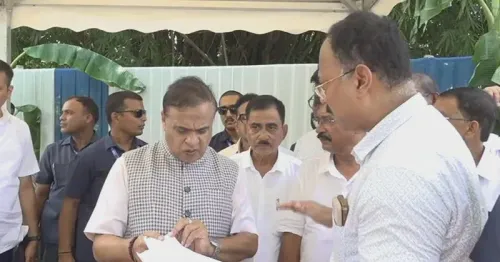
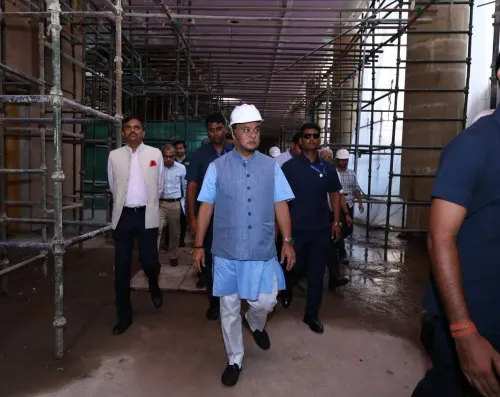
Assam Chief Minister Himanta Biswa Sarma on Sunday, 24 May 2026, announced that Guwahati will host a landmark Integrated Directorate Complex — a twin-tower government facility designed to consolidate multiple state departments, directorates and commissionerates under a single roof, marking one of the most significant administrative infrastructure investments in the state's recent history.
Context
Sharing the announcement on social media, CM Sarma described the development as governance acquiring 'a powerful new address.' The complex, featuring two towers of 17 storeys each, is envisioned to bring together several arms of the Assam state government that are currently dispersed across Guwahati, the state's largest city and primary administrative hub.
The Chief Minister framed the project as a move toward 'faster public service and governance designed for scale and the future,' signalling that the consolidation is intended not merely as a real-estate exercise but as a structural reform to how citizens interact with the state apparatus.
Policy Backdrop
Since assuming office in 2021, the Sarma-led BJP government in Assam has pursued a series of administrative modernisation measures, including office consolidation and e-governance upgrades. The Integrated Directorate Complex fits squarely within that broader agenda of streamlining state machinery.
Across India, states such as Gujarat and Karnataka have undertaken comparable integrated secretariat or directorate projects over the past decade, driven by the twin goals of cutting operational costs and improving inter-departmental coordination. These efforts align with the national Digital India framework, which encourages states to build physical and digital infrastructure that enables seamless public service delivery.
For North-East India, where governance infrastructure has historically lagged behind other regions, a project of this scale in Guwahati carries additional significance as the city consolidates its role as the commercial and administrative gateway to the region.
Stakeholders and Impact
The most immediate beneficiaries of the complex would be Assam's state government employees, who currently navigate a fragmented network of offices spread across the city. Consolidation is expected to reduce inter-departmental transit time and improve file-movement efficiency within the bureaucracy.
For ordinary citizens, a single-location directorate complex could significantly reduce the number of offices they must visit to access government services — a persistent friction point in state-level administration. Businesses, contractors and civil society organisations that regularly interface with multiple directorates and commissionerates stand to gain from reduced compliance overheads.
The project also carries an employment dimension: construction of a facility of this scale in Guwahati would generate substantial short-term labour demand and longer-term service-sector activity in the surrounding area.
What's Next
Key details — including the precise timeline for project completion, the full list of departments slated for relocation, and any formal inauguration date — are yet to be made public. Observers will watch for a detailed project report or government notification that spells out the phased shifting of offices and the administrative framework governing the complex once operational.
As Assam moves closer to making the Integrated Directorate Complex a reality, the project will serve as a test of the state government's capacity to execute large-scale infrastructure on schedule — and a template that other North-East states may look to replicate.
Point of View
Who has consistently used visible infrastructure milestones to reinforce a narrative of administrative transformation in Assam. Consolidating dispersed directorates into a single landmark structure serves a dual purpose: it delivers a tangible efficiency gain for the bureaucracy while projecting an image of a modernising, forward-looking state government ahead of future electoral cycles. The project mirrors a well-worn playbook used by BJP-governed states — large, photogenic public infrastructure as proof of developmental intent. The real test, however, will be execution: whether the complex is delivered on time and whether the promised service-delivery improvements materialise for ordinary Assam residents.
NationPress
7 Oct 2026
Frequently Asked Questions
What is the Integrated Directorate Complex in Guwahati?
The Integrated Directorate Complex is a planned twin-tower government facility in Guwahati , Assam , announced by Chief Minister Himanta Biswa Sarma . Each tower will rise 17 storeys and together they will house multiple state departments, directorates and commissionerates currently spread across the city.
Why is Assam building the Integrated Directorate Complex?
The complex is designed to consolidate fragmented government offices under one roof, improving inter-departmental coordination, reducing bureaucratic delays and making it easier for citizens to access state services without visiting multiple locations across Guwahati .
When will the Guwahati Integrated Directorate Complex be completed?
An official completion timeline has not yet been announced. CM Sarma made the announcement on 24 May 2026 , but a detailed project report and phased schedule are awaited from the state government.
Which departments will move into the Assam Integrated Directorate Complex?
The full list of departments has not been made public yet. The announcement states that multiple Assam departments, directorates and commissionerates will be brought together under the complex, but a formal notification is pending.
How does the Guwahati complex compare to similar projects in other Indian states?
States such as Gujarat and Karnataka have built comparable integrated government complexes over the past decade to cut costs and improve service delivery. The Guwahati project follows a similar model and aligns with the national Digital India push for modernised, citizen-friendly governance infrastructure.