CM Himanta Approves Guwahati Satellite Cities Authority
Synopsis
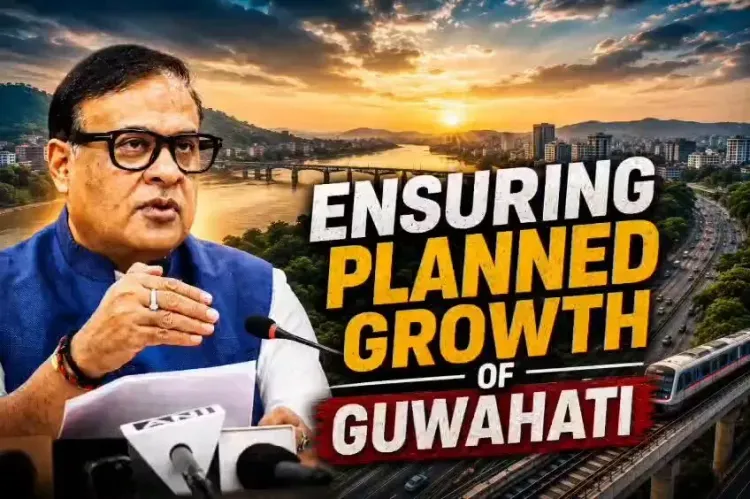
Assam Chief Minister Himanta Biswa Sarma has approved the creation of a Guwahati Satellite Cities Development Authority to manage the city's planned urban expansion. The move extends Assam's existing metropolitan governance framework and mirrors satellite-township models adopted in other major Indian cities.
Key Takeaways
Assam CM Himanta Biswa Sarma approved the Guwahati Satellite Cities Development Authority on 13 June 2026 .
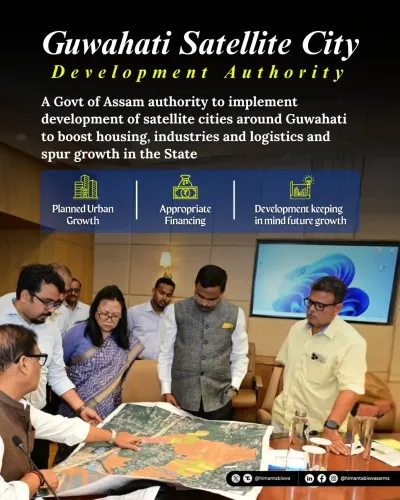
The authority is designed to enable planned, structured urban expansion of Guwahati beyond its current metropolitan limits.
Guwahati already has the Guwahati Metropolitan Development Authority (GMDA) , established in 2016 ; the new body targets peri-urban satellite zones.
The move follows a national pattern of states creating dedicated satellite-township agencies to decongest major cities, with the Delhi NCR model as a reference point.
Key details — jurisdiction boundaries, funding, and coordination with existing authorities — are yet to be formally notified.
Assam Chief Minister Himanta Biswa Sarma on Saturday, 13 June 2026, announced the approval of a new Guwahati Satellite Cities Development Authority, signalling a structural shift in how the state intends to manage the rapid urbanisation of its largest city. The decision, shared by the Chief Minister on social media, is framed as a forward-looking measure to enable planned expansion beyond Guwahati's existing urban limits.
Context
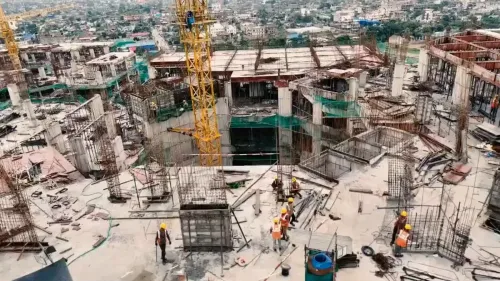
Guwahati is the commercial and administrative hub of Assam and the broader Northeast region, and has experienced sustained population growth and infrastructure stress over the past two decades. The Chief Minister stated that 'Guwahati needs to have a planned urban expansion and growth' to cater to future needs, framing the new authority as the mechanism to facilitate that 'next phase of growth.'
The city was previously brought under the national Smart Cities Mission in 2015, and the state established the Guwahati Metropolitan Development Authority (GMDA) in 2016 to oversee planning within the metropolitan area. The new satellite cities body appears to extend that governance architecture outward, targeting peri-urban zones that fall beyond the GMDA's current remit.
Policy Backdrop
Across India, state governments have increasingly turned to dedicated satellite township authorities to decongest over-stretched state capitals. The Delhi NCR model — where planned satellite towns such as Gurgaon, Noida, and Faridabad absorbed population overflow from the capital — is widely cited as a template. Assam's move aligns with national urban policy frameworks that encourage structured peri-urban planning rather than unregulated sprawl.
Northeast India's urbanisation rate has accelerated sharply, placing pressure on civic infrastructure, land use, and transportation corridors in cities like Guwahati. A dedicated authority with a satellite-city mandate would, in principle, allow the state to pre-plan land acquisition, road networks, utilities, and zoning in designated growth corridors before demand overwhelms capacity.
Stakeholders and Impact
Guwahati residents stand to benefit from reduced congestion and better-distributed civic services if satellite townships are developed with adequate infrastructure. Real estate developers and investors are likely to watch the authority's jurisdiction boundaries and land-use regulations closely, as planned satellite zones typically unlock significant development activity.
Coordination between the new Guwahati Satellite Cities Development Authority and existing bodies — particularly the GMDA and municipal corporations — will be a critical operational question. Overlapping mandates between metropolitan and satellite authorities have historically created administrative friction in other Indian states, making clarity of jurisdiction essential from the outset.
What's Next
The specifics of the authority's jurisdiction, funding structure, staffing, and timeline for operationalisation are yet to be detailed publicly. These parameters are expected to emerge through formal government notifications, and potentially through the Assam state assembly or upcoming budget discussions. Urban planners and civic groups are likely to seek clarity on which corridors or districts fall under the new body's remit.
The establishment of the Guwahati Satellite Cities Development Authority marks a significant institutional step for Northeast India's urban governance — one that could set a precedent for how other rapidly growing cities in the region approach planned expansion in the years ahead.
Point of View
The state is building a durable administrative mechanism that can outlast individual budget cycles. The decision also carries political weight: positioning Guwahati as a model of Northeast urban governance strengthens Assam's case for central funding under national urban missions. How quickly the authority becomes operational, and whether its mandate is kept distinct from the GMDA's, will determine whether this remains a headline or becomes a genuine inflection point in the city's development trajectory.
NationPress
23 Sept 2026
Frequently Asked Questions
What is the Guwahati Satellite Cities Development Authority?
It is a new state body approved by Assam Chief Minister Himanta Biswa Sarma on 13 June 2026 to oversee planned urban expansion and satellite township development around Guwahati, extending governance beyond the existing metropolitan area.
Why does Guwahati need satellite cities?
Guwahati is Assam's largest city and faces rapid population growth and infrastructure pressure. Satellite cities are intended to absorb overflow demand, reduce congestion, and enable planned development in peri-urban corridors before unregulated sprawl takes hold.
How is the new authority different from the Guwahati Metropolitan Development Authority?
The Guwahati Metropolitan Development Authority, established in 2016, manages planning within the existing metropolitan area. The new Satellite Cities Development Authority is intended to focus on zones beyond those limits, targeting future growth corridors.
What is the status of Guwahati under the Smart Cities Mission?
Guwahati was included in India's national Smart Cities Mission in 2015, which funded technology-driven urban improvements within the city. The new satellite cities authority addresses expansion beyond the city's current footprint, which is a separate and complementary objective.
What details about the new authority are still pending?
Jurisdiction boundaries, funding arrangements, staffing, and coordination protocols with existing bodies like the GMDA have not yet been publicly detailed and are expected to be formalised through government notifications or assembly proceedings.