CM Fadnavis Calls for AI Command System for Disaster Management
Synopsis
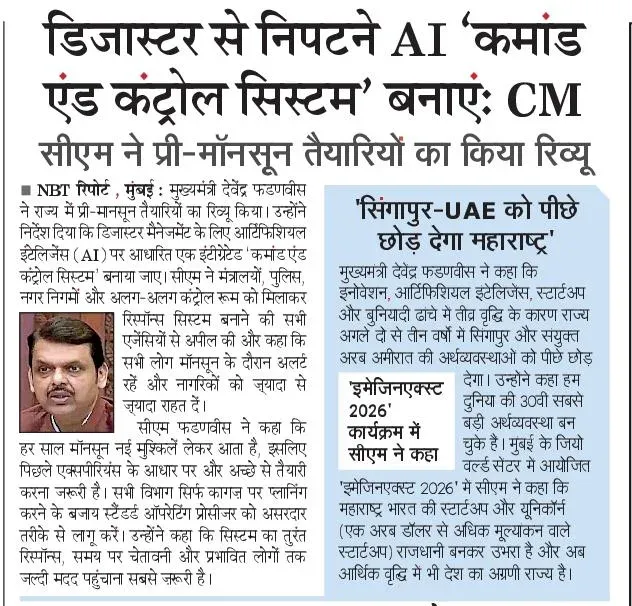
Chief Minister Devendra Fadnavis has called for an AI-based Command and Control System to strengthen Maharashtra's disaster response. The directive, issued ahead of the monsoon season, marks a significant step in the state's push to integrate artificial intelligence into emergency governance.
Key Takeaways
CM Devendra Fadnavis has directed Maharashtra authorities to develop an AI-based 'Command and Control System' for disaster management.
The announcement was made on 23 May 2026 , ahead of the approaching monsoon season.
Maharashtra's disaster governance operates under the Disaster Management Act, 2005 and is coordinated with the National Disaster Management Authority .
The proposed system would aim to integrate real-time data, weather inputs, and field reports into a unified decision-support platform.
Coordination with the NDMA and state emergency services will be essential for implementation.
Details on pilot rollout, agency assignments, and timelines are yet to be officially announced.
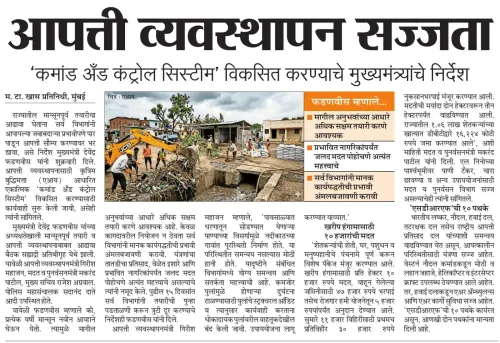
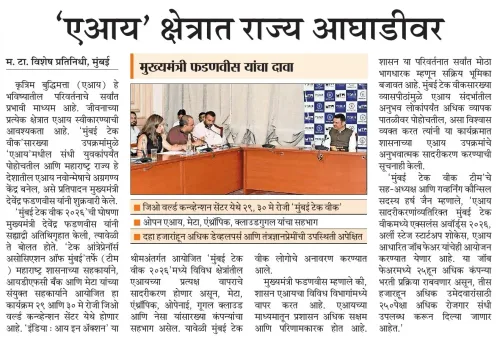
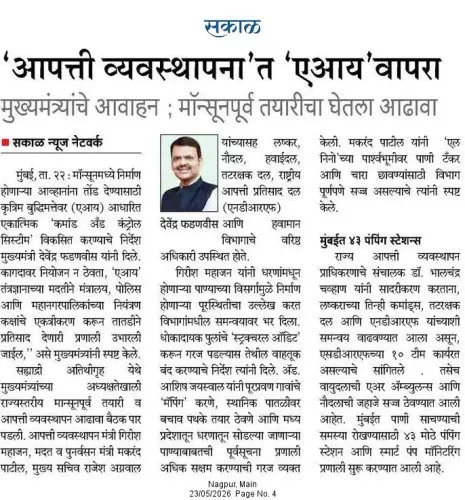
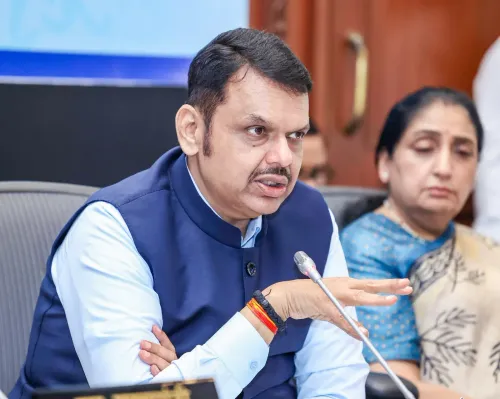
Chief Minister Devendra Fadnavis of Maharashtra has directed authorities to develop an artificial-intelligence-based 'Command and Control System' to handle disaster response, the Chief Minister's Office of Maharashtra announced on Saturday, 23 May 2026. The directive signals a significant push to integrate advanced technology into the state's emergency preparedness framework ahead of the monsoon season.
Context
The Chief Minister's Office posted on X, quoting CM Fadnavis with the directive: 'Disaster se nipTne AI Command and Control System banao' ('Build an AI Command and Control System to handle disasters'). The announcement underscores the state government's intent to move beyond conventional emergency response mechanisms and deploy real-time, data-driven tools for crisis management.
Maharashtra is among India's most disaster-prone states, regularly facing flooding, cyclones, and landslides during the monsoon months of June through September. The urgency of the directive is sharpened by the proximity of the upcoming monsoon season.
Policy Backdrop
India's disaster governance framework is anchored in the Disaster Management Act, 2005, which mandates state-level authorities to maintain preparedness plans and coordinate with the National Disaster Management Authority (NDMA). Maharashtra operates its own State Disaster Management Authority under this framework.
Across Indian states, there has been a growing pattern of integrating digital and AI tools into emergency response — from satellite-based flood mapping to real-time alert systems. CM Fadnavis, who has previously championed digital governance initiatives during his earlier tenures from 2014 to 2019 and in his current term, is now extending that approach explicitly to disaster management. An AI-powered command and control system would, in principle, allow authorities to aggregate sensor data, weather inputs, and field reports into a single decision-support interface.
Stakeholders and Impact
The communities most directly affected by this initiative are those in disaster-prone districts of Maharashtra — including coastal areas vulnerable to cyclonic activity and river-basin regions prone to seasonal flooding. State emergency services, district collectors, and municipal bodies would be the primary operational users of any such system.
Coordination with the NDMA will be critical, as national-level data feeds and early-warning systems would need to be integrated into the proposed state platform. Civil society organisations working in disaster relief and local self-government bodies are also key stakeholders in how the system is eventually deployed and accessed.
What's Next
The immediate question is whether the state will commission a dedicated pilot or expand an existing digital infrastructure project to incorporate the AI command layer. Observers will watch for official tendering, agency assignments, or a formal policy notification from the state's relief and rehabilitation department.
With the monsoon expected to arrive in Maharashtra by early June, the timeline for even a preliminary rollout is tight. The directive from CM Fadnavis sets a clear political mandate; translating it into an operational system will test the state's capacity for rapid technology procurement and inter-agency coordination.
Point of View
Not an add-on. It fits a broader pattern of BJP-governed states using high-visibility tech announcements to differentiate their administrative brand. The real test will come in implementation: AI command systems require sustained data infrastructure, trained personnel, and inter-agency discipline — none of which can be assembled between a May announcement and a June monsoon. Watchers should track whether this translates into a funded, time-bound project or remains an aspirational directive.
NationPress
7 Oct 2026
Frequently Asked Questions
What is the AI Command and Control System announced by CM Fadnavis?
It is a proposed artificial-intelligence-based platform directed by Chief Minister Devendra Fadnavis to manage disaster response in Maharashtra , intended to integrate real-time data and field inputs for faster emergency decision-making.
Why is Maharashtra building an AI disaster management system?
Maharashtra is among India's most disaster-prone states, facing recurring flooding, landslides, and cyclones during the monsoon season. CM Fadnavis has called for the system to strengthen the state's preparedness and response capabilities.
When was the AI disaster system directive announced?
The directive was announced on Saturday, 23 May 2026 , by the Chief Minister's Office of Maharashtra via an official post on X.
How does this fit into India's disaster management framework?
India's disaster governance is governed by the Disaster Management Act, 2005 . State-level systems like the one proposed by CM Fadnavis are required to coordinate with the National Disaster Management Authority (NDMA) at the national level.
Has Devendra Fadnavis promoted digital governance before?
Yes. Devendra Fadnavis , who served as Chief Minister from 2014 to 2019 and again in his current term, has consistently championed digital governance and technology-driven public administration in Maharashtra .