Maharashtra to build AI-driven disaster command system, CM Fadnavis orders pre-monsoon review
Synopsis
Maharashtra is moving beyond traditional disaster response — CM Fadnavis has ordered an AI-driven Command and Control System to unify police, civic bodies, and emergency agencies under one roof. Paired with a ₹16,224 crore DBT payout to over a lakh farmers and first-ever well compensation, the state is signalling a structural shift in how it handles monsoon crises.
Key Takeaways
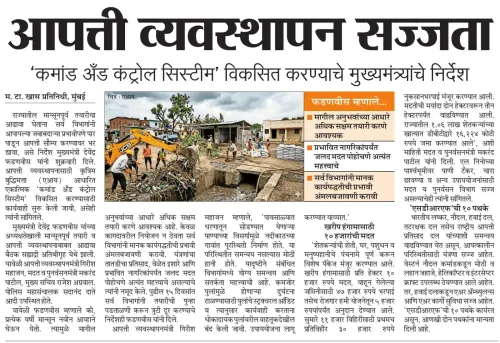
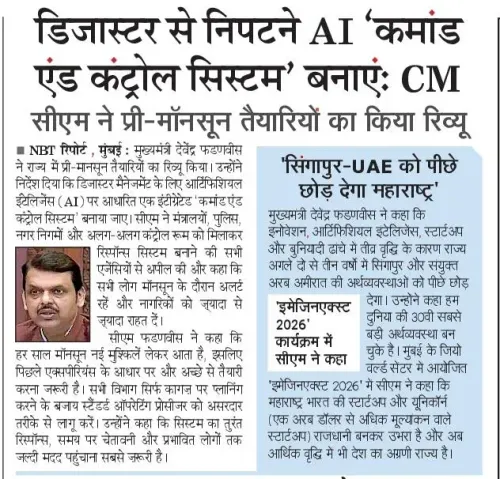
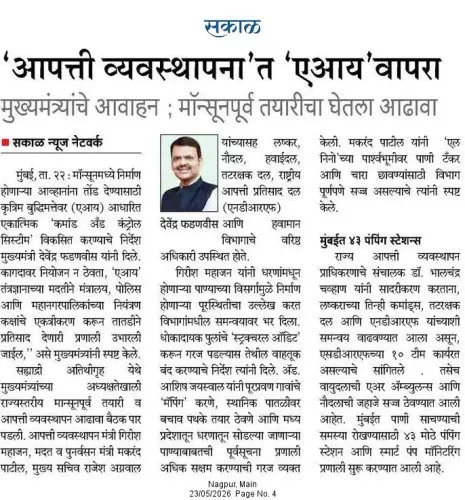
CM Devendra Fadnavis ordered development of an AI-based integrated Command and Control System for disaster management on 22 May 2025 .
All departments directed to complete a preparedness review within 15 days and integrate Mantralaya , Police, and Municipal Corporations into a unified response system.
State has deposited ₹16,224 crore via DBT to 1.06 lakh farmers ; relief eligibility raised from 2 hectares to 3 hectares .
For the first time, ₹30,000 per well compensation sanctioned for around 11,000 damaged wells.
Disaster Management Minister Girish Mahajan ordered structural audits of weak bridges and traffic suspension on unsafe structures.
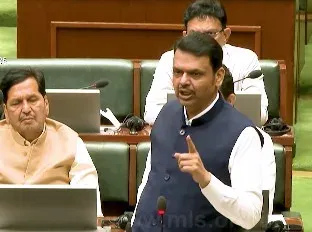
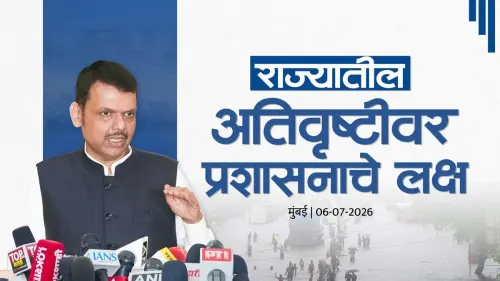
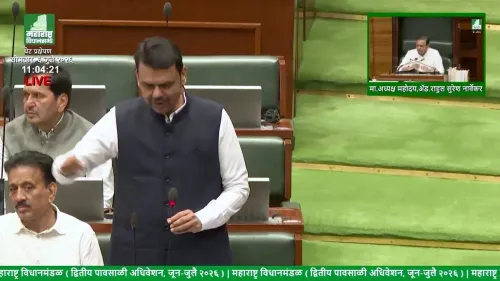
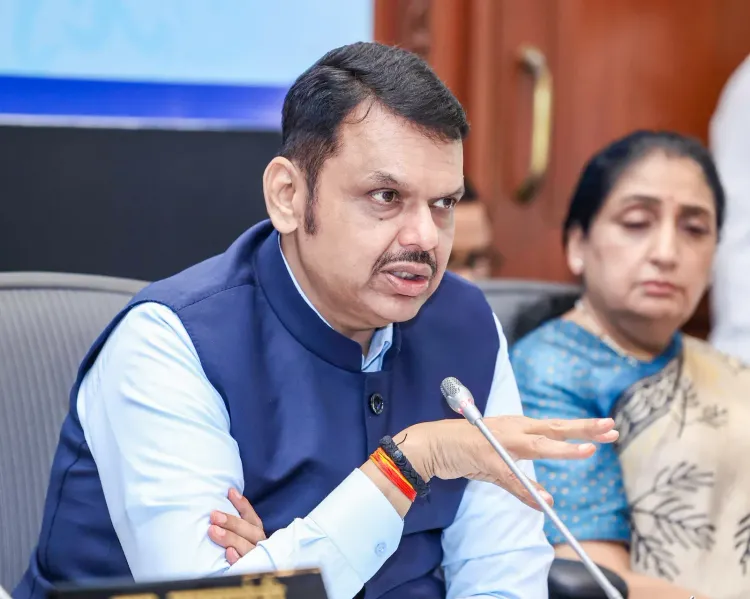
Maharashtra Chief Minister Devendra Fadnavis on Friday, 22 May directed all state departments to strengthen disaster mitigation efforts and ordered officials to begin developing an AI-based integrated Command and Control System for emergency response across Maharashtra. The directive came during a high-level review meeting on Pre-Monsoon Preparedness and Disaster Management held in Mumbai.
What Fadnavis Directed
Chief Minister Fadnavis called for all departments to conduct a thorough preparedness review over the next 15 days and plug operational gaps on priority. He also ordered the integration of Mantralaya, Police, Municipal Corporations, and various control rooms through a unified response system to ensure coordinated relief during the monsoon season.
'Every monsoon brings new challenges, and therefore, preparedness must be strengthened based on past experiences. Directed all departments to ensure effective implementation of SOPs, timely warnings, rapid response and swift assistance to affected citizens,' Fadnavis said.
Disaster Management and Infrastructure Concerns
Disaster Management Minister Girish Mahajan underscored the need for better coordination during dam water discharge, which frequently triggers flooding in downstream villages. He directed structural audits of weak bridges and ordered traffic suspension on structures deemed unsafe.
Relief Package and Farmer Compensation
Relief and Rehabilitation Minister Makarand Patil announced that the state has sanctioned a special relief package covering agricultural losses, damaged homes, livestock deaths, and human casualties. Key components include ₹10,000 per hectare for Kharif crop losses, ₹47,000 compensation for flood-washed land, and grants of up to ₹5,000 under the Employment Guarantee Scheme.
Patil said the state has deposited ₹16,224 crore through Direct Benefit Transfer (DBT) into the accounts of 1.06 lakh farmers. Notably, for the first time, compensation of ₹30,000 per well has been sanctioned for around 11,000 damaged wells. Relief eligibility has also been expanded from two hectares to three hectares.
Agencies Reviewed
The Chief Minister reviewed the monsoon preparedness of a wide array of agencies, including the Indian Army, Indian Navy, Indian Air Force, Indian Coast Guard, India Meteorological Department (IMD), NDRF, SDRF, State Disaster Management Authority (SDMA), Central Railway, Western Railway, Konkan Railway, Department of Telecommunications (DoT), Brihanmumbai Municipal Corporation (BMC), and the Mumbai Metropolitan Region Development Authority (MMRDA).
With the monsoon weeks away, the pace of implementation across these agencies will determine whether Maharashtra's upgraded disaster architecture delivers on its promise this season.
Point of View
But the devil is in integration. The state's disaster response has historically been hampered not by lack of agencies but by poor coordination between them — the very problem this system is meant to solve. The expanded relief package and first-ever well compensation signal political will, but ₹16,224 crore in DBT payouts also raises the question of whether preventive infrastructure investment is keeping pace with post-disaster relief spending. If the AI system remains a review-meeting announcement and is not operational before the first heavy rainfall, Maharashtra will once again be managing crises reactively rather than pre-emptively.
NationPress
7 Oct 2026
Frequently Asked Questions
What is the AI-based Command and Control System announced by CM Fadnavis?
It is an AI-driven integrated emergency response platform ordered by Maharashtra Chief Minister Devendra Fadnavis on 22 May 2025, designed to unify Mantralaya, Police, Municipal Corporations, and various control rooms for coordinated disaster management. The system aims to strengthen real-time response and citizen relief during monsoon emergencies.
What relief has Maharashtra announced for flood-affected farmers?
The state has sanctioned ₹10,000 per hectare for Kharif crop losses, ₹47,000 for flood-washed land, and grants of up to ₹5,000 under the Employment Guarantee Scheme. A total of ₹16,224 crore has been deposited via DBT into the accounts of 1.06 lakh farmers, with relief eligibility expanded from two to three hectares.
What is new about the well compensation announced by Maharashtra?
For the first time, the state has sanctioned ₹30,000 per well for approximately 11,000 damaged wells. This is a new addition to the existing disaster relief framework and was announced by Relief and Rehabilitation Minister Makarand Patil.
Why did Girish Mahajan order bridge audits?
Disaster Management Minister Girish Mahajan directed structural audits of weak bridges because dam water discharge during monsoons frequently causes flooding in downstream villages, and unsafe bridges pose additional risk to lives and emergency movement. He ordered traffic to be suspended on any structure found unsafe.
Which agencies were reviewed at the pre-monsoon preparedness meeting?
CM Fadnavis reviewed the readiness of the Indian Army, Indian Navy, Indian Air Force, Indian Coast Guard, IMD, NDRF, SDRF, SDMA, Central Railway, Western Railway, Konkan Railway, DoT, BMC, and MMRDA, among other civic bodies.