Pension Sakhis: DoRD and PFRDA sign MoU to widen rural pension cover
Synopsis
India's rural pension gap has a new fix: the DoRD-PFRDA MoU will convert trained BC Sakhis into 'Pension Sakhis,' using the DAY-NRLM's vast SHG network to deliver doorstep NPS enrolment to rural women and Lakhpati Didis — a community-led bet on closing one of social security's most stubborn last-mile gaps.
Key Takeaways
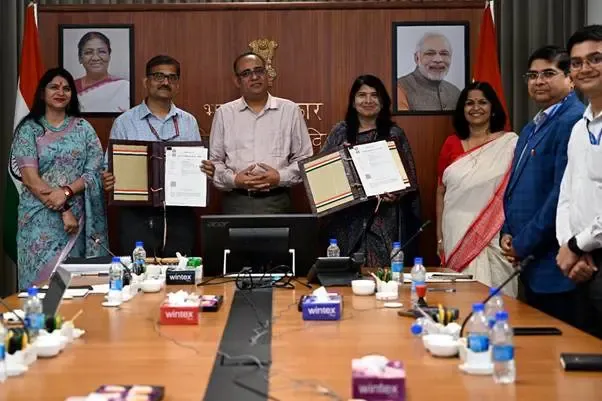
DoRD and PFRDA signed an MoU on 15 September 2026 to deploy 'Pension Sakhis' in rural India.
Trained BC Sakhis and DAY-NRLM community cadres will provide doorstep pension awareness, enrolment, and support.
Target beneficiaries include SHG members , rural women, Lakhpati Didis , and other underserved groups.
The National Pension System (NPS) will be the primary product promoted under the initiative.
Digital dashboards and Central Record-keeping Agency tracking will be used to monitor performance and enrolment.
The collaboration aims to build a more inclusive social security ecosystem amid rising life expectancy and demographic shifts.
The Department of Rural Development (DoRD) and the Pension Fund Regulatory and Development Authority (PFRDA) signed a memorandum of understanding (MoU) on 15 September 2026 to expand pension coverage in rural India through a dedicated cadre of community workers called 'Pension Sakhis'. The initiative will harness the grassroots network of the Deendayal Antyodaya Yojana-National Rural Livelihoods Mission (DAY-NRLM) to bring formal retirement security to Self Help Group (SHG) members, rural women, Lakhpati Didis, and other underserved populations.
What the MoU Covers
Under the agreement, trained community workers — primarily Banking Correspondent (BC) Sakhis and other financially literate cadres drawn from DAY-NRLM's institutional network — will be reoriented as Pension Sakhis. Their mandate spans doorstep awareness campaigns, enrolment facilitation, and ongoing pension-related support in remote villages. Digital dashboards, mobile- and web-based platforms, and unique identifier-based tracking through Central Record-keeping Agencies (CRAs) will be used to monitor outreach, enrolment, and performance, according to the official statement.
What Officials Said
Rohit Kansal, Secretary of the Ministry of Rural Development, noted that SHG members have 'distinct savings patterns, livelihood cycles, and risk profiles,' underscoring why a one-size-fits-all approach to pension outreach has historically fallen short. He emphasised that pension awareness must be grounded in 'honesty, transparency, and trust,' and expressed confidence that trained Sakhis can serve as credible last-mile agents for social security. Mamta Shankar, Whole Time Member (Economics) at PFRDA, highlighted the urgency of retirement planning given rising life expectancy and shifting demographic trends, noting that rural households have 'limited access to formal retirement and social security mechanisms.'
Why This Matters
India's rural pension penetration remains significantly below urban levels. The National Pension System (NPS) and related products have struggled to reach informal-sector workers who lack steady incomes or awareness of long-term savings instruments. By embedding pension outreach within an already-functioning SHG ecosystem — one that covers tens of millions of rural women — the collaboration attempts to solve the last-mile distribution problem that has historically hobbled financial inclusion drives. This comes amid growing policy emphasis on social protection as a lever of inclusive growth, with the Centre increasingly looking to community-led models to deliver welfare at scale.
Expected Impact
The partnership is designed to strengthen pension literacy, deepen financial inclusion, and enhance social protection for rural communities across the country. Officials expect the Pension Sakhis model to contribute to a 'more inclusive and resilient social security ecosystem,' according to the joint statement. The scale of DAY-NRLM's network — which spans hundreds of thousands of SHGs — gives the initiative significant reach potential, though actual enrolment outcomes will depend on the quality of training and incentive structures put in place for the Sakhis.
Point of View
Not the informal rural economy. Piggybacking on DAY-NRLM's SHG network is smart — trust and reach are already baked in. The real risk is incentive design: BC Sakhis are already stretched across banking and savings mandates, and adding pension enrolment without adequate compensation or simplified processes could make this yet another well-intentioned MoU that stalls at implementation. The proof will be in enrolment numbers 12 months from now, not the signing ceremony.
NationPress
15 Sept 2026
Frequently Asked Questions
What is the Pension Sakhis initiative?
The Pension Sakhis initiative is a collaboration between the Department of Rural Development (DoRD) and PFRDA, formalised through an MoU on 15 September 2026, to deploy trained community workers as 'Pension Sakhis' who provide doorstep pension awareness, enrolment, and support in rural areas. These workers are drawn primarily from the BC Sakhi and DAY-NRLM cadres already embedded in Self Help Groups.
Who will benefit from the Pension Sakhis programme?
The programme targets Self Help Group (SHG) members, rural women, Lakhpati Didis, and other underserved groups in rural India who currently lack access to formal retirement and social security mechanisms. It is designed specifically to reach households with limited financial literacy or connectivity.
What pension products will be promoted under this MoU?
The National Pension System (NPS) is the primary product to be promoted under the MoU. The collaboration aims to expand adoption of pension products more broadly among rural households that have historically been excluded from formal retirement planning.
How will the programme be monitored?
Digital dashboards, mobile- and web-based solutions, and unique identifier-based tracking through Central Record-keeping Agencies (CRAs) will be used to monitor outreach, enrolment, and the performance of individual Pension Sakhis. This technology layer is intended to ensure accountability and measure real-world impact.
Why is rural pension coverage low in India?
Rural pension penetration is low primarily because existing schemes were designed around formal-sector employment, leaving out informal workers who lack steady incomes or awareness of long-term savings products. Geographic remoteness and limited financial literacy have further kept enrolment numbers far below urban levels.