Iran refuses US talks until conditions met, Hormuz tensions spike
Synopsis
Iran's top security official has flatly rejected US President Donald Trump's claim that Tehran wants a deal, declaring 'No talks until Iran's conditions are met' — even as a super tanker erupted in flames in the Strait of Hormuz and drone strikes targeted Iranian fishing boats. With the June MoU deadline expired since August 17 and no formal channel in place, the world's most critical oil chokepoint is now also the most volatile diplomatic flashpoint.
Key Takeaways
Mohsen Rezaei , Secretary of Iran's Supreme National Security Council, declared on 15 September 2026 that Iran will not negotiate with the US until its conditions are met.
The statement directly rebutted Donald Trump's claim on Truth Social that Iran wanted to make a deal 'quickly and badly.' A US-Iran MoU signed on 18 June set a 60-day negotiating window that expired on 17 August without a final agreement.
A super oil tanker identified as 'EL GAIA' struck naval mines in the Strait of Hormuz and was engulfed in flames, according to IRGC Navy.
Two fishing boats were hit in a drone attack off Kargan near Larak Island , leaving an unspecified number of fishermen missing.
The IRGC states the Strait of Hormuz 'remains closed and under the control of Iran's naval forces.'
Iran's Supreme National Security Council Secretary Mohsen Rezaei declared on Tuesday, 15 September 2026, that Tehran will hold no negotiations with Washington until its conditions are satisfied — a direct rebuttal to US President Donald Trump's claim that Iran was eager to strike a deal. The statement, posted on social media platform X, came as tensions in the Strait of Hormuz escalated sharply with a tanker fire and a drone strike on fishing boats.
Rezaei's Rebuke of Trump
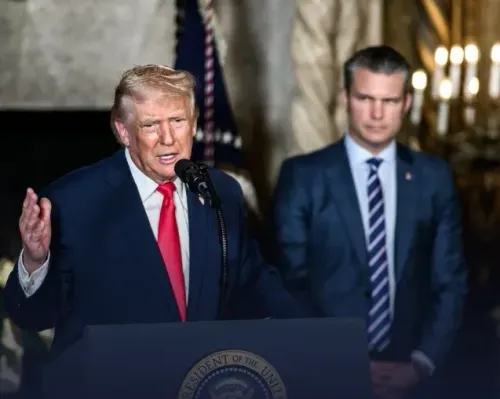
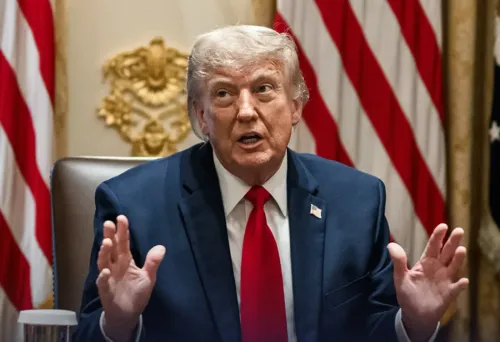
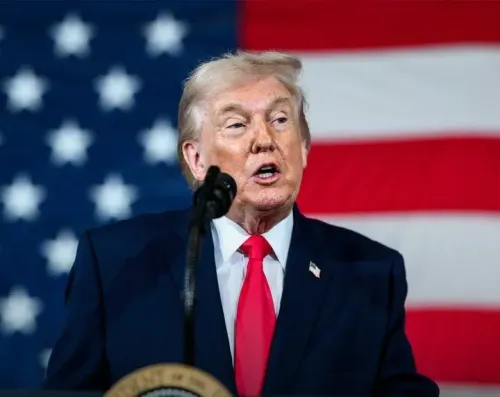
Trump, writing on Truth Social on Monday, asserted that Iran wanted to make a deal 'quickly and badly' and that Washington was open to resuming negotiations. Rezaei rejected that framing emphatically. 'Don't get distracted by the US president's mixed signals — from 'no negotiations' to 'we're ready to talk.' The stakes around oil and the straits have changed. Damage control won't stop what's coming,' he wrote. He followed up with an unambiguous line: 'No talks until Iran's conditions are met. Period!'
The remarks reflect a hardening of Tehran's posture at a moment of acute geopolitical pressure. Notably, this is not a new Iranian demand — officials have consistently attached preconditions to any resumption of formal dialogue.
The Collapsed MoU Timeline
The backdrop to Tuesday's statement is a stalled diplomatic framework. On 18 June, the United States and Iran signed a memorandum of understanding (MoU) that outlined a pathway to ending regional hostilities across multiple fronts, including Lebanon. The two sides were scheduled to conclude a final agreement within 60 days — a deadline that expired on 17 August without a resolution. The talks' fate has since remained unclear amid a series of escalations, according to reports.
The expiry of the MoU window without a follow-on agreement has left the diplomatic track in limbo, even as military incidents have multiplied in and around the Strait of Hormuz.
Drone Attack on Fishing Boats Near Kargan
Compounding the diplomatic deadlock, two fishing boats were targeted in a drone attack off Iran's southern coast late on Monday night, leaving an unspecified number of fishermen missing, according to the semi-official Mehr news agency. The attack occurred off the coast of the southern port city of Kargan and near Larak Island. Ahmad Nafisi, Hormozgan province's deputy governor for political and security affairs, confirmed that search and rescue operations are under way, adding that further details would be released after investigation.
No group has claimed responsibility for the attack, and Iranian authorities have not attributed it publicly.
Oil Tanker Explosion in the Strait of Hormuz
Separately, the navy of Iran's Islamic Revolutionary Guard Corps (IRGC) said a super oil tanker attempting to cross the Strait of Hormuz via what it described as a 'forbidden' southern route struck naval mines and caught fire. According to a statement published on the IRGC's official outlet, Sepah News, efforts to contain the blaze on the vessel — identified as 'EL GAIA' — proved futile, and the tanker was entirely engulfed in flames.
The IRGC navy stated that prior warnings had been issued about the risks of using the 'illegal' route and reiterated that the strait 'remains closed and under the control of Iran's naval forces.' The incident raises immediate concerns about global oil supply chains, given that roughly 20% of the world's seaborne crude passes through the Strait of Hormuz.
What to Watch Next
With the MoU deadline long past, no formal negotiating channel in place, and kinetic incidents multiplying near one of the world's most critical energy chokepoints, the prospect of a diplomatic off-ramp appears increasingly narrow. The fate of the missing fishermen, the investigation into the drone attack, and any further IRGC moves in the Strait will be closely tracked in the coming hours. Any fresh statement from Washington or a direct Iranian government response to Trump's Truth Social post could shift the trajectory.
Point of View
Not a spontaneous reaction — it closes the diplomatic door precisely as Trump was trying to reopen it, and it does so while the Strait of Hormuz is literally on fire. The timing suggests Tehran is using the EL GAIA incident and the drone strikes as leverage, signalling that the cost of delay falls on global oil markets, not on Iran. The expired MoU is the critical detail mainstream coverage has underplayed: both sides agreed to a framework in June and then let it lapse, which means the current impasse is not an absence of diplomacy but a deliberate collapse of it. Without clarity on what Iran's 'conditions' actually are, Trump's open-to-talk posture and Rezaei's rejection are both performative — and the Strait pays the price.
NationPress
15 Sept 2026
Frequently Asked Questions
Why is Iran refusing to negotiate with the United States?
Iran's Supreme National Security Council Secretary Mohsen Rezaei stated on 15 September 2026 that Tehran will not enter negotiations with Washington until its unspecified conditions are met. The declaration came in direct response to US President Donald Trump's claim that Iran was eager to make a deal 'quickly and badly.'
What was the US-Iran MoU signed in June 2026?
The United States and Iran signed a memorandum of understanding on 18 June 2026, outlining a pathway to ending regional hostilities including in Lebanon. The two sides had a 60-day window to reach a final agreement, but that deadline expired on 17 August without a resolution, leaving the talks in an unclear state.
What happened to the oil tanker in the Strait of Hormuz?
The IRGC Navy reported that a super oil tanker identified as 'EL GAIA' struck naval mines while attempting to cross the Strait of Hormuz via what the IRGC called a 'forbidden' southern route. The vessel caught fire and was completely engulfed in flames, according to a statement published on Sepah News.
What is known about the drone attack on Iranian fishing boats?
Two fishing boats were targeted in a drone attack off Iran's southern coast near the port city of Kargan and Larak Island on Monday night, leaving an unspecified number of fishermen missing. Search and rescue operations have been launched, and Hormozgan province's deputy governor Ahmad Nafisi said further details would be released after investigation.
What did Donald Trump say about Iran negotiations?
President Donald Trump wrote on Truth Social on Monday that 'the failing Nation of Iran wants to make a deal, quickly and badly,' adding that Washington was open to the concept of resuming negotiations. Iran's security chief Rezaei directly rebutted the claim, calling it a 'mixed signal' and reiterating that no talks would proceed until Tehran's conditions are satisfied.