Trump confirms Iran talks begin Monday after Gulf states urge deal
Synopsis
With strikes reportedly hours away, a coordinated push by Saudi Arabia, the UAE, Qatar, and Iran itself persuaded Trump to stand down — and shift to negotiations set to begin Monday. The proposed framework targets both the Strait of Hormuz and Iran's nuclear programme, making this one of the most consequential diplomatic pivots of Trump's second term.
Key Takeaways
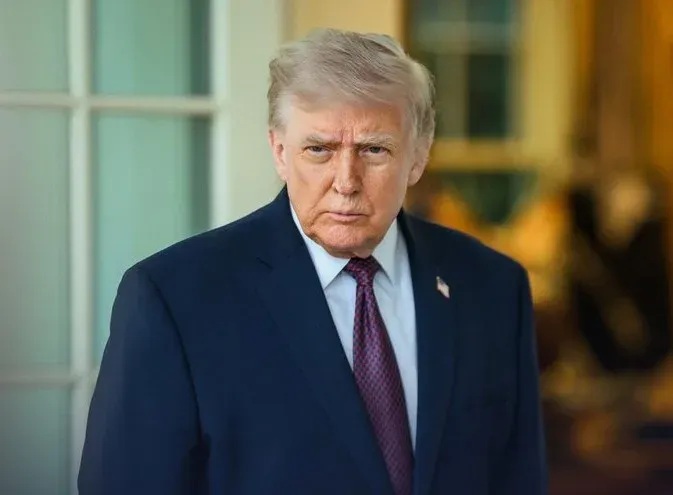
US President Donald Trump confirmed on 3 August that US-Iran negotiations would begin Monday afternoon .
Saudi Arabia , the UAE , and Qatar urged Washington to call off planned military strikes, saying 'they think there's a deal.' Saudi Crown Prince Mohammed bin Salman called Trump on Saturday to express concern and seek clarity on the proposed military action.
The proposed framework covers two tracks: opening of the Strait of Hormuz and ending Iran's nuclear threat.
Trump posted on Truth Social that the US remained 'locked and loaded' but agreed to cancel the strike to allow diplomacy to proceed.
Pakistan , Turkiye , and other regional states have also called for de-escalation, according to reports.
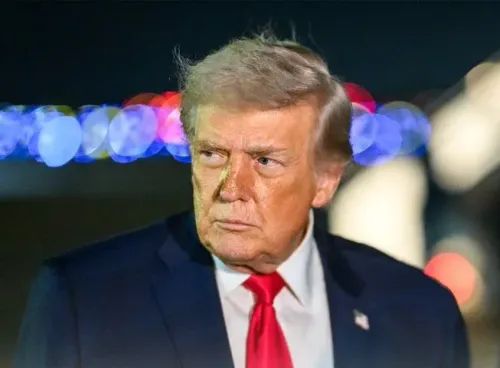
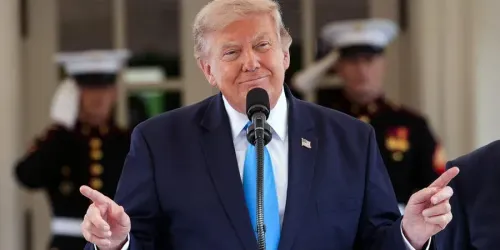
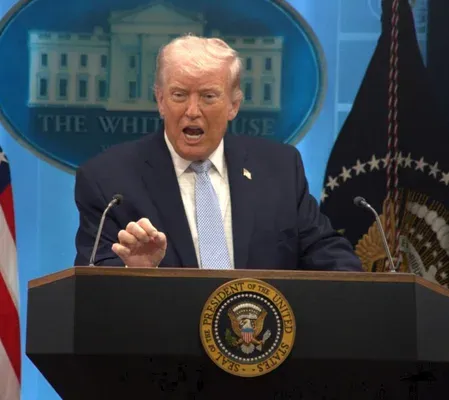
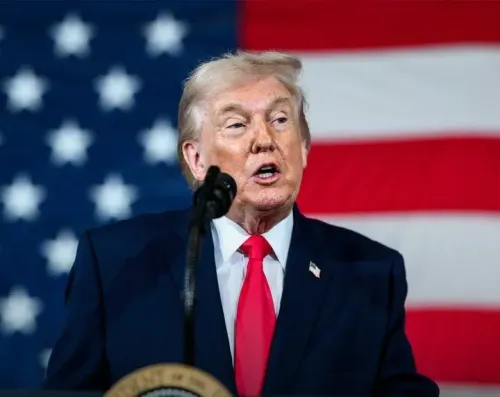
US President Donald Trump on Sunday, 3 August confirmed that negotiations with Iran would commence Monday afternoon, disclosing that Saudi Arabia, the United Arab Emirates (UAE), and Qatar had urged Washington to stand down from planned military strikes because, in his words, 'they think there's a deal.'
Trump made the remarks to reporters aboard Air Force One en route to Joint Base Andrews, outlining what he described as a two-track agreement — one covering the Strait of Hormuz and a second addressing Iran's nuclear programme.
What Trump Said
'There's a deal on (the Strait of) Hormuz, and then there will be a deal on the nuclear, or you might call it the denuclearization of Iran,' Trump told reporters. He added that Iran itself had also asked the United States to pull back the planned strikes, and that Washington had shifted to 'talking to them in the form of a negotiation.'
Earlier, in a post on Truth Social, Trump had declared the US 'locked and loaded' for military action 'at levels of Military Terror, Strength, and Power not seen since World War II,' but said he had agreed to cancel the attack 'subject to being able to rapidly make a DEAL,' citing requests from Iran and regional governments.
Gulf Mediation and Regional Pressure
Saudi Crown Prince and Prime Minister Mohammed bin Salman Al Saud spoke with Trump by phone on Saturday, 'expressed concern and asked for clarity' about the proposed plan of action against Iran, according to a US official cited by reports. Pakistan, Qatar, the UAE, Turkiye, and other countries have separately called on both Washington and Tehran to de-escalate and avoid further conflict, according to reports.
Terms of the Proposed Framework
According to Trump, the proposed agreement would require the 'Immediate, Complete, and Total OPENING OF THE HORMUZ STRAIT, and an end to Iran's nuclear threat.' He framed the pause in military planning as being in the 'future benefit of the WORLD and, likewise, the survival of a successful and prosperous Iran.'
Trump also claimed that Israel supported the decision to pursue the diplomatic path, though no independent confirmation from Israeli officials was immediately available.
Context and What Comes Next
The development marks a sharp pivot from what had appeared to be an imminent US military operation against Iran. This comes amid longstanding tensions over Iran's nuclear programme and its influence over key Gulf shipping lanes, including the strategically vital Strait of Hormuz — through which roughly 20% of global oil trade passes.
Notably, Gulf states have historically sought to avoid a military conflagration on their doorstep, and their collective intervention appears to have created the diplomatic opening Trump is now pursuing. Whether Monday's talks produce a durable framework — or collapse, as several prior US-Iran diplomatic efforts have — remains to be seen. All parties are expected to engage in what Trump described as formal negotiations beginning this week.
Point of View
And whether the 'framework' is a genuine diplomatic foundation or a face-saving pause. Gulf states have strong economic incentives to prevent a Hormuz conflict, and their collective intervention is the real story here. The harder question is whether Iran, under maximum pressure, will agree to terms that go beyond what it rejected in prior negotiations — and whether Israel, whose endorsement Trump claimed, is truly on board with a deal that stops short of dismantling Iran's nuclear infrastructure entirely.
NationPress
17 Sept 2026
Frequently Asked Questions
Why did Trump cancel the planned US military strike on Iran?
Trump said he agreed to cancel the strike after Iran and several Gulf states — including Saudi Arabia, the UAE, and Qatar — requested a pause, citing the framework of a potential deal. He posted on Truth Social that the US remained militarily prepared but would allow diplomacy to proceed.
What does the proposed US-Iran deal cover?
According to Trump, the proposed agreement has two components: the immediate and complete opening of the Strait of Hormuz, and an end to Iran's nuclear threat. Formal negotiations were set to begin Monday afternoon.
Which countries pushed for de-escalation between the US and Iran?
Saudi Arabia, the UAE, Qatar, Pakistan, Turkiye, and other regional nations called on both Washington and Tehran to de-escalate. Saudi Crown Prince Mohammed bin Salman spoke directly with Trump by phone on Saturday to express concern about the proposed military action.
Did Israel support Trump's decision to pursue diplomacy with Iran?
Trump claimed that Israel supported the decision to pursue a diplomatic path, though no independent confirmation from Israeli officials was immediately available at the time of his remarks.
What is the significance of the Strait of Hormuz in the US-Iran standoff?
The Strait of Hormuz is one of the world's most critical oil shipping chokepoints, with roughly 20% of global oil trade passing through it. Control or closure of the strait by Iran has long been a central concern in US-Iran tensions, making it a key element of any prospective agreement.