Iran threatens 'offensive and destructive' phase if US strikes continue
Synopsis
Iran's top military adviser has put Washington on notice: two to three more days of US strikes and Tehran shifts from retaliation to full-scale offensive operations. With ground forces, expanded missile waves, and the Strait of Hormuz already in play, this is the sharpest Iranian escalation signal yet — and a direct warning to Gulf neighbours not to stay on the sidelines.
Key Takeaways
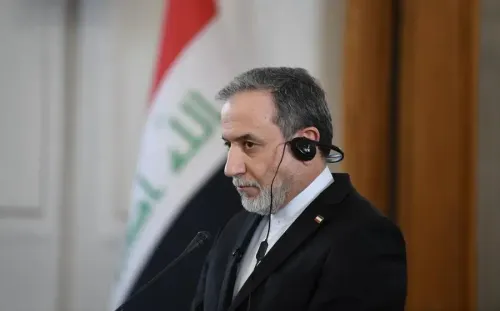
Mohsen Rezaei , military adviser to Iran's Supreme Leader, warned on 18 July that Iran will enter an 'offensive and destructive' phase if US strikes continue for another two to three days .
Rezaei declared Iran's policy of 'both war and negotiation' has ended, and that US bases and forces will no longer be safe within any political borders.
Iran threatened to deploy ground forces and expand the war's scope, promising 'expanded waves of missile and drone attacks.' Iranian forces reportedly targeted a Thai-flagged vessel in the Strait of Hormuz on Friday for crossing without IRGC Navy clearance.
The US military has launched multiple strike waves against Iran's southern provinces, citing threats to commercial shipping in the Strait of Hormuz.
Rezaei called on Kuwait , Jordan , the UAE , and Qatar to help prevent further escalation.
Mohsen Rezaei, military adviser to Iran's Supreme Leader, warned on 18 July that if the United States continues its military campaign against Iran for another two to three days, Tehran will shift into an 'offensive and destructive' phase — a significant escalation in rhetoric as the conflict intensifies.
Key Developments
Rezaei, speaking in an interview with state-run IRIB TV, declared that Iran's policy of 'both war and negotiation' has come to an end. He warned that Iran's armed forces will no longer confine themselves to retaliatory strikes, and that US bases and forces will no longer be safe within any political borders if American attacks persist.
He added that Iran would deploy additional military capabilities, including ground forces, and that the scope of the conflict would expand significantly. 'The United States must wait for expanded waves of missile and drone attacks,' Rezaei said, cautioning Washington against any ground operation on Iranian soil.
Iran's Restraint Claim and Regional Warning
Rezaei asserted that Iran has, until now, exercised deliberate restraint to prevent the war from spiralling into a broader regional and international crisis. He accused the United States of miscalculating by turning the conflict into a regional one.
He also called on the peoples of neighbouring countries — including Kuwait, Jordan, the United Arab Emirates, and Qatar — to take steps to prevent further escalation, signalling Tehran's concern about the conflict drawing in the wider Gulf region.
Strait of Hormuz Incident
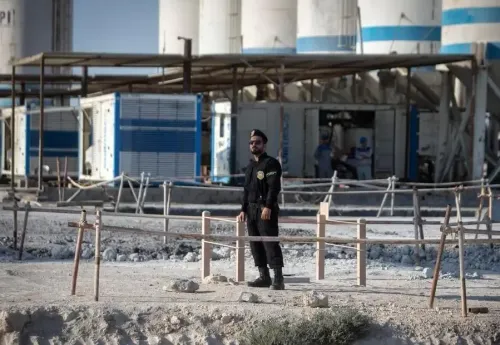
Separately, Iran's semi-official Tasnim news agency reported on Friday that Iranian forces targeted a 'violating' vessel in the Strait of Hormuz. According to an informed military source cited by Tasnim, the Thai-flagged vessel attempted to cross the strait without obtaining the required permissions from the Navy of Iran's Islamic Revolution Guard Corps (IRGC) and ignored warnings before being targeted.
Background: Escalating US-Iran Military Exchanges
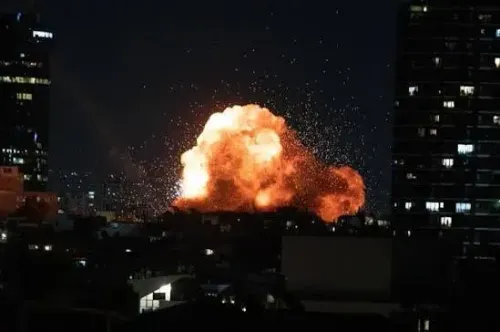
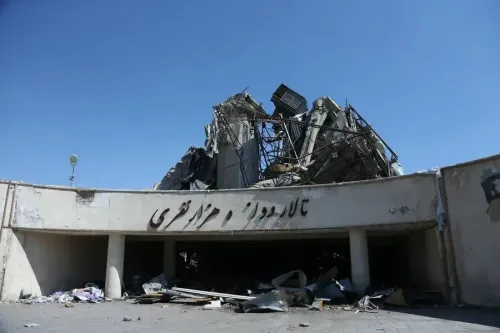
Over the preceding several days, the US military launched multiple waves of strikes against Iran's southern provinces, stating the attacks were aimed at 'degrading Iran's ability to threaten commercial shipping' in response to Iranian forces targeting vessels in the Strait of Hormuz. Iran, in turn, responded with waves of missile and drone attacks on US military bases and facilities across the region.
This is one of the most direct and sustained military exchanges between the two countries in decades, raising fears of a broader regional conflagration. Notably, the Strait of Hormuz — through which roughly 20% of the world's oil supply transits — has become a focal flashpoint in the standoff.
What Happens Next
With Rezaei explicitly warning of expanded missile and drone waves and the possible deployment of ground forces, the coming days will be critical. Regional powers have been put on notice, and global energy markets are watching the Strait of Hormuz situation closely. Any further escalation risks drawing in additional actors and disrupting global oil supply chains.
Point of View
Specific enough to constitute a credible threat. The shift in language from 'retaliation' to 'offensive and destructive' is not rhetorical noise; it marks a declared change in Iran's rules of engagement. What mainstream coverage underplays is the Strait of Hormuz dimension: the targeting of a Thai-flagged vessel is a direct signal to non-US actors that Tehran is prepared to enforce its maritime leverage. The call to Gulf neighbours — Kuwait, Jordan, UAE, Qatar — to 'prevent escalation' is simultaneously a warning: host US forces at your own risk. If Iran follows through on expanded missile and drone waves, the pressure on Gulf states to distance themselves from Washington will intensify sharply.
NationPress
16 Oct 2026
Frequently Asked Questions
What did Iran's military adviser warn about the US conflict?
Mohsen Rezaei, military adviser to Iran's Supreme Leader, warned on 18 July that if the United States continues its military campaign for another two to three days, Iran will enter an 'offensive and destructive' phase. He said Iran's armed forces would no longer limit themselves to retaliatory strikes and that US bases and forces would not be safe within any political borders.
What is the current state of US-Iran military exchanges?
The US military has launched multiple waves of strikes against Iran's southern provinces, citing the need to degrade Iran's ability to threaten commercial shipping in the Strait of Hormuz. Iran has responded with waves of missile and drone attacks targeting US military bases and facilities across the region, marking one of the most sustained military exchanges between the two countries in decades.
What happened in the Strait of Hormuz on Friday?
Iranian forces targeted a Thai-flagged vessel in the Strait of Hormuz after it reportedly attempted to cross without obtaining required permissions from the IRGC Navy and ignored warnings, according to Iran's semi-official Tasnim news agency citing a military source.
Which countries did Iran call on to prevent escalation?
Rezaei called on the peoples of Kuwait, Jordan, the United Arab Emirates, and Qatar to help prevent further escalation, signalling Tehran's concern about the conflict drawing in the broader Gulf region.
What military capabilities did Iran threaten to deploy?
Rezaei warned that Iran would deploy additional military capabilities including ground forces, and threatened expanded waves of missile and drone attacks. He cautioned the United States against any ground operation against Iran.