US crypto bill CLARITY Act: Senate push to regulate digital assets
Synopsis
The US House is turning up the pressure on the Senate to pass the CLARITY Act — a bill that would end years of crypto's regulatory no-man's-land by splitting oversight between the SEC and CFTC. Industry witnesses at Federal Hall made it plain: the ambiguity has already pushed business to Germany, Hong Kong, and Gibraltar. The Senate's next move will decide whether America leads or follows in digital finance.
Key Takeaways
US lawmakers urged the Senate on 18 July to advance the CLARITY Act , a sweeping digital assets regulatory bill.
The House passed the legislation 294-134 approximately one year ago; the Senate is now developing its own approach.
The bill would divide crypto oversight between the SEC and the CFTC , establishing when a digital asset qualifies as a security versus a commodity.
Bullish executive Randi Abernethy testified that her firm initially registered in Germany , Hong Kong , and Gibraltar due to the absence of a US federal framework.
Nova Labs said the SEC sued it in January 2025 over digital asset claims later dismissed with prejudice, costing the company years of resources.
House Financial Services Committee chair French Hill called regulatory clarity 'President Trump's goal' and pledged to help the Senate finalise the legislation.
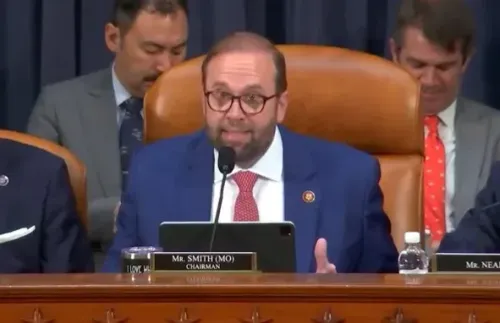
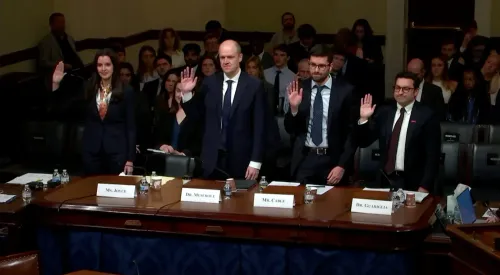
US lawmakers on 18 July urged the Senate to advance a landmark digital assets bill, arguing that a clear federal regulatory framework is essential to protect investors, repatriate cryptocurrency businesses from overseas, and cement American leadership in financial technology. The hearing was held at New York's historic Federal Hall, organised by the House Financial Services Subcommittee on Digital Assets, Financial Technology and Artificial Intelligence.
What the CLARITY Act Proposes
The CLARITY Act seeks to draw a definitive line between assets falling under Securities and Exchange Commission (SEC) jurisdiction and those classified as digital commodities regulated by the Commodity Futures Trading Commission (CFTC). The legislation also includes protections for software developers and providers who do not exercise control over customer assets.
The House passed the bill a year ago by a decisive 294-134 vote. The Senate is now deliberating its own approach to digital asset regulation, and House members are pressing their Senate counterparts to act.
What Lawmakers Said
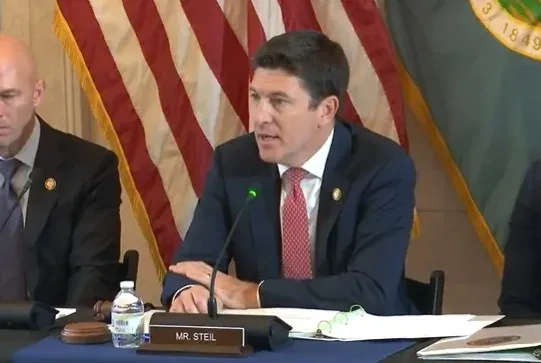
Bryan Steil, chairman of the subcommittee, framed the hearing as a pivot away from reactive enforcement. 'Our goal is clear: replace regulation by enforcement with clear rules of the road for digital assets,' he said.
French Hill, chairman of the full House Financial Services Committee, argued that predictable rules were indispensable for positioning the United States as the centre of the global digital ecosystem. 'This is President Trump's goal,' Hill said. 'We stand ready to help our Senate colleagues complete the work and get it to the president's desk.'
Industry Voices: Years of Uncertainty Cost the US
Industry witnesses testified that prolonged regulatory ambiguity had driven investment and innovation offshore. Randi Abernethy, head of clearing and group risk at digital asset firm Bullish, said her company initially operated under regulators in Germany, Hong Kong, and Gibraltar because the United States lacked a federal framework.
'We are not asking to operate in the shadows. We are asking for a rule book, and we intend to build under it,' Abernethy said. She added that federal regulation would require registered exchanges to meet standards covering segregated customer assets, capital, market surveillance, and examinations. 'Regulatory clarity is not a favour to industry,' she said. 'It is how Congress brings this activity onshore under American regulators with American investor protections.'
Sarah Aberg, chief legal officer at Nova Labs — which supports the Helium decentralised wireless network operating more than 140,000 hotspots and serving millions of users — said regulatory ambiguity had imposed substantial costs on her company. She noted that the SEC sued Nova Labs in January 2025 over digital asset claims that were subsequently dismissed with prejudice. 'We were glad to be vindicated, but we spent years and significant resources defending claims that were ultimately abandoned,' she said.
Ryan Louvar, chief legal officer at WisdomTree, argued that tokenisation could modernise the ownership, transfer, and settlement of financial products without altering the underlying character of regulated securities. 'The question is no longer whether finance will become more digital. It will,' Louvar said. 'The question is whether the United States will continue to lead in developing the next generation of financial infrastructure.'
What Happens Next
With the House having already cleared the bill, legislative momentum now rests with the Senate, which is crafting its own version of digital asset rules. The outcome will determine whether the US establishes a unified federal framework or continues operating in a fragmented, enforcement-driven regulatory environment — a scenario that industry participants say has already cost the country significant fintech investment.
Point of View
It has actively redirected incorporation and investment to Europe and Asia. What the bill does not yet resolve is how the SEC-CFTC boundary will be drawn in practice — a definitional fight that has derailed previous crypto legislation. The Senate's version may look very different, and reconciliation could drag well into 2026.
NationPress
18 Jul 2026
Frequently Asked Questions
What is the CLARITY Act?
The CLARITY Act is a US federal legislation that seeks to establish clear regulatory jurisdiction over digital assets, dividing oversight between the Securities and Exchange Commission (SEC) and the Commodity Futures Trading Commission (CFTC). It also includes protections for software developers who do not control customer assets. The House passed it by a 294-134 vote approximately one year before the July 2025 Senate push.
Why are US lawmakers pushing to pass the crypto bill now?
Lawmakers argue that years of regulatory uncertainty have pushed cryptocurrency businesses and investment to jurisdictions such as Germany, Hong Kong, and Gibraltar. They say a clear federal framework is needed to protect investors and reassert American leadership in financial technology and digital infrastructure.
What is the difference between SEC and CFTC oversight under the bill?
The CLARITY Act would define when a digital asset falls under SEC jurisdiction — typically when it functions as a security — and when it should be treated as a digital commodity regulated by the CFTC. The precise boundary is one of the most contested aspects of the legislation.
What did industry witnesses say at the Federal Hall hearing?
Witnesses from Bullish, Nova Labs, and WisdomTree testified that regulatory ambiguity had imposed significant costs, including offshore incorporation and costly SEC litigation later dismissed. They argued that a federal rule book would bring crypto activity onshore under American investor protections rather than eliminating it.
What happens next with the CLARITY Act?
The Senate is now considering its own approach to digital asset regulation. House members, including committee chair French Hill, have urged Senate colleagues to finalise the work and send legislation to President Trump's desk. The timeline remains uncertain as the two chambers may need to reconcile differing versions.