US SECURE Data Act: Congress splits over AI, privacy rules

Synopsis
The US Congress is deadlocked over the SECURE Data Act — a Republican push for a single national privacy standard that supporters call overdue and critics call a corporate handout. With AI now capable of inferring intimate details from raw data, the stakes of getting this wrong have never been higher, and the bill's fate could reshape data rights for hundreds of millions of Americans.
Key Takeaways
The SECURE Data Act would create the first nationwide US consumer privacy framework , replacing a patchwork of laws across 22 states .
House Energy and Commerce Committee Chairman Brett Guthrie framed the bill as an innovation imperative, citing competition with China .
Senior Democrat Frank Pallone called the bill a 'loophole upon loophole' that locks in a 'failed notice and consent status quo.' EPIC's Caitriona Fitzgerald warned AI is 'turbocharging' companies' ability to make inferences about consumers, raising the urgency of stronger rules.
Critics argue the bill would set a national standard 'weaker than the weakest state law,' overriding protections in California , Washington , and others.
The debate has global resonance, with countries including India also grappling with balancing privacy, innovation, and AI growth.
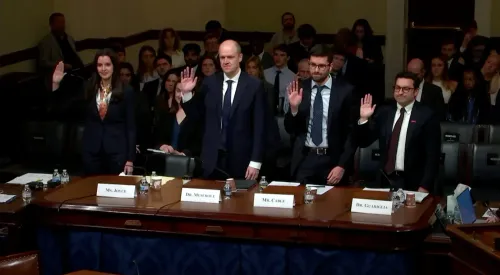
A Republican-backed proposal to establish the first nationwide consumer privacy framework in the United States has ignited a sharp congressional clash over data protection, artificial intelligence, and the future of digital regulation. The SECURE Data Act, debated at a House Energy and Commerce Subcommittee on Commerce, Manufacturing and Trade hearing on 4 June, has exposed deep fault lines between those seeking uniform national standards and those warning the bill would hollow out stronger state-level protections.
What the SECURE Data Act Proposes
Supporters of the bill argue that a single national privacy standard is essential to replace a growing patchwork of differing state laws. As of the hearing, 22 US states have already enacted their own privacy legislation, creating compliance headaches for companies operating across state lines.
Kate Goodloe, Managing Director of the Business Software Alliance, told lawmakers: 'Consumers' data should also be used responsibly and kept securely no matter where they live.' Ashli Watts, President and CEO of the Kentucky Chamber of Commerce, said small businesses were struggling to navigate conflicting state requirements, adding: 'The SECURE Data Act provides just that. The model is proven, and the consensus exists across party lines. What remains is for Congress to act.'
Republicans Frame It as an Innovation Imperative
House Energy and Commerce Committee Chairman Brett Guthrie set the tone for the Republican argument, framing the debate in geopolitical terms. 'We're not competing with Europe to regulate. We're competing with China to innovate,' Guthrie said. 'We have to innovate and also protect individuals' data.' The position reflects a broader Republican view that regulatory fragmentation puts American technology companies at a competitive disadvantage.
Democrats and Advocates Warn of Weakened Protections
Frank Pallone, the senior Democrat on the committee, pushed back sharply, saying the bill 'locks in the failed notice and consent status quo' and contains 'loophole upon loophole to water down its provisions.' Critics argue the legislation would override stronger consumer protections already in place in states such as California and Washington.
Caitriona Fitzgerald, Deputy Director of the Electronic Privacy Information Center (EPIC), warned that the bill would create a national standard 'weaker than the weakest state law,' potentially dismantling existing state-level rules on online privacy, children's safety, data brokers, and consumer rights.
AI at the Centre of the Privacy Debate
Much of the hearing's most charged testimony centred on artificial intelligence. Fitzgerald warned that 'AI is turbocharging the ability for companies to make inferences about consumers,' arguing that stronger privacy rules are urgently needed to prevent data misuse, discrimination, and surveillance-based pricing. The concern reflects a widening global consensus — including in India, which is navigating its own digital data protection framework — that AI amplifies the stakes of any privacy legislation.
What Comes Next
The hearing signals that the SECURE Data Act faces significant headwinds in its current form. Democrats and privacy advocates are likely to push for amendments strengthening the bill's enforcement provisions and preserving state-law floors. The outcome will have implications well beyond US borders, potentially influencing how other democracies calibrate the balance between innovation and data rights.
Point of View
But the solution of a weak federal floor that pre-empts stronger state laws is a gift to large platforms that have long lobbied against California-style rules. The AI dimension makes the stakes existential: a bill written for the data economy of 2015 is being asked to govern inference engines that can profile individuals from seemingly innocuous data points. Congress has failed to pass federal privacy legislation for over two decades; the risk is that urgency now produces a law that locks in inadequate protections for a generation.
NationPress
21 Oct 2026
Frequently Asked Questions
What is the SECURE Data Act?
The SECURE Data Act is a Republican-backed bill that would establish the first unified national consumer privacy framework in the United States. It is designed to replace the current patchwork of privacy laws across 22 states with a single federal standard.
Why are Democrats and privacy advocates opposing the bill?
Opponents argue the bill would set a national privacy standard weaker than existing state laws in California and Washington, effectively stripping millions of Americans of stronger protections. Senior Democrat Frank Pallone called it a 'loophole upon loophole' that entrenches a failed consent model.
How does artificial intelligence factor into the debate?
Privacy advocates warn that AI dramatically amplifies the risks of weak data rules, enabling companies to make detailed inferences about consumers from raw data. EPIC's Caitriona Fitzgerald said AI is 'turbocharging' corporate surveillance capabilities, making robust privacy legislation more urgent, not less.
Why do Republicans support a federal privacy standard?
Republicans argue that 22 states having different privacy laws creates costly compliance burdens for businesses, especially small ones. Chairman Brett Guthrie framed it as a competitiveness issue, saying the US must 'compete with China to innovate' rather than match Europe on regulation.
Does this debate affect countries like India?
The US privacy debate has indirect but significant global implications. India is itself navigating a digital data protection framework, and how the world's largest economy resolves the tension between innovation and privacy rights is likely to influence regulatory thinking in other democracies.