Trump expands AI Ratepayer Protection Pledge to shield consumers from data centre costs
Synopsis
Trump's Ratepayer Protection Pledge expansion is a direct intervention in a debate that has quietly intensified across US state capitals: who pays when an AI data centre moves in and strains the local grid? By pulling in governors, utilities, co-ops, and tech companies — covering 80 per cent of US power delivery — the administration is attempting to set a national norm before the AI energy bill lands on household doorsteps.
Key Takeaways
President Donald Trump expanded the Ratepayer Protection Pledge on 23 July to cover governors, utilities, rural co-operatives, and data centre developers.
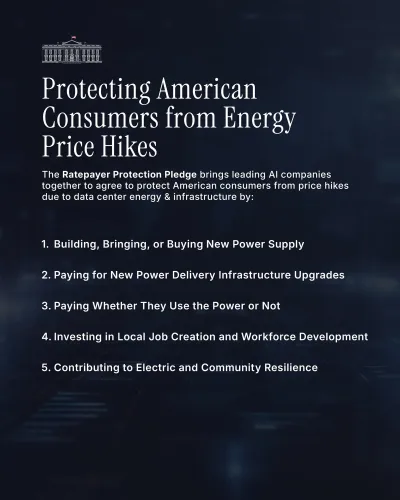
The pledge requires AI data centre companies and power providers to bear infrastructure costs instead of passing them to consumers.
The initiative now covers 80 per cent of all power delivered to American homes and businesses.
Nearly 200 additional stakeholders have signed on since the pledge was first announced.
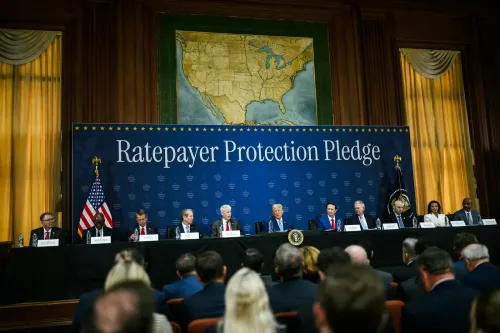
The expanded programme was formally unveiled at the Environmental Protection Agency headquarters alongside Energy Secretary Chris Wright and EPA Administrator Lee Zeldin .
The White House framed the pledge as part of broader US strategic competition with China in artificial intelligence.
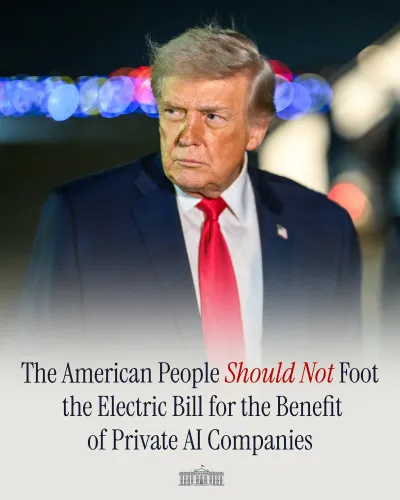
President Donald Trump on Thursday, 23 July expanded the administration's Ratepayer Protection Pledge to governors, state legislatures, utilities, power providers, and data centre developers, directing that the surging electricity demand driven by artificial intelligence infrastructure must not translate into higher bills for American households and small businesses.
What the Expanded Pledge Covers
White House Press Secretary Karoline Leavitt announced the expansion during the daily briefing, stating that companies building and operating AI data centres would be required to bear the full cost of the power infrastructure they need rather than passing those expenses on to residential consumers. The pledge now extends to governors who appoint state utility regulators, utilities, rural electric co-operatives, and technology companies involved in data centre construction and operation.
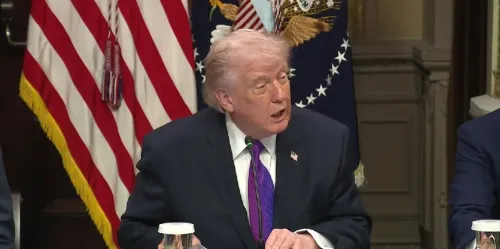
'The president will expand the Ratepayer Protection Pledge to governors, state legislatures, developers, and power providers to ensure that everyone involved in building and powering data centres pays their own way, instead of passing those costs on to hard-working families,' Leavitt said.
Scale of Industry Support
According to Leavitt, the initiative has drawn significant backing since its initial announcement. 'Nearly 200 additional stakeholders have signed on since it was first announced, including utilities, data centre developers, public power authorities, co-ops and state governors,' she said. She added that the pledge now covers 80 per cent of all power delivered to American homes and businesses — a figure that underscores the breadth of the coalition the administration has assembled.
Formal Unveiling and Key Officials
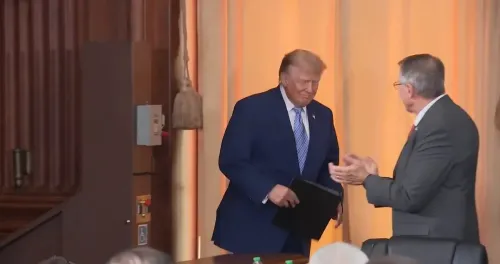
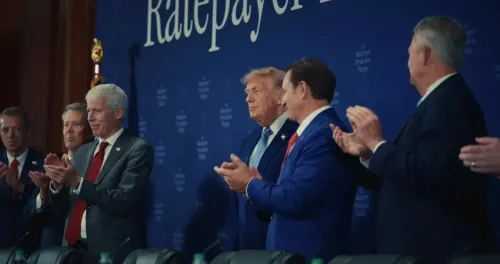
Trump was set to formally unveil the expanded programme later on Thursday at the Environmental Protection Agency headquarters, alongside Energy Secretary Chris Wright, EPA Administrator Lee Zeldin, and several governors. The White House framed the event as a demonstration of cross-sector alignment between the federal government, state executives, and the energy industry.
AI Race and Strategic Competition with China
The administration also positioned the pledge within the context of strategic competition with China in artificial intelligence. 'President Trump's bold leadership is turning data centres from a source of concern into engines of growth and opportunity for communities across this country, all while cementing America's dominance over China in the global AI race,' Leavitt said. The administration has repeatedly argued that sustaining US leadership in AI will require substantial investment in computing infrastructure, electricity generation, and advanced semiconductor technology.
The Broader Energy Challenge
The rapid build-out of large-scale AI computing facilities has significantly increased electricity demand, placing pressure on grids and raising questions about who should finance the additional generation and transmission capacity required. Governments, utilities, and regulators across the country have been grappling with how to fund that expansion without burdening residential ratepayers. This initiative represents the Trump administration's answer to that challenge — placing financial responsibility squarely on the private sector entities that benefit from AI infrastructure. How effectively that principle is enforced at the state level, where utility regulation ultimately resides, will determine whether the pledge delivers on its consumer-protection promise.
Point of View
But its teeth depend entirely on state-level utility regulators — most of whom were not appointed by Trump and operate under independent commissions. Covering 80 per cent of US power delivery sounds comprehensive, but a voluntary pledge without enforceable rate-case mechanisms is largely symbolic. The harder question mainstream coverage glosses over is whether technology companies, facing thin margins on infrastructure, will absorb these costs or quietly negotiate carve-outs at the state level. The China framing is also worth scrutinising: it conflates AI investment with consumer protection in a way that could justify accelerated permitting and grid expansion that ultimately does raise rates, pledge or no pledge.
NationPress
22 Oct 2026
Frequently Asked Questions
What is the Ratepayer Protection Pledge announced by President Trump?
The Ratepayer Protection Pledge is a White House initiative requiring AI data centre developers, utilities, and power providers to cover the electricity infrastructure costs their projects generate, rather than passing those costs on to residential consumers. President Trump expanded it on 23 July to include governors, state legislatures, rural electric co-operatives, and technology companies.
How much of US power delivery does the pledge now cover?
According to Press Secretary Karoline Leavitt, the expanded pledge covers 80 per cent of all power delivered to American homes and businesses. Nearly 200 additional stakeholders have signed on since the pledge was first announced.
Why is AI driving up electricity costs for consumers?
Large-scale AI data centres require enormous amounts of electricity to train and operate powerful AI models, significantly increasing demand on local and regional power grids. Utilities and regulators have been debating how to finance the additional generation and transmission infrastructure needed to support that growth without raising bills for residential customers.
Who was present at the formal unveiling of the expanded pledge?
President Trump formally unveiled the expanded programme at the Environmental Protection Agency headquarters on 23 July, alongside Energy Secretary Chris Wright, EPA Administrator Lee Zeldin, and several state governors.
How does the pledge connect to US competition with China in AI?
The White House linked the initiative to strategic competition with China, arguing that ensuring AI infrastructure costs do not burden consumers will accelerate domestic AI investment and help cement US dominance in the global AI race. The administration has consistently framed AI leadership as requiring major investment in computing, energy, and semiconductor technology.