Trump vows US leads China in AI race, pushes Big Tech to fund own power
Synopsis
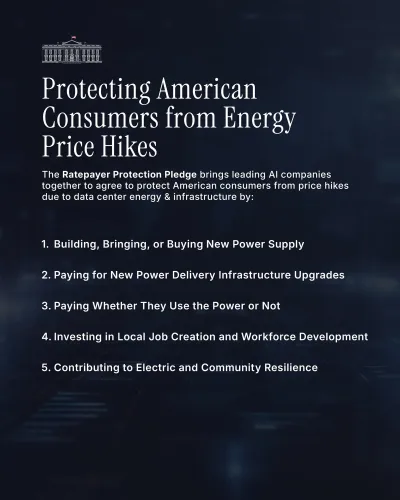
Trump's Ratepayer Protection Pledge flips the script on AI's energy problem: instead of burdening the national grid, Big Tech must build and pay for its own power — and feed the surplus back to consumers. With 220-plus signatories and Xi Jinping's Washington visit on the horizon, the US-China AI rivalry just got a concrete infrastructure dimension.
Key Takeaways
President Trump declared the US leads China in the AI race and vowed to maintain that advantage through a new energy strategy, announced on 24 July .
The Ratepayer Protection Pledge has been signed by more than 220 utilities, tech companies, and state governments, covering electricity rates for 80% of US power distribution.
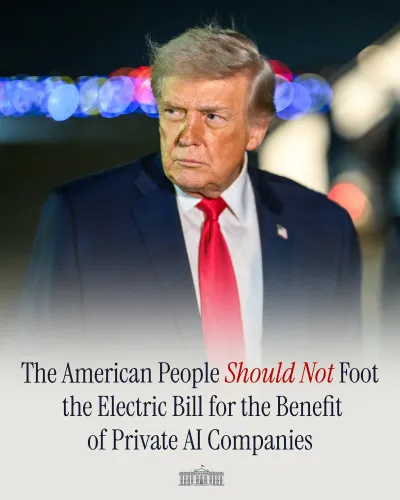
Tech companies are being required to build and fund their own power plants alongside AI data centres , rather than drawing from the existing grid.
Trump said AI expansion will require more than double the country's current electricity generation capacity.
Chinese President Xi Jinping is expected to visit Washington on 24 September , with AI competition likely on the agenda.
Trump warned that foreign nations are lobbying US communities to reject data-centre projects in order to slow American AI progress.
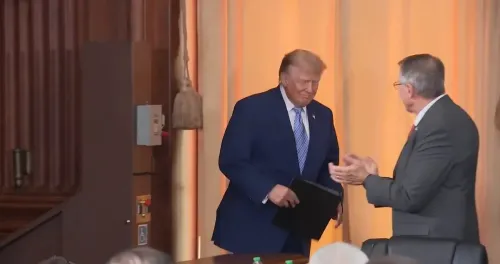
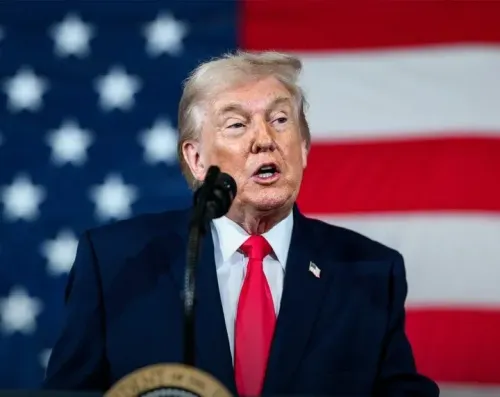
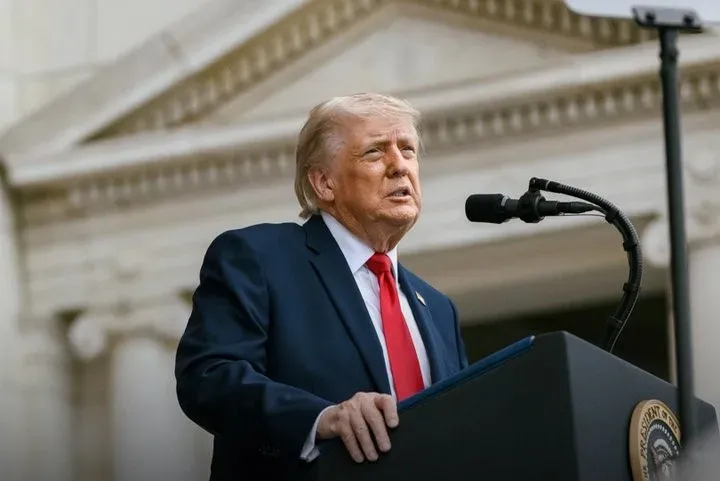
US President Donald Trump on 24 July declared that the United States holds a commanding lead over China in the global artificial intelligence race, and unveiled a strategy requiring technology companies to build and finance their own power infrastructure — insulating American consumers from the surging electricity costs that AI expansion demands.
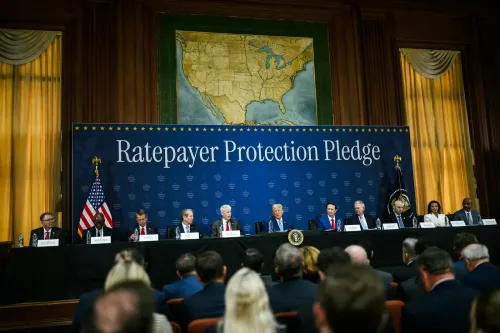
The Ratepayer Protection Pledge
Speaking at an event centred on the administration's Ratepayer Protection Pledge, Trump said the explosive growth of AI would require more than double the country's current electricity generation capacity. More than 220 utilities, technology companies, state governments, and other partners have signed the pledge, he said, adding that electricity rates for 80 per cent of power distributed across America are now being kept in check under the plan.
'We're insisting that AI data centres and big tech companies pay their own way,' Trump said. 'They're happy to do it, because this way, they're going to be able to function and function brilliantly.'
Big Tech Builds Its Own Grid
Trump said his administration had encouraged technology firms to construct dedicated power plants alongside AI data centres rather than drawing from the existing national grid. He argued that surplus electricity generated by these facilities would eventually be fed back into the grid, potentially lowering consumer rates overall. 'They're going to have a lot of electricity left over and they'll put that into the grid, so we'll actually end up with more electricity, the rates are going to go down,' he said.
Trump framed the need bluntly: 'You need double the electricity that we have right now, maybe even more than that, to really fulfil what you want to do.' He contrasted the US regulatory environment — which requires environmental impact assessments — with China's faster-moving approach to energy infrastructure, noting the strategic disadvantage that slower permitting can create.
Strategic Competition With China
Trump repeatedly cast the AI infrastructure push as part of a broader geopolitical contest. 'Whoever wins that race is probably going to win, period,' he said, describing artificial intelligence as 'probably the biggest thing anybody's ever seen — bigger than the internet.' He warned that foreign nations were actively lobbying American communities to reject large data-centre projects in order to slow US progress.
Trump also disclosed that Chinese President Xi Jinping is expected to visit Washington on 24 September, with AI and energy among the likely agenda items. 'We talked about it when I was over in Beijing, and we'll be talking about it again,' he said.
Local Benefits and National Security
The President argued that communities hosting AI infrastructure projects would gain through direct investment, job creation, and lower electricity costs, citing examples from several states where utilities had frozen or reduced consumer rates under data-centre development agreements. He linked the energy and AI expansion directly to national security, saying a second-place finish in the AI race would carry lasting strategic consequences. 'If you come in second, you're going to be second overall because there's never been anything big like this,' he said.
The push comes as technology companies globally are committing billions of dollars to new data centres, forcing governments and utilities to weigh energy security, affordability, and climate obligations simultaneously. Whether the Ratepayer Protection Pledge delivers on its consumer-cost promises will likely depend on how quickly new generating capacity can come online — and whether regulatory frameworks can keep pace with the industry's appetite.
Point of View
Rather than solves, grid modernisation; surplus electricity feeding back into an ageing transmission network is only as useful as that network's capacity to absorb it. The 220-signatory headline is also softer than it sounds — utilities signing a pledge is not the same as shovels in the ground. And with Xi Jinping's Washington visit set for September, the administration's framing of AI as a winner-takes-all race may harden into a negotiating posture that leaves little room for the kind of technical cooperation that has historically accelerated breakthroughs.
NationPress
22 Oct 2026
Frequently Asked Questions
What is the US Ratepayer Protection Pledge on AI?
The Ratepayer Protection Pledge is a Trump administration initiative requiring AI data centres and large technology companies to build and finance their own power-generating infrastructure rather than drawing from the national electricity grid. More than 220 utilities, tech firms, and state governments have signed the pledge, which Trump says now covers electricity rates for 80% of US power distribution.
Why does AI require so much electricity?
Training and running large AI models demands enormous and continuous computing power, which translates directly into massive electricity consumption. Trump said fulfilling AI's potential would require more than double the United States' current electricity generation capacity — a figure consistent with projections from major energy analysts tracking data-centre growth.
How does Trump's AI energy plan protect consumers?
By requiring tech companies to fund and build their own power plants, the administration aims to prevent AI-driven electricity demand from pushing up rates for ordinary households. Trump added that surplus power from these dedicated facilities would be fed back into the national grid, potentially lowering consumer costs further.
When is Xi Jinping expected to visit Washington?
Trump disclosed that Chinese President Xi Jinping is expected to visit Washington on 24 September. Trump said the two leaders had discussed the visit during his own trip to Beijing and would speak about it again ahead of the meeting.
How does the US compare to China in artificial intelligence?
Trump claimed the US is leading China 'by a lot' in the AI race, though he did not cite independent metrics. He warned that this lead depends on expanding domestic energy infrastructure rapidly, and cautioned that foreign nations — implicitly including China — are attempting to persuade US communities to block data-centre projects in order to slow American progress.