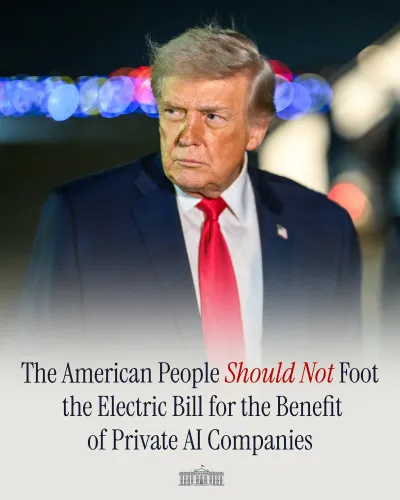
Trump: AI firms must fund their own power infrastructure, not taxpayers
Synopsis
Trump's Ratepayer Protection Pledge flips the script on AI's energy bill — instead of letting grid costs trickle down to households, it demands that big tech build and pay for its own power. With over 220 signatories and state-level deals already freezing consumer rates, the policy is either a genuine consumer shield or a voluntary compact with no enforcement teeth. The answer will define who really pays for the AI boom.
Key Takeaways
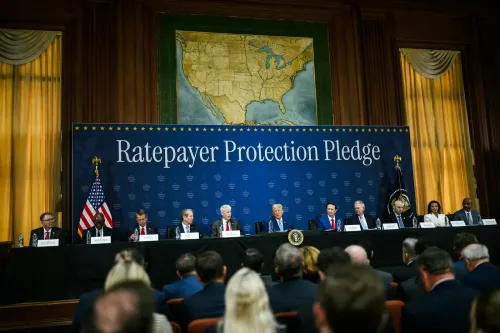
President Trump on 24 July unveiled the Ratepayer Protection Pledge , requiring AI and tech companies to fund their own energy infrastructure.
More than 220 utilities, tech companies, and state governments have signed the pledge, covering 80% of US power distribution.
Southern Company's Georgia Power has frozen household base rates until 2029 under the arrangement.
A $27 billion Meta project in Richland Parish, Louisiana is set to save residents $2.6 billion on electricity bills and give public school teachers bonuses of up to $50,000 .
Trump said AI will require 'double the electricity' currently generated in the US, framing the policy as essential to maintaining American technological leadership.
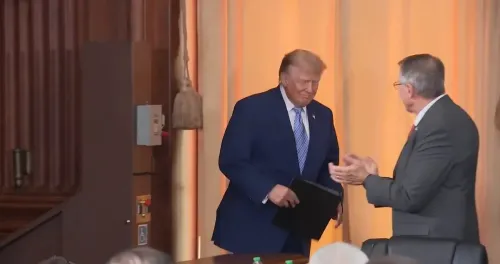
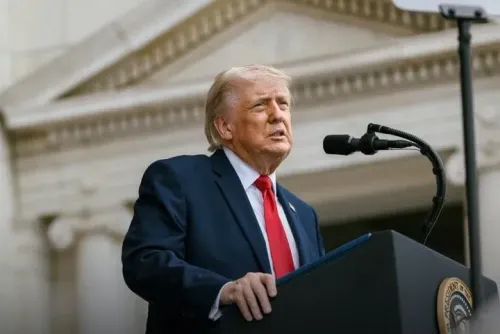
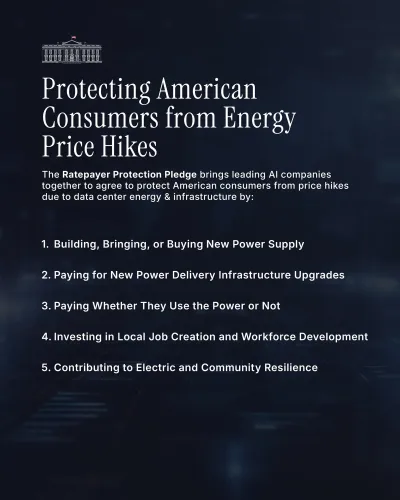
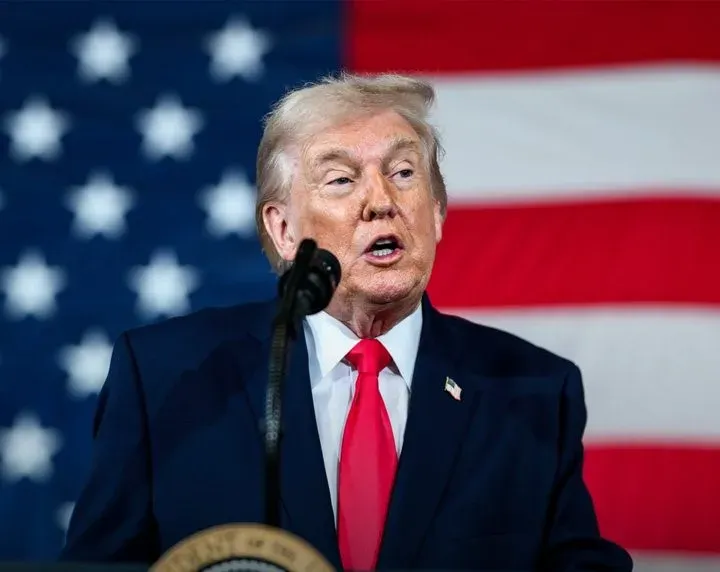
President Donald Trump on 24 July declared that technology companies building artificial intelligence systems must finance the energy infrastructure their data centres require, insisting that American households should not absorb the cost of the industry's surging electricity demand. The announcement came at an event centred on his administration's Ratepayer Protection Pledge, framed as a consumer-first energy compact between the federal government and the tech sector.
What the Ratepayer Protection Plan Requires
Under the plan, major technology companies are required to fund or construct the power generation capacity needed to meet their own grid demand, rather than passing those costs through to residential consumers. Trump said the administration is permitting companies to build dedicated power plants alongside new AI facilities, with surplus electricity fed back into the national grid.
'We're insisting that AI data centres and big tech companies pay their own way,' Trump said. 'And they're happy to do it, because this way, they're going to be able to function and function brilliantly.'
He added that the arrangement would ultimately expand overall electricity supply: 'They're going to have a lot of electricity left over and they'll put that into the grid, so we'll actually end up with more electricity, the rates are going to go down.'
Scale of the Electricity Challenge
Trump argued that AI's power appetite is without historical precedent. 'You need double the electricity that we have right now, maybe even more than that, to really fulfil what you want to do,' he said. The administration contends that without proactive infrastructure investment by the industry itself, grid stress would translate directly into higher consumer bills across the country.
According to Trump, more than 220 utilities, technology companies, state governments and other partners have formally signed the pledge. He claimed that electricity rates covering 80 per cent of power distributed in the United States are now being held in check under the plan.
State-Level Deals Cited as Evidence
Trump pointed to several state-level agreements as proof of the model's viability. He noted that Southern Company's Georgia Power has frozen base household electricity rates until 2029, partly enabled by Google's investment in the state, which he said is 'allowing them to eliminate property taxes entirely.'
In Iowa, he said data-centre agreements are enabling utilities to freeze consumer electricity rates for at least five years. In Louisiana, Trump cited a Meta-backed project in Richland Parish that he said would save local residents $2.6 billion on electricity bills and deliver bonuses of as much as $50,000 to public school teachers this year — benefits tied to a $27 billion Meta project.
The Competitive Framing
Trump cast the policy in explicitly competitive terms, warning communities that rejecting AI infrastructure would cede investment to rival regions. 'If you don't take all that money, somebody else is going to take it,' he said. He also linked energy expansion to America's broader technological ambitions: 'We want to lead the world. And it is said, if you come in second, you're going to be second overall because there's never been anything big like this.'
The administration's position represents a significant shift in how Washington is approaching the intersection of industrial policy and energy regulation — placing the cost burden squarely on the private sector rather than on ratepayers or federal budgets. Whether the voluntary pledge model holds as AI energy demand continues to accelerate will be the defining test of the policy's durability.
Point of View
But a voluntary pledge is not a tariff or a regulation; it is a handshake. The deals Trump cited, from Georgia Power's rate freeze to Meta's Louisiana project, are real but selective: they represent negotiations where both sides had commercial incentives to agree, not a replicable national template. The harder question is what happens when AI demand outpaces what any single company's dedicated plant can supply, and utilities face pressure to expand shared infrastructure anyway. At that point, the cost will find its way back to consumers unless the pledge evolves into binding statutory obligation.
NationPress
22 Oct 2026
Frequently Asked Questions
What is Trump's Ratepayer Protection Pledge?
It is a policy initiative announced by President Trump requiring major technology companies to fund or build the energy infrastructure needed to power their AI data centres, rather than passing those costs on to residential electricity consumers. More than 220 utilities, tech firms, and state governments have reportedly signed on.
Why is AI driving up electricity demand in the United States?
AI data centres require enormous and continuous amounts of electricity to train and run large-scale models. Trump said the US may need to 'double' its current electricity generation capacity to fully support AI expansion, making energy infrastructure one of the sector's most pressing bottlenecks.
Which companies and states are part of the pledge?
Trump cited Google and Southern Company's Georgia Power, which has frozen household base rates until 2029, as well as data-centre agreements in Iowa that freeze consumer rates for at least five years. A $27 billion Meta project in Richland Parish, Louisiana was also highlighted, with projected savings of $2.6 billion for local residents.
How does the plan claim to lower electricity rates for consumers?
By requiring tech companies to build dedicated power plants for their own facilities, the plan aims to reduce pressure on the shared grid. Trump argued that surplus electricity from these plants would flow back into the grid, increasing overall supply and pushing consumer rates down.
Is the Ratepayer Protection Pledge legally binding?
Based on available information, the pledge is a formal commitment rather than a statutory regulation — companies and utilities have signed on voluntarily. The administration has not publicly detailed enforcement mechanisms if signatories fail to meet their infrastructure obligations.