25 years after 9/11, US security framework is 'fraying', lawmakers warn
Synopsis
A quarter-century after 9/11 reshaped American security, a bipartisan House Intelligence Committee hearing has surfaced a sobering consensus: the framework that prevented another catastrophic attack is now 'fraying'. From ISIS-K drones targeting US cities to nuclear-capable adversaries multiplying, experts say America faces its highest-ever threat state — and the political will to act is uncertain.
Key Takeaways
House Permanent Select Committee on Intelligence held a bipartisan hearing on Wednesday reviewing 9/11 Commission reforms ahead of the attacks' 25th anniversary in September 2026 .
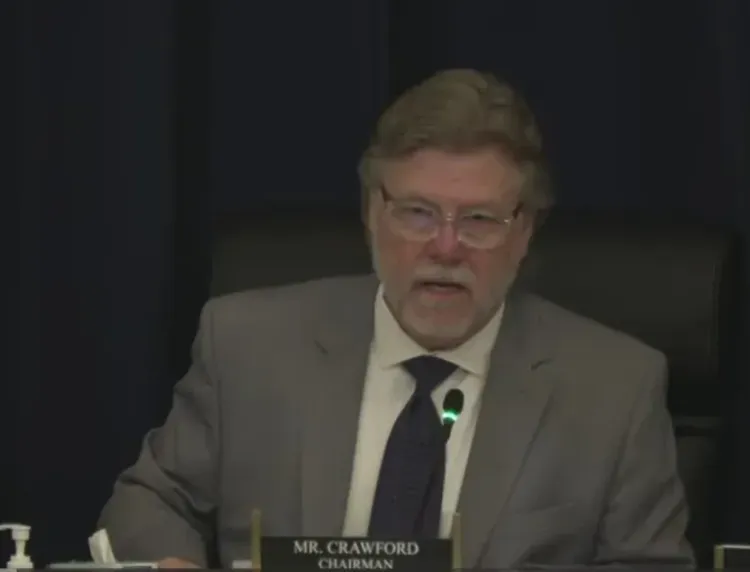
Committee Chairman Rick Crawford warned the US is again in a 'blinking red situation' , echoing pre-9/11 intelligence alerts.
Counterterrorism expert Bruce Hoffman said the post-9/11 security framework is 'fraying, being dismantled, or falling into disrepair' .
National security expert Jamil Jaffer called the current environment 'the highest state of threat' in US history, citing multiple near-nuclear adversaries.
Jaffer urged permanent reauthorisation of Section 702 surveillance powers to prevent a return to pre-9/11 intelligence-sharing failures.
ISIS-K 's expansion into Turkey , Iran , Russia , and the US , and the risk of commercial drone attacks on urban centres, were flagged as emerging threats.
Twenty-five years after the September 11 attacks fundamentally restructured America's national security architecture, bipartisan lawmakers and counterterrorism experts have sounded the alarm that the United States now confronts a more complex and perilous threat environment — one shaped by artificial intelligence, cyber warfare, commercial drones, foreign espionage, and decentralised terror networks.
A 'Blinking Red' Moment, Again
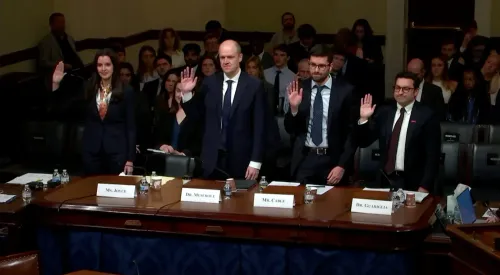
During a hearing of the House Permanent Select Committee on Intelligence on Wednesday, witnesses and lawmakers revisited the sweeping reforms that followed the 9/11 Commission report, while warning that the country risks repeating the complacency that preceded the 2001 attacks. Committee Chairman Rick Crawford described the current moment as a 'blinking red situation' — deliberately invoking the phrase used to characterise the intelligence environment in the months before 11 September 2001.
'We must be prepared and forward-looking about the threats we face,' Crawford said, citing advances in AI, quantum computing, cyber warfare, and drone technology, alongside intensifying great-power competition from China, Russia, Iran, and North Korea.
Intelligence Failures Then, Structural Risks Now
Former FBI Deputy Director John Pistole told lawmakers that the 9/11 Commission had identified two foundational failures: a 'failure of imagination' and the absence of a 'unity of effort' across government agencies. 'How is it that we did not envision such an attack as the 19 hijackers on 9/11?' Pistole asked. He acknowledged that post-attack intelligence-sharing reforms had substantially improved threat detection and disruption capabilities, but cautioned that dangers remain 'high'.
Counterterrorism expert Bruce Hoffman credited those reforms with preventing another catastrophic attack, calling it a 'towering achievement'. 'The United States has not experienced another major terrorist attack like 9/11, nor anything even close,' Hoffman said. 'It is proof of how important the 9/11 Commission's recommendations have been.' Yet Hoffman was equally direct in his warning: the security framework constructed after the attacks is now 'fraying, being dismantled, or falling into disrepair'.
Evolving Threats: Drones, ISIS-K and Domestic Extremism
Hoffman argued that the threat landscape has shifted dramatically — from primarily foreign terrorist organisations to a volatile blend of international networks, lone actors, and domestic extremism. He specifically highlighted ISIS-K's expanding operational reach beyond Afghanistan into Turkey, Iran, Russia, and the United States. He also raised the spectre of commercial drone attacks on urban centres. 'What's to stop any terrorist group anywhere from importing commercial drones and carrying out an attack on a major urban centre?' he asked.
The Highest State of Threat in US History
National security law expert Jamil Jaffer delivered what was arguably the starkest assessment of the hearing, stating that America currently faces 'the highest state of threat' in its history. 'We've never been at a point where so many countries in the world that are opposed to us are on the verge of nuclear capability,' Jaffer said. He urged Congress to permanently reauthorise Section 702 surveillance powers, calling them 'the single most valuable intelligence collection authority' available to the government. Jaffer warned that repeated political battles over the programme risk rebuilding the legal 'wall' that had hampered intelligence-sharing before 9/11.
What Comes Next
The hearing is part of a broader bipartisan congressional review of the 9/11 Commission recommendations ahead of the 25th anniversary of the attacks in September 2026. The original commission's work led to landmark institutional changes, including the creation of the Office of the Director of National Intelligence (ODNI) and the National Counterterrorism Center (NCTC). Whether Congress acts on the renewed warnings — or allows political gridlock to stall reform — will likely define the next chapter of American counterterrorism policy.
Point of View
The signal is worth taking seriously. Yet the same hearing exposed a familiar contradiction: experts urge permanent reauthorisation of Section 702, while Congress has repeatedly allowed the programme to lapse into political bargaining. The post-9/11 architecture — ODNI, NCTC, reformed intelligence-sharing — was built on the lesson that structural complacency kills. A quarter-century on, the warning is that the structure itself is being quietly hollowed out, not by a foreign adversary, but by domestic political dysfunction and institutional drift.
NationPress
6 Oct 2026
Frequently Asked Questions
Why are US lawmakers warning about national security 25 years after 9/11?
Bipartisan lawmakers and counterterrorism experts testified at a House Intelligence Committee hearing that the security framework built after the 9/11 attacks is now 'fraying', while new threats from AI, drones, cyber warfare, and adversaries like China, Russia, Iran, and North Korea have grown more complex. The hearing was convened as part of a congressional review ahead of the attacks' 25th anniversary in September 2026.
What did experts mean by the US security framework 'fraying'?
Counterterrorism expert Bruce Hoffman used the term to describe the gradual weakening of the institutional and legal structures — including intelligence-sharing protocols and surveillance authorities — that were established after the 9/11 Commission's recommendations. He said these are being 'dismantled or falling into disrepair' even as threats evolve.
What is Section 702 and why does it matter?
Section 702 is a US government surveillance authority that national security expert Jamil Jaffer called 'the single most valuable intelligence collection authority' available. Jaffer warned that recurring political battles over its reauthorisation risk rebuilding the legal barriers that had prevented intelligence-sharing before the 9/11 attacks.
What new threats did the hearing identify beyond traditional terrorism?
Witnesses pointed to ISIS-K's expanding reach into Turkey, Iran, Russia, and the United States, as well as the risk of commercial drones being used to attack American cities. Broader threats from China, Russia, Iran, and North Korea — including the proliferation of near-nuclear capabilities — were also highlighted as unprecedented in scale.
What reforms came out of the original 9/11 Commission?
The 9/11 Commission's recommendations led to the creation of the Office of the Director of National Intelligence (ODNI) and the National Counterterrorism Center (NCTC), along with sweeping changes to intelligence-sharing across government agencies. Former FBI Deputy Director John Pistole credited these reforms with significantly improving the US ability to detect and disrupt threats.