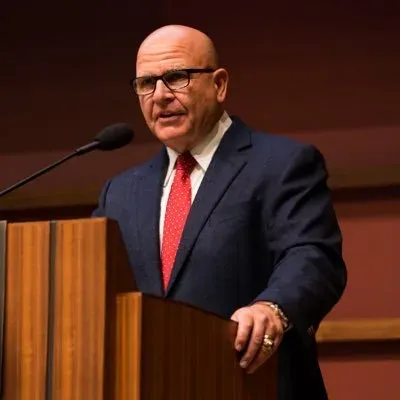
US was 'extraordinarily negligent' on China, McMaster tells Congress
Synopsis
A former White House national security adviser told Congress the US was ‘extraordinarily negligent’ as China grew its military 46-fold since 2001 — while American banks and private equity firms invested in Chinese military-tech companies. The hearing, marking 25 years since 9/11, exposed a structural blind spot: the entire post-9/11 intelligence architecture was built for terrorism, not state-actor threats.
Key Takeaways
McMaster told the House Intelligence Committee on 22 July that the US was ‘extraordinarily negligent’ as China expanded its capabilities over 25 years .
China’s military grew 46-fold since 2001 , according to McMaster’s testimony.
Beijing invested heavily in the Ministry of State Security and Chinese Communist Party United Front operations during this period.
US scientists affiliated with the People’s Liberation Army were allowed access to American intellectual property, McMaster said.
Expert Seth Jones warned that fusion centres and JTTFs are not equipped to detect MSS activities at the state level.
Homeland security expert Frank Cilluffo flagged that Chinese intelligence is now targeting frontier AI and tech companies .
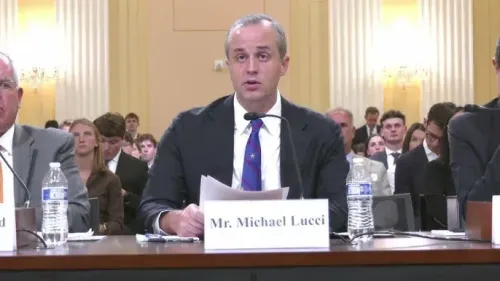
Former White House national security adviser H.R. McMaster told Congress on 22 July that the United States was ‘extraordinarily negligent’ as China systematically expanded its military, intelligence, and technological capabilities over the past 25 years. Testifying before the House Intelligence Committee, McMaster said Washington’s post-9/11 preoccupation with counterterrorism allowed its counterintelligence posture to fall critically behind.
McMaster’s Core Charge
McMaster argued that the gap in US vigilance opened as China and Russia grew more assertive and a coalition of hostile states began consolidating. He pointed to China’s entry into the World Trade Organization as a pivotal moment — one that delivered enormous economic gains which Beijing channelled into military and intelligence expansion.
‘The counterintelligence threat has lagged way behind,’ McMaster said during the hearing, which marked 25 years since the September 11 attacks. ‘So we were not only so far behind, I think we were extraordinarily negligent in this period of time. And I think we’re racing to catch up and we have a lot of work to do.’
Scale of China’s Military and Intelligence Build-up
China’s military had grown 46-fold since 2001, McMaster told the committee. Beijing also invested heavily in the Ministry of State Security (MSS) and the Chinese Communist Party’s United Front activities, he said. Simultaneously, the US opened its economy to China and allowed scientists affiliated with the People’s Liberation Army (PLA) to access American intellectual property and expertise — knowledge that was then used to secure both commercial and military advantages.
McMaster also criticised investments by US banks and private equity firms in Chinese companies developing military technology, calling it a structural vulnerability that compounded the intelligence deficit.
Wider Testimony: Agencies Not Equipped for State Threats
National security expert Seth Jones, also testifying before the committee, said agencies created after 9/11 to improve information sharing were not adequately prepared to confront hostile governments operating inside the United States. He pointed specifically to the National Counterterrorism Center, the Office of the Director of National Intelligence (ODNI), Joint Terrorism Task Forces (JTTFs), and state fusion centres.
‘Our fusion centers and our JTTFs and most of our state and local entities don’t even know what to look for, aren’t equipped to look for the activities of the MSS in our states,’ Jones said. He warned that local organisations were likely to be the first to encounter Chinese intelligence or United Front activities but lacked the infrastructure to identify and respond effectively.
The Evolving Threat Landscape
Homeland security expert Frank Cilluffo told the committee that counterintelligence could no longer be viewed solely through the lens of traditional government-to-government espionage. Foreign intelligence agencies, he said, were increasingly targeting private companies developing advanced technologies.
‘If you’re MSS today, you’re looking at frontier model companies,’ Cilluffo said — a pointed reference to the AI and deep-tech firms now at the centre of the US-China strategic competition.
The Post-9/11 Architecture and Its Limits
The September 11 attacks prompted the largest reorganisation of the US national security establishment in decades. Congress created the ODNI and the National Counterterrorism Center to improve coordination and prevent intelligence from remaining siloed within individual agencies. Notably, the hearing underscored that the very framework built to guard against terrorism may have structurally deprioritised the state-actor threat — a contradiction that experts say is now urgent to address.
Point of View
But the more damaging admission is structural: US banks and private equity were actively financing Chinese military-tech development while counterintelligence agencies looked the other way. The post-9/11 reorganisation — the ODNI, the NCTC — optimised for non-state actors. Retrofitting it for a peer-state adversary with deep commercial tentacles is a different order of problem, and the hearing suggests Washington is still early in reckoning with that.
NationPress
20 Oct 2026
Frequently Asked Questions
What did H.R. McMaster say about the US and China at the Congress hearing?
McMaster told the House Intelligence Committee that the US was ‘extraordinarily negligent’ as China expanded its military, intelligence, and technological capabilities over 25 years. He said Washington’s post-9/11 focus on counterterrorism allowed its counterintelligence posture to fall critically behind.
How much has China’s military grown since 2001, according to McMaster?
McMaster testified that China’s military had grown 46-fold since 2001. He attributed this to Beijing channelling profits from its WTO membership and economic integration with the US into military and intelligence expansion.
Why were US agencies unprepared for the Chinese intelligence threat?
According to expert Seth Jones, agencies created after 9/11 — including the National Counterterrorism Center, JTTFs, and state fusion centres — were designed to counter non-state terrorist threats, not hostile state actors. Jones said most lacked the tools and training to detect MSS activities at the local level.
What role did US private investment play in China’s military build-up?
McMaster criticised US banks and private equity firms for investing in Chinese companies developing military technology, calling it a structural vulnerability. He also said scientists affiliated with the People’s Liberation Army were allowed access to American intellectual property and expertise.
What is the significance of the House Intelligence Committee hearing?
The hearing marked 25 years since the September 11 attacks and served as a broad review of how the post-9/11 national security architecture has performed. Experts testified that the framework, while effective against terrorism, left the US exposed to state-actor threats from China and Russia.