Urgent Call from McMaster on Chinese Technological Threat
Synopsis
Retired Lt. Gen. H. R. McMaster calls for immediate action to protect critical technologies and supply chains as competition with China escalates. He highlights vulnerabilities in Western economies and warns of risks associated with China's economic strategies.
Key Takeaways
Urgent action required to secure technologies against China.
Western economies are vulnerable due to past complacency.
China's strategies pose significant challenges to global standards.
Companies should adopt stricter safeguards and ethical practices.
Collaboration with allies is essential for rebuilding supply chains .
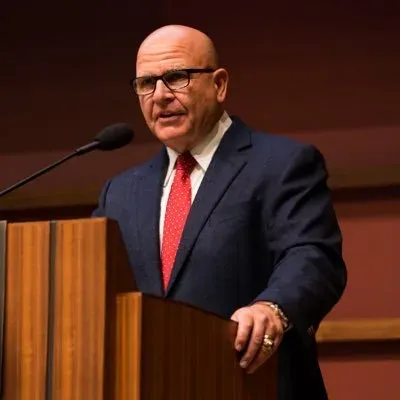
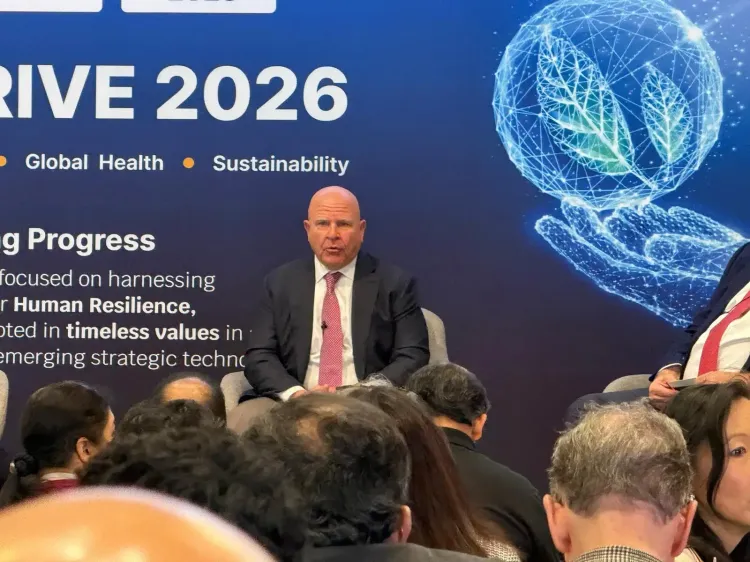
Washington, April 18 (NationPress) Retired Lt. Gen. H. R. McMaster, former US National Security Adviser, emphasized the urgent need for the United States and its allies to act swiftly in safeguarding essential technologies and supply chains as the strategic rivalry with China escalates.
During a panel session at Stanford University's Thrive 2026 conference, McMaster remarked that years of globalization have rendered Western economies vulnerable, having favored efficiency over resilience. “We have grown complacent,” he warned, indicating that supply chains are now at risk amid a resurgence of great power competition.
He pointed out that “China has effectively weaponized its position as a marketplace economic model against our free market systems,” noting that this challenge encompasses areas like artificial intelligence, supercomputing, energy, and materials science.
McMaster characterized this competition as part of a larger initiative by China and other nations to alter global regulations, aspiring to replace the existing framework with one that aligns with their “authoritarian governance.”
Regarding emerging technologies, he expressed skepticism about the feasibility of establishing universal global standards. “It is unrealistic to expect that the leadership of the Chinese Communist Party will agree to rules that we consider to be in our favor,” he stated.
He encouraged companies and investors to implement stricter protective measures, suggesting a “Hippocratic oath” for corporate boards to ensure that businesses do not assist adversaries or jeopardize long-term interests.
“Avoid aiding our potential adversaries in developing weaponry… Refrain from assisting an authoritarian regime in suppressing human freedom… and ensure the long-term sustainability of your enterprise,” he advised.
McMaster cited earlier US investments in Chinese companies tied to military and surveillance systems as clear examples of potential risks. Concerns about intellectual property theft and state-sponsored competition remain significant.
He also underscored vulnerabilities in the supply chains for vital minerals, arguing that Western environmental regulations have shifted processing capabilities to China.
“Many were well-intentioned… they merely transferred the pollution to China,” he noted, advocating for new investments in extraction and refining technologies.
Rebuilding supply chains, according to McMaster, will necessitate collaboration with allies, particularly in sectors like shipbuilding and semiconductors where multinational cooperation is crucial.
Simultaneously, he warned against restricting academic collaborations, stating that limiting foreign students in US educational institutions would be a “significant error,” while advocating for stricter vetting in sensitive research domains.
On the subject of Taiwan, he cautioned that the likelihood of disruptions to semiconductor supplies is increasing. Any blockade or coercive actions from China would result in “a catastrophe for the global economy,” he asserted.
McMaster concluded that governments may need to intervene when markets fail to protect national security. “It’s a battle of free markets versus the public good of national security,” he said, acknowledging that some economic sacrifices may be unavoidable.
Point of View
McMaster's insights underline a pressing concern regarding national security and the economic implications of China's growing technological influence. His call for action reflects a need for a strategic reevaluation of how the U.S. and its allies approach international competition and technological collaboration.
NationPress
19 Sept 2026
Frequently Asked Questions
What did McMaster say about China's economic model?
McMaster stated that China has weaponized its marketplace economic model against free market economies, affecting various sectors including AI and energy.
What is McMaster's stance on supply chain vulnerabilities?
He warned that supply chains are vulnerable due to complacency and called for urgent action to rebuild them in coordination with allies.
How does McMaster suggest companies protect themselves?
He proposed a 'Hippocratic oath' for corporate boards to avoid aiding adversaries and to prioritize the long-term viability of their companies.
What are the implications of tensions with Taiwan?
McMaster highlighted that any coercive action by China regarding Taiwan could disrupt semiconductor supplies and lead to a global economic disaster.
What role should governments play according to McMaster?
He suggested that governments may need to intervene in markets to ensure national security when the market fails to address critical issues.