China espionage targeting US states, warns House Intelligence Committee
Synopsis
The US House Intelligence Committee heard on 17 July that China's espionage playbook has gone local — targeting state governments, universities, and supply chains, not just Washington. With Volt Typhoon already embedded in critical infrastructure and fusion centres starved of resources, lawmakers are confronting a counterintelligence gap that federal agencies alone cannot close.
Key Takeaways
House Intelligence Committee heard on 17 July that China is using espionage, cyber intrusions, influence operations, and economic coercion against US states and critical infrastructure.
Chairman Rick Crawford cited the Volt Typhoon campaign as evidence of pre-positioned PRC capabilities inside US telecommunications and infrastructure networks.
More than 3,200 personnel across 80 fusion centres are on the counterintelligence frontline but face classification barriers, funding gaps, and clearance delays.
Witnesses named Russia and Iran alongside China as foreign intelligence threats increasingly targeting state and local governments.
State officials from Florida , Alabama , and Nebraska called for stronger state-level authority and closer federal-state coordination in counterintelligence.
US lawmakers and state security officials sounded a sharp alarm on 17 July over China's escalating use of espionage, cyber intrusions, influence operations, and economic coercion against American states and critical infrastructure, telling a House Intelligence Committee hearing that local governments have become central to the country's counterintelligence effort.
Key Developments at the Hearing
Members of the House Permanent Select Committee on Intelligence, alongside witnesses from state fusion centres and legislatures, testified that foreign intelligence threats have expanded far beyond Washington, making states, cities, universities, and private businesses the new frontline of US national security.
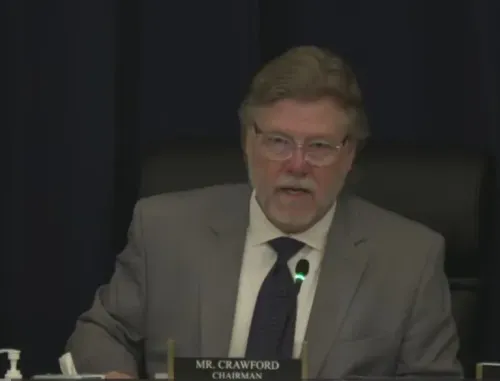
Committee Chairman Rick Crawford said the People's Republic of China (PRC) had adopted 'a whole of society strategy' that goes well beyond traditional spycraft. 'Beijing leverages legal investments, supply chains, research partnerships, cyber intrusions, influence operations, and economic coercion to position itself for advantage, long before any traditional conflict ever begins,' Crawford said. He warned that China's activities are deliberately designed to remain below the threshold of armed conflict, adding that 'our homeland is becoming increasingly contested domain.'
Crawford specifically cited the Volt Typhoon cyber campaign as evidence that adversaries had already 'pre-positioned capabilities inside our critical infrastructure and telecommunications networks that could be activated at a time of their choosing.'
States on the Front Lines
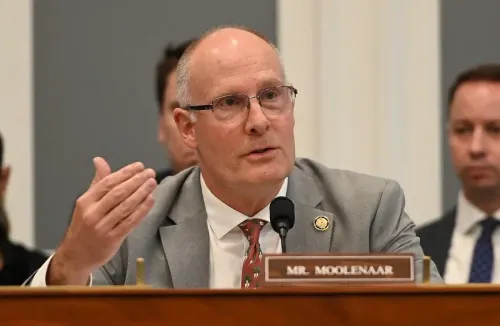
Ranking Member Jim Himes said counterintelligence can no longer remain the exclusive domain of federal agencies. 'The title of this hearing captures the fundamental reality that states truly operate on the front lines,' Himes said. He also urged policymakers to balance foreign intelligence countermeasures with protections for civil liberties, stressing that citizens, legal permanent residents, and visitors must be treated fairly regardless of race, ethnicity, or national origin.
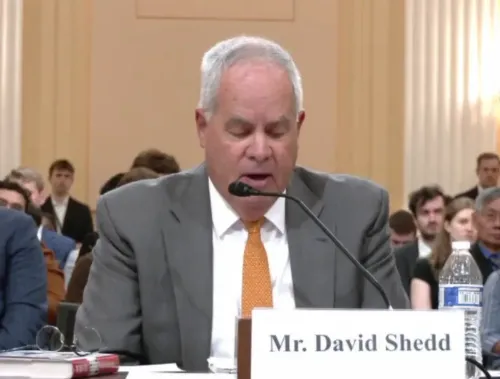
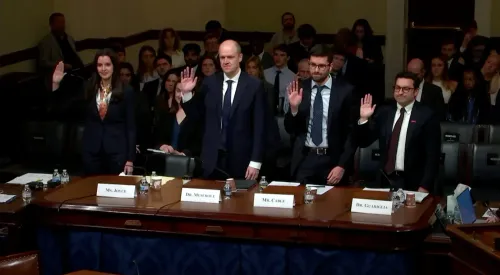
Mike Sena, President of the National Fusion Center Association, told the committee that foreign intelligence services — 'most prominently the PRC,' along with Russia, Iran, and others — are increasingly targeting state and local governments, universities, critical infrastructure operators, and private industry. 'As a result, state and local partners are often the first to encounter indicators involving espionage, cyber activity, foreign influence, supply chain compromise and economic targeting,' Sena said.
Gaps in the Current System
Sena noted that more than 3,200 personnel across 80 fusion centres provide intelligence analysis and information-sharing with federal, state, and local partners. However, he argued that the current system remains hampered by classification barriers, disconnected databases, inconsistent funding, and delays in security clearances. He urged Congress to establish a national counterintelligence information-sharing framework, embed more federal personnel in fusion centres, and improve training and resources.
Jay Mosley, Director of the Alabama Fusion Center, reinforced that counterintelligence 'is no longer confined to Washington,' stressing that trusted relationships among local, state, and federal agencies are essential to identifying suspicious activity before it escalates into a broader national security threat.
State-Level Legislative Response
Florida state Representative Daniel Alvarez declared that states must take a more assertive role in homeland security. 'Florida will not wait for the federal government to defend our people, period,' he said, adding that state-level counterintelligence efforts must protect constitutional rights and focus on behaviour rather than political views, ethnicity, or religion.
Nebraska state Senator Eliot Bostar described legislative efforts to restrict telecommunications equipment deemed national security risks and reduce vulnerabilities linked to foreign adversaries. He called for closer coordination between Congress and state governments to strengthen America's overall counterintelligence posture.
This hearing reflects a growing consensus in Washington that the US counterintelligence architecture must be rebuilt from the ground up — with states as active participants, not passive recipients of federal guidance.
Point of View
Not rhetorical: the US counterintelligence system was built for a Washington-centric threat model, and China has deliberately exploited the seams between federal and state jurisdictions. Volt Typhoon's reported pre-positioning inside critical infrastructure is not a future risk — it is a present one, and the fusion centre testimony makes clear that the information-sharing architecture meant to detect such activity is fragmented and underfunded. The civil liberties caveat raised by Ranking Member Himes is also worth watching: past counterintelligence expansions have produced documented overreach against Chinese-American communities. How Congress balances operational urgency with constitutional guardrails will define whether this hearing produces durable reform or another round of unfunded mandates to state governments.
NationPress
15 Oct 2026
Frequently Asked Questions
What did the House Intelligence Committee hearing on China reveal?
The hearing on 17 July found that China is using a broad range of tools — espionage, cyber intrusions, influence operations, supply chain manipulation, and economic coercion — to target US states, universities, and critical infrastructure, not just federal agencies. Lawmakers said local governments have become central to America's counterintelligence effort.
What is Volt Typhoon and why does it matter?
Volt Typhoon is a Chinese state-linked cyber campaign that, according to Committee Chairman Rick Crawford, has already pre-positioned capabilities inside US critical infrastructure and telecommunications networks. Crawford warned these capabilities could be 'activated at a time of their choosing,' making it an active national security concern rather than a hypothetical threat.
What are fusion centres and what problems do they face?
Fusion centres are intelligence-sharing hubs staffed by more than 3,200 personnel across 80 locations that connect federal, state, and local agencies. According to National Fusion Center Association President Mike Sena, they are hampered by classification barriers, disconnected databases, inconsistent funding, and delays in granting security clearances to state and local staff.
Which countries were identified as the main foreign intelligence threats?
The People's Republic of China was identified as the most prominent threat, with Russia and Iran also named as foreign intelligence services increasingly targeting US state and local governments, universities, and private industry.
What reforms did witnesses call for?
Witnesses urged Congress to establish a national counterintelligence information-sharing framework, embed more federal personnel in state fusion centres, accelerate security clearance processing, and improve training and resources. State officials also called for greater state-level authority to act independently on homeland security threats.