US Homeland Security seeks new drone powers amid rising aerial threats

Synopsis
Over 11,000 drones logged at the US-Mexico border this fiscal year, 60-plus neutralised over FIFA stadiums, and a DHS fragmented across 8 separate counter-UAS programmes — Homeland Security Secretary Markwayne Mullin's congressional testimony lays bare how far drone threats have outrun American law. The push for new legal powers is urgent, and Congress's response will set the template for how democracies regulate the drone age.
Key Takeaways
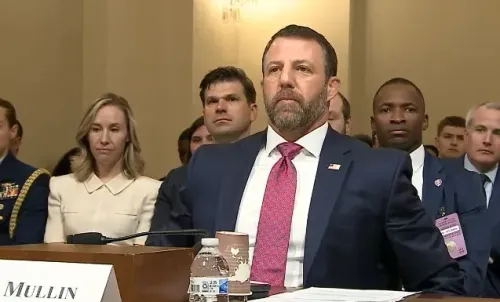
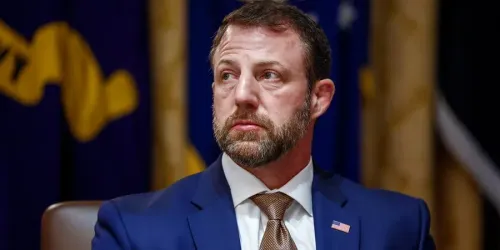
Homeland Security Secretary Markwayne Mullin urged Congress on 26 June to grant DHS expanded legal authority to counter drone threats.
Deputy Secretary Troy Edgar said 11,000 drones were registered at the US-Mexico border since the start of the current fiscal year.
DHS has 8 of its 22 components running separate counter-UAS programmes, prompting plans for a unified joint counter-drone task force .
For the FIFA Club World Cup , counter-drone systems cover all 11 stadiums — a first in US history; over 60 unauthorised drones have been neutralised to date.
Mullin cited fibre-optic-guided drones as particularly difficult to intercept, saying kinetic measures are currently the only option.
DHS and the FBI are scaling counter-drone training for state and local agencies, with demand already exceeding available capacity.
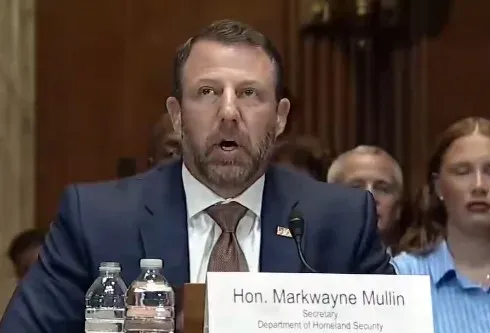
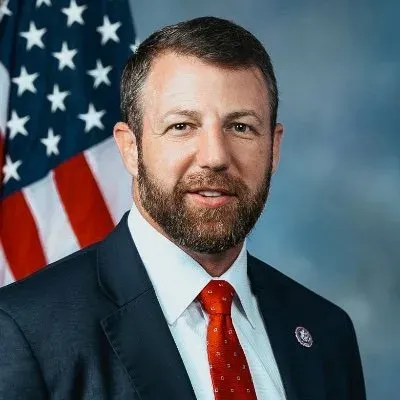
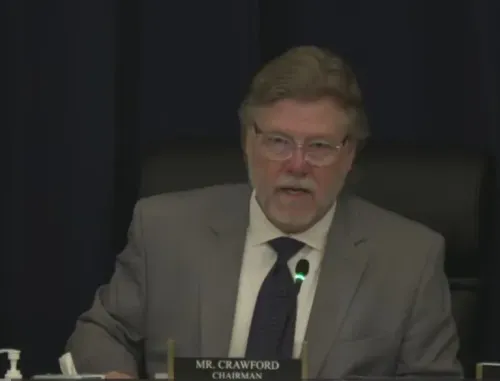
The US Department of Homeland Security (DHS) is pressing Congress for expanded legal authority to counter increasingly sophisticated drone threats, with Homeland Security Secretary Markwayne Mullin warning lawmakers on 26 June that unmanned aerial systems pose mounting risks to border security, critical infrastructure, and major public events. Mullin made the appeal before the House Appropriations Subcommittee on Homeland Security, arguing that existing legislation has failed to keep pace with fast-evolving drone technology.
Why Existing Laws Are Falling Short
Mullin told the subcommittee that while current technology can handle hobbyist-grade drones, more advanced systems are becoming significantly harder to intercept. 'The issue that we have is the ones that have it on fibre,' he said. 'The only way for us to be able to bring them down is be kinetic.' He noted that expanding counter-drone capabilities is complicated by aviation safety concerns, collateral damage risks, and overlapping federal jurisdictions — all of which require new legislative backing. 'Congress is going to have to lean on this a little bit,' Mullin said. 'This is a threat that's changing every single day.'
Surge at the US-Mexico Border
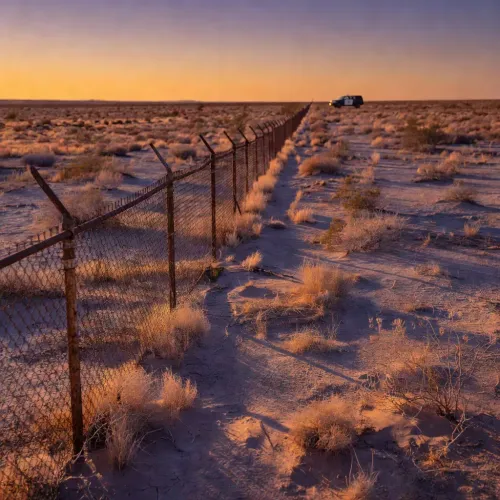
Deputy Homeland Security Secretary Troy Edgar told lawmakers that drone activity along the US-Mexico border has risen sharply. 'Just from the beginning of this fiscal year till yesterday, they had 11,000 drones basically registered at the border,' Edgar said, adding that a better-funded strategy backed by clear legal authorities was urgently needed. The border drone surge reflects a broader pattern of unmanned systems being used for surveillance and smuggling — a challenge that has outpaced the department's current enforcement toolkit.
A Fragmented DHS Response
Mullin acknowledged that DHS's counter-drone efforts are currently fragmented across its 22 components, with at least 8 running separate counter-UAS programmes. He said the department is considering establishing a joint counter-drone task force to unify these efforts. DHS is also working with the FBI to scale up counter-drone training for state and local law enforcement agencies — demand for which, Mullin said, already exceeds available capacity at the FBI's training programme.
FIFA Club World Cup: A Historic Deployment
The growing threat has already prompted an unprecedented operational response. Mullin told lawmakers that for the ongoing FIFA Club World Cup, counter-drone systems have been deployed across all 11 host stadiums — the first time in history such comprehensive coverage has been achieved. He said authorities have neutralised more than 60 unauthorised drones over FIFA venues to date, along with 8 during the Formula 1 race and 12 during the Augusta tournament.
The Broader Security Context
The rapid proliferation of commercial drone technology has become a global security concern, with governments worldwide investing in counter-UAS capabilities to protect airports, military installations, and large public gatherings from surveillance, smuggling, and potential attacks. The United States has significantly ramped up investment in these systems ahead of major international events and along its borders. DHS officials argue that stronger legal authorities, improved technology, and tighter coordination among federal, state, and local agencies will be essential to stay ahead of increasingly capable unmanned aerial threats. Whether Congress acts swiftly on Mullin's request will determine how quickly those gaps can be closed.
Point of View
The department's drone response mirrors the fragmentation that plagued its cybersecurity posture a decade ago — before a series of high-profile breaches forced consolidation. The fibre-optic drone problem is particularly telling: if the only available response to a sophisticated drone is kinetic force over a crowded stadium, the legal and liability framework is already dangerously behind the technology curve. Congress has historically been slow on emerging-technology authorities; the 11,000 border drone figure and the FIFA deployment data are clearly designed to accelerate that timeline. Whether they do will depend on whether lawmakers treat this as a genuine security gap or another appropriations negotiation.
NationPress
24 Sept 2026
Frequently Asked Questions
Why is the US Department of Homeland Security seeking new drone powers from Congress?
DHS says existing laws have not kept pace with rapidly advancing drone technology, creating gaps in its ability to counter sophisticated unmanned aerial systems. Secretary Markwayne Mullin told a House subcommittee on 26 June that new legal authority is needed to address aviation safety concerns, collateral damage risks, and overlapping federal jurisdictions that currently limit counter-drone operations.
How many drones have been detected at the US-Mexico border this fiscal year?
Deputy Homeland Security Secretary Troy Edgar told lawmakers that 11,000 drones had been registered at the US-Mexico border from the start of the current fiscal year through 25 June. He described the figure as evidence that a better-funded, authority-backed strategy is urgently needed.
What makes fibre-optic drones harder to counter?
Unlike radio-controlled drones that can be jammed, fibre-optic-guided drones communicate through physical cables, making electronic countermeasures ineffective. Secretary Mullin said the only current option to bring such drones down is kinetic force — a significant legal and safety complication over populated areas.
How is DHS handling drone threats at the FIFA Club World Cup?
For the first time in US history, DHS has deployed counter-drone systems across all 11 FIFA Club World Cup stadiums. Mullin said more than 60 unauthorised drones had been neutralised over FIFA venues to date, in addition to 8 during a Formula 1 event and 12 during the Augusta tournament.
What is DHS proposing to fix its fragmented counter-drone structure?
DHS is considering establishing a joint counter-drone task force to consolidate efforts currently spread across 8 of its 22 components, each running separate counter-UAS programmes. The department is also working with the FBI to expand counter-drone training for state and local law enforcement, where demand already exceeds available training capacity.