DHS chief Mullin defends stricter voter checks ahead of US midterms
Synopsis
DHS Secretary Markwayne Mullin went on CNN to defend the Trump administration's election-integrity push — and his framing was telling. Rather than cite hard fraud data, he argued that even one illegal vote justifies sweeping new checks, while leaving the door open to ICE presence at polling stations under a public-safety carve-out. With midterms on the horizon, the policy debate is moving from rhetoric to implementation.
Key Takeaways
DHS Secretary Markwayne Mullin defended stricter voter citizenship verification on 15 June , ahead of next year's US midterm elections .
Mullin cited alleged irregularities including mail ballots sent to deceased registrants and 20–30 ballots mailed to single addresses.
He ruled out ICE involvement in voter ID enforcement at polling stations but left open a public-safety exception for emergencies such as bomb threats.
Republicans back stronger voter ID laws; Democrats warn they create barriers for eligible voters.
Mullin cited Oklahoma 's in-person ID requirement as a model for secure elections.
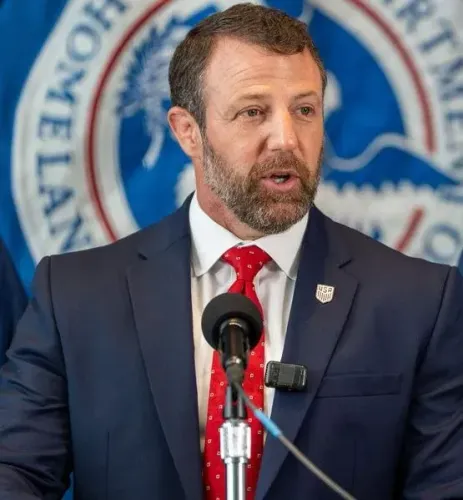
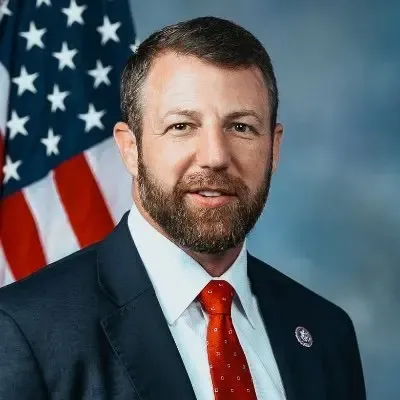
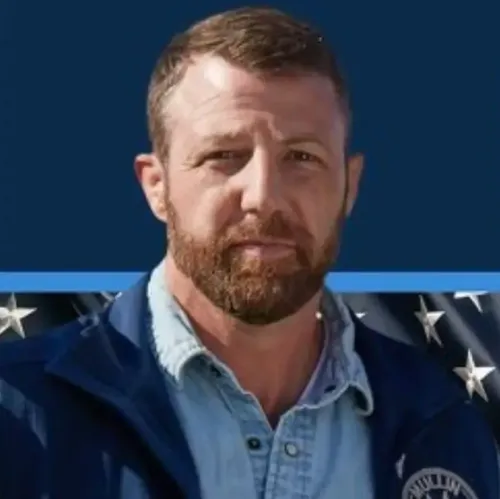
US Homeland Security Secretary Markwayne Mullin on Sunday, 15 June defended the Trump administration's push for tighter citizenship verification in federal elections, arguing that even a single instance of illegal voting is sufficient to justify stronger safeguards ahead of next year's midterm elections. Mullin made the remarks during an appearance on CNN's State of the Union, where he outlined the Department of Homeland Security (DHS)'s role in supporting the administration's election-integrity agenda.
What Mullin Said
'We're going to make sure that our Constitution is upheld, meaning that only citizens of the United States are voting,' Mullin said. He described citizenship verification as 'the most important thing we can do to protect the integrity of our election,' adding that the goal was to ensure 'every vote actually counts.'
When the CNN host cited data showing relatively few prosecutions involving non-citizen voting and questioned whether the problem was widespread enough to warrant additional measures, Mullin dismissed the scale argument outright. 'One person voting illegally is one too many,' he said. 'We shouldn't have to worry about even one.'
Irregularities in Voter Rolls
Mullin also claimed that authorities had identified anomalies in voter registration records. 'We see thousands of individuals that are registered to vote that has had mail-out ballots to them that are passed away,' he said, adding that officials had observed cases of '20, 30 ballots being mailed to the same address.' He rejected the suggestion that the administration was seeking to curtail mail-in voting, saying the objective was simply to verify that recipients were legally eligible to vote.
Mullin pointed to Oklahoma's voter identification procedures as a model, noting that he and his wife were required to show identification when they voted the previous day. 'You know what? Perfect,' he said.
ICE at Polling Stations
The interview also addressed whether Immigration and Customs Enforcement (ICE) personnel could be deployed to polling locations. Mullin said ICE officers would not be used for voter identification or immigration enforcement at voting sites, but left open the possibility of their presence in emergency public-safety scenarios. 'The only reason why we would be there is not for voter identification,' he said. 'It'd be because law enforcement is needed' — citing situations such as bomb threats requiring additional law enforcement support.
The Wider Political Divide
Voter verification and election security remain sharply contested in the United States. Republicans have broadly argued that stronger identification and citizenship checks are necessary to protect electoral integrity. Democrats, however, contend that documented voter fraud is rare and warn that additional requirements risk creating barriers for eligible voters — particularly minority and low-income communities who may face greater difficulty producing qualifying identification. This comes amid a broader pattern of election-security debates that have intensified since the 2020 presidential election, with the Trump administration now using executive levers to advance measures that Congress has not formally codified.
With midterms approaching, the administration's push is likely to face legal and legislative scrutiny, as courts have previously struck down certain voter-roll purge practices and strict ID requirements in several states.
Frequently Asked Questions
What voter verification measures is the Trump administration pushing?
The Trump administration, backed by DHS Secretary Markwayne Mullin, is pushing for stricter citizenship verification in federal elections and improved accuracy of voter registration rolls. Mullin cited cases of mail ballots sent to deceased registrants and multiple ballots mailed to a single address as justification.
Will ICE agents be deployed to US polling stations?
Mullin said ICE personnel would not be used for voter identification or immigration enforcement at voting locations. However, he said ICE could be present in emergency public-safety situations, such as bomb threats, where additional law enforcement support is needed.
Why are Democrats opposing these measures?
Democrats argue that documented voter fraud in the US is rare and warn that stricter identification and citizenship requirements could disenfranchise eligible voters, particularly minority and low-income communities. They contend the measures are disproportionate to the scale of the problem.
What did Mullin say about non-citizen voting data?
When a CNN host cited data showing relatively few prosecutions for non-citizen voting, Mullin said the number of cases was beside the point, stating 'one person voting illegally is one too many.' He did not dispute the data but argued that even isolated instances undermine public confidence in elections.
What state did Mullin cite as a model for election security?
Mullin pointed to Oklahoma's voter identification procedures as an example of a secure electoral system, noting that both he and his wife were required to show identification when voting in person the previous day.