US rejects digital dollar: Trump administration rules out CBDC
Synopsis
The Trump administration has drawn a hard line against a digital dollar, with Treasury Secretary Scott Bessent calling a CBDC a potential surveillance tool. Instead, Washington is betting on privately issued stablecoins and the CLARITY Act to make the US the global home of regulated digital assets — a stance that could reshape the international CBDC debate given the dollar's reserve status.
Key Takeaways
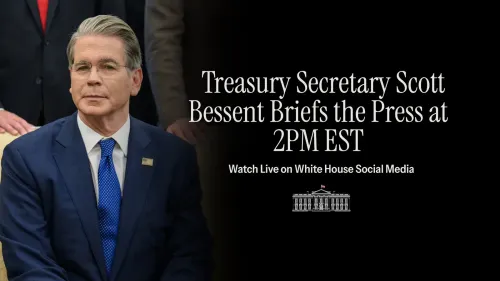
Treasury Secretary Scott Bessent declared on 29 May that the Trump administration will not create a US central bank digital currency (CBDC) .
Bessent argued a CBDC would be 'the first step toward tracking' private financial transactions.
The administration instead backs a regulatory framework for private-sector stablecoins and digital assets under US oversight.
Stablecoin legislation has passed with bipartisan support; the CLARITY Act is currently before Congress .
Bessent criticised offshore digital asset markets as poorly regulated, urging the industry to relocate under US jurisdiction .
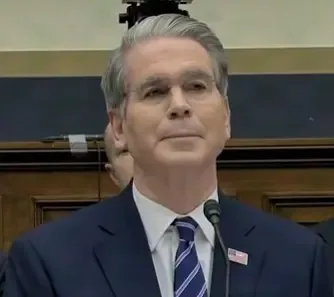
Treasury Secretary Scott Bessent on 29 May declared that the Trump administration will not pursue a US central bank digital currency (CBDC), citing risks of government surveillance over private financial transactions. The announcement, made at a White House briefing, positions the United States firmly among nations sceptical of state-issued digital money even as central banks elsewhere continue to pilot their own versions.
The Administration's Position
Bessent was unambiguous in his remarks to reporters. 'This administration has been very clear there will be no central bank digital currency,' he said. He argued that a government-issued digital dollar would represent the first step toward state monitoring of personal finances. 'I think that would be the first step toward tracking,' he added, framing a CBDC as a direct threat to individual financial freedom.
The Alternative: Stablecoins and Private Digital Assets
Rather than backing a digital dollar, the administration is pushing a regulatory framework that encourages private-sector digital assets and stablecoins under US oversight. Bessent pointed to recent legislative progress as evidence of momentum. 'We've passed stablecoin legislation with bipartisan support, and the CLARITY Act is now up on the Hill, and I think it has bipartisan support,' he said. The strategy marks a clear pivot: instead of the state issuing digital currency, Washington wants to be the regulatory home for privately issued digital assets.
Bringing Offshore Activity Onshore
Bessent was pointed in his criticism of poorly regulated offshore digital asset markets. 'When you look at digital assets, all the nonsense that happens, all the things you read about, that's because it's the wild, wild west offshore,' he said. 'So, we've got to bring it onshore.' He argued that subjecting the industry to US regulation and best practices would deliver stronger consumer protections than allowing growth outside American jurisdiction. 'The most important thing we can do is to make digital assets come into the United States, make the US the home,' he said.
Call for Congressional Action
Responding to a question at the briefing, Bessent urged Congress to advance legislation that establishes a clearer regulatory framework for digital assets. He argued that regulatory certainty would simultaneously spur innovation and strengthen consumer safeguards — a dual mandate the administration believes a CBDC cannot fulfil. The CLARITY Act, currently before lawmakers, is cited as a key vehicle for that framework.
Global Context
The US rejection of a CBDC comes as dozens of central banks — including those in China, the European Union, and India — are at various stages of exploring or testing government-issued digital currencies. The Federal Reserve had previously conducted exploratory research on a digital dollar, but that work has effectively been shelved under the current administration. The US stance could influence other jurisdictions weighing the balance between state-issued and privately issued digital money, particularly given the dollar's reserve currency status.
Point of View
Which has been a significant donor constituency. The pivot to stablecoins is not without merit: bringing offshore digital asset activity under US regulatory oversight addresses real consumer-protection gaps. But the CLARITY Act still needs to pass, and bipartisan goodwill in Congress is fragile. If US stablecoin regulation stalls while the EU and China advance their CBDCs, Washington risks ceding the standard-setting role it is explicitly trying to claim.
NationPress
14 Oct 2026
Frequently Asked Questions
Why has the Trump administration rejected a US central bank digital currency?
The Trump administration has ruled out a CBDC primarily on privacy grounds, with Treasury Secretary Scott Bessent arguing it could become a tool for government tracking of private financial transactions. The administration views a government-issued digital dollar as a threat to personal financial freedom.
What is the US alternative to a CBDC?
Instead of a digital dollar, the administration is promoting a regulatory framework for privately issued stablecoins and digital assets under US oversight. It has backed stablecoin legislation that passed with bipartisan support and is pushing the CLARITY Act through Congress to create clearer rules for the digital asset industry.
What is the CLARITY Act?
The CLARITY Act is a proposed piece of legislation currently before the US Congress that aims to establish a comprehensive regulatory framework for digital assets. Treasury Secretary Bessent has cited it as a key tool for bringing offshore digital asset activity under US jurisdiction and improving consumer protections.
How does the US position compare to other countries on CBDCs?
The US rejection of a CBDC puts it at odds with many major economies, including China, the European Union, and India, which are actively exploring or testing government-issued digital currencies. The Federal Reserve had previously conducted exploratory research on a digital dollar, but that work has been effectively shelved under the current administration.
What did Scott Bessent say about offshore digital asset markets?
Bessent described offshore digital asset markets as the 'wild, wild west,' arguing that the problems associated with the crypto industry stem from inadequate regulation outside US jurisdiction. He called for bringing digital asset activity onshore under US regulatory standards to ensure better consumer protections and industry practices.