Assam CM Office: 900+ Laptops for Rural Bank Sakhis
Synopsis
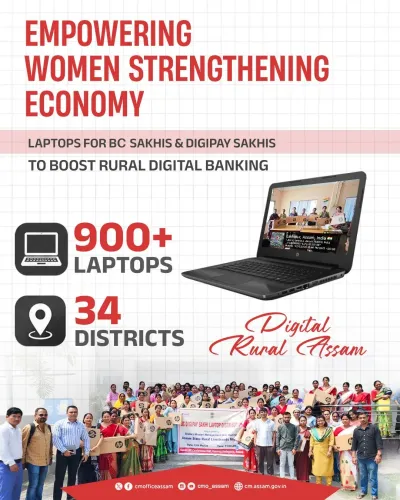
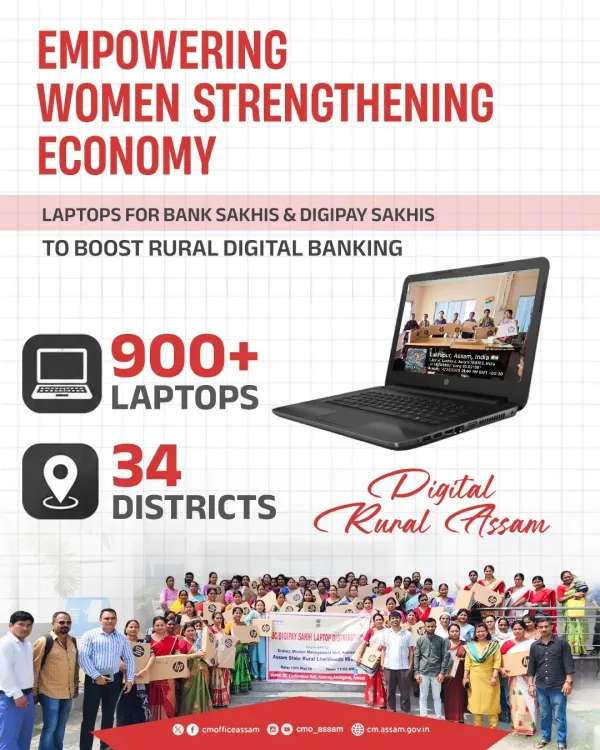
Assam's Chief Minister's Office says over 900 laptops have been distributed to Bank Sakhis and DigiPay Sakhis across 34 districts, deepening doorstep digital banking for rural households under CM Himanta Biswa Sarma's leadership.
Key Takeaways
Over 900 laptops have been provided to Bank Sakhis and DigiPay Sakhis across 34 districts of Assam.
The initiative focuses on doorstep banking and digital service delivery in rural villages.
Women agents serve as banking correspondents, enabling transactions and digital payments at the village level.
The programme builds on national frameworks including PMJDY and the Digital India initiative.
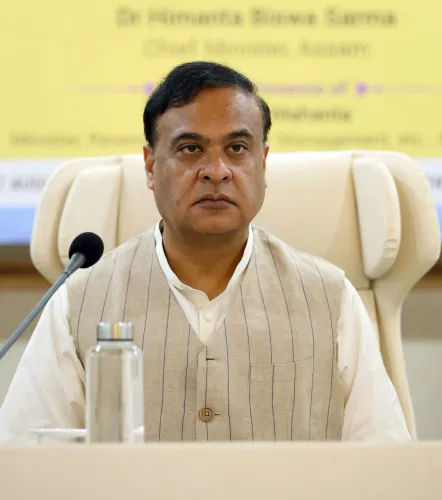
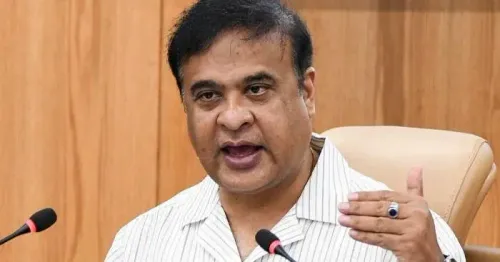
CM Himanta Biswa Sarma is credited with leading the state-level push for rural digital financial inclusion.
The Northeast's terrain and connectivity barriers make women-agent models a critical last-mile delivery mechanism.
The Chief Minister's Office of Assam announced on Wednesday, 10 June 2026 that the state government has distributed over 900 laptops to Bank Sakhis and DigiPay Sakhis across 34 districts to strengthen last-mile digital banking access in rural villages.
Context
The initiative aims to bring doorstep banking and digital financial services to underserved rural households in Assam. By equipping women agents with laptops, the programme enables them to process transactions, open accounts, and facilitate digital payments directly in villages without requiring residents to travel to bank branches.
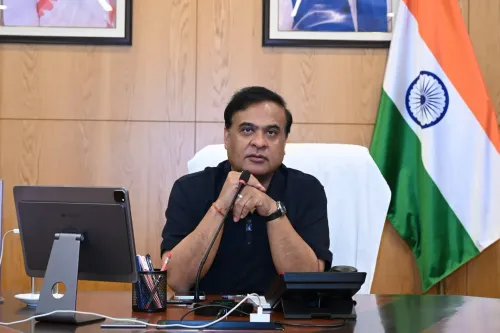
The CMO post states the effort is being carried out 'under the leadership of HCM Dr. Himanta Biswa Sarma', framing the rollout as a state-level push to empower women entrepreneurs alongside expanding digital access.
Policy Backdrop
The Bank Sakhi model positions local women as banking correspondents — a structure that traces its lineage to the Pradhan Mantri Jan Dhan Yojana (PMJDY) launched in 2014, which established India's foundational push for universal bank accounts. The Digital India programme, launched in 2015, further accelerated government focus on rural digital infrastructure.
The complementary DigiPay Sakhi initiative trains women to facilitate digital payments, extending the reach of formal financial systems into communities where physical bank infrastructure remains sparse. Together, the two schemes create a layered network of women-led service delivery at the village level.
Similar women-agent models have been scaled across other Indian states through self-help groups linked to the National Rural Livelihoods Mission (NRLM), reflecting a broader national pattern of combining central scheme frameworks with state-level implementation.
Stakeholders and Impact
Assam's terrain and connectivity challenges — particularly pronounced in its rural and hilly belts — have historically made last-mile banking difficult. The Northeast as a region has faced persistent barriers to formal financial inclusion, making the deployment of on-ground women agents a pragmatic bridge solution.
The direct beneficiaries are rural women recruited as Sakhis, who gain livelihoods and entrepreneurial roles, and village households that gain access to savings, remittance, and payment services. The laptop distribution is intended to upgrade the technological capability of agents who may previously have relied on basic mobile devices or manual processes.
What's Next
The effectiveness of the rollout will be measured by growth in digital transaction volumes across Assam's 34 districts and the sustained activity of enrolled Sakhis. State-level progress reports on coverage and transaction data will be a key indicator of whether the laptop deployment translates into measurable financial inclusion gains.
Any integration with forthcoming upgrades to India's central digital public infrastructure — including expanded UPI rails and updated Aadhaar-enabled payment systems — could further amplify the programme's reach in the months ahead.
Point of View
The announcement reinforces a governance narrative centred on women's empowerment and digital Assam ahead of a politically active period. The Northeast's structural connectivity deficit gives this model particular salience: where branches cannot reach, trained women agents with devices can. The real test, however, lies in transaction data — whether Sakhi networks sustain active usage or remain underutilised assets.
NationPress
26 Sept 2026
Frequently Asked Questions
What is Bank Sakhi in Assam?
Bank Sakhi is a programme that appoints local women as banking correspondents to deliver doorstep financial services — including account opening, deposits, and withdrawals — directly in rural villages, reducing the need for residents to travel to distant bank branches.
How many laptops have been given to Bank Sakhis in Assam?
According to the Chief Minister's Office of Assam, over 900 laptops have been distributed to Bank Sakhis and DigiPay Sakhis across 34 districts of the state.
What is DigiPay Sakhi?
DigiPay Sakhi is a complementary initiative to Bank Sakhi that trains women entrepreneurs to facilitate digital payments in rural areas, expanding access to formal financial systems in underserved communities.
How does Assam's rural banking initiative connect to central government schemes?
The initiative builds on the foundation of the Pradhan Mantri Jan Dhan Yojana (2014) and the Digital India programme (2015), using state-level implementation through women agents to extend the reach of these national frameworks into rural Assam.
Who is overseeing Assam's digital financial inclusion drive?
Chief Minister Dr. Himanta Biswa Sarma, who has led the state since May 2021, is credited with overseeing the initiative, which is being implemented through the state government's rural development and digital governance programmes.