Nvidia posts 85% revenue growth, forecasts 95% surge ahead
Synopsis
Nvidia reported a stunning 85% revenue surge for its April quarter — the first of fiscal 2027 — and forecast an even faster 95% growth rate for Q2, cementing its position as the indispensable hardware engine of the global AI buildout.
Key Takeaways
Nvidia reported 85% revenue growth for the April quarter , its first quarter of fiscal year 2027 , beating projections.
The company forecast 95% revenue growth for the second quarter of fiscal 2027 , signalling accelerating momentum.
Nvidia , founded in 1993 by Jensen Huang , has become the dominant supplier of AI accelerator chips globally.
The results reinforce a multi-year AI capex supercycle driven by hyperscaler and cloud-provider spending on GPU -dense infrastructure.
SpaceX , founded in 2002 by Elon Musk , continues to expand its Starlink satellite ambitions alongside sustained private-sector capital inflows.
Nvidia has once again surpassed expectations, reporting 85% revenue growth for its April quarter — the first quarter of its fiscal year 2027 — and forecasting an even sharper 95% revenue growth for the second quarter, signalling that demand for its AI chips shows no signs of slowing.
Blowout quarter for the AI chip giant
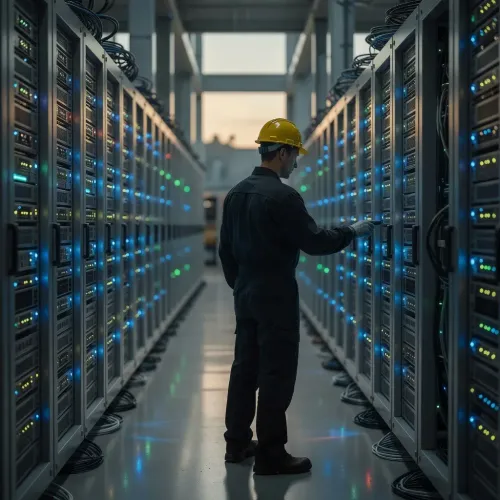
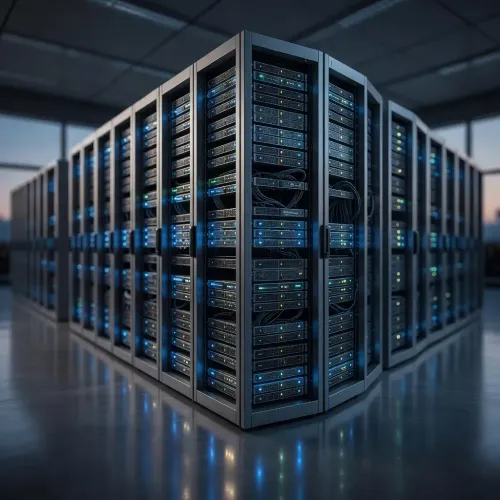
The results mark yet another milestone for Nvidia, which has become the dominant supplier of accelerators powering the global AI infrastructure buildout. The company's fiscal 2027 is shaping up to be, as analysts described it, 'a firecracker,' with growth rates accelerating rather than plateauing. The back-to-back beats underscore how hyperscalers and cloud providers continue to pour capital into GPU-dense data centres.
Why it matters
For the broader semiconductor sector, Nvidia's trajectory reinforces a multi-year demand cycle tied directly to AI model training and inference workloads. Founded in 1993 by Jensen Huang, the company has transformed from a graphics card maker into the hardware backbone of the modern AI economy. A forecast of 95% growth in a single quarter is extraordinary at the company's current scale, and it raises the floor for what the market now expects from the AI capex supercycle.
The competitive backdrop
Despite intensifying competition from custom silicon efforts at Google, Amazon, and Microsoft, as well as challenger chip startups, Nvidia's lead in software ecosystems — particularly its CUDA platform — continues to create a durable moat. Rivals have struggled to replicate the combination of hardware performance and developer tooling that keeps enterprises locked into Nvidia's stack. The company's data-centre revenue had already surged sharply through fiscal 2024 and 2025 following the commercial rollout of its H100 GPU platform.
SpaceX's blue-sky ambitions
The results were reported alongside attention to SpaceX's expanding ambitions in the commercial space sector. SpaceX, founded in 2002 by Elon Musk, operates the Starlink satellite constellation — first deployed operationally in 2019 — and continues to attract sustained private capital for both launch vehicles and satellite network expansion. The pairing of Nvidia and SpaceX in market commentary reflects a broader investor narrative: that advanced technology spending is concentrating in a small number of specialised hardware platforms, whether on the ground or in orbit.
What's next
All eyes will be on whether Nvidia can deliver on its 95% second-quarter growth forecast as supply chains for next-generation chips remain under scrutiny. Any guidance revision — upward or downward — will reverberate across the entire AI infrastructure investment thesis. For SpaceX, the appetite for its ambitions will depend on regulatory clearances and the pace of its launch cadence through the remainder of 2025.
Point of View
Which is itself the most remarkable story in semiconductors. What mainstream coverage underweights is the compounding effect of CUDA lock-in: as more AI workloads are written for Nvidia's software stack, the switching cost rises faster than any rival's hardware can close the gap. The pairing with SpaceX in investor commentary is telling — both companies represent the same macro thesis: that the next decade of technology value creation is concentrated in a handful of vertically integrated hardware platforms that nobody can easily replicate. The real risk to watch is not competition but geopolitics — any further tightening of export controls on advanced chips could force a bifurcation of the AI hardware market that even Nvidia's software moat cannot bridge.
NationPress
5 Oct 2026
Frequently Asked Questions
What were Nvidia's latest quarterly results?
Nvidia reported 85% revenue growth for its April quarter , the first quarter of fiscal year 2027 , surpassing analyst projections. The company then forecast 95% revenue growth for the following quarter.
Why is Nvidia growing so fast?
Demand for Nvidia 's AI accelerator chips — used in training and running large AI models — has surged as hyperscalers and cloud providers race to build GPU -dense data centres. The company's CUDA software ecosystem reinforces customer loyalty and raises switching costs for rivals.
What is Nvidia's fiscal 2027 outlook?
Nvidia 's fiscal 2027 is shaping up to be a standout year, with the company forecasting 95% revenue growth in Q2 after already delivering 85% growth in Q1 . Analysts describe the trajectory as sharply accelerating rather than moderating.
What is SpaceX's role in the current tech investment landscape?
SpaceX , founded by Elon Musk in 2002 , continues to expand its Starlink satellite network and attract private capital for launch vehicles. It represents a parallel concentration of advanced technology spending in specialised hardware, alongside companies like Nvidia in the semiconductor space.
Who are Nvidia's main competitors in AI chips?
Nvidia faces competition from custom silicon developed internally by Google , Amazon , and Microsoft , as well as from emerging chip startups. However, Nvidia 's combination of hardware performance and its entrenched CUDA developer platform has so far kept rivals from meaningfully eroding its market position.