Nadda: Strong Health System is Foundation of Viksit Bharat
Synopsis
Union Health Minister J. P. Nadda on June 2 said a strong health system is foundational to PM Modi's Viksit Bharat goal, urging medical students and health professionals to drive excellence and evidence-based research as the true strength of health institutions.
Key Takeaways
Union Health Minister J.
Nadda posted on June 2, 2026 that a healthy India is the foundation of the Atmanirbhar Bharat and Viksit Bharat visions.
He stated that while government can provide infrastructure and equipment, the 'real strength of institutions lies in their human resources.' Nadda called on medical students and health professionals to advance excellence, research, and evidence-based practice .
The government approved 22 new AIIMS and over 100 new medical colleges between 2014 and 2024 to expand health education capacity.
The National Medical Commission Act, 2019 mandates outcome-based curricula and research promotion in medical education.
Budget allocations under Union Budget 2026-27 and the next phase of Pradhan Mantri Swasthya Suraksha Yojana will be key indicators of follow-through.
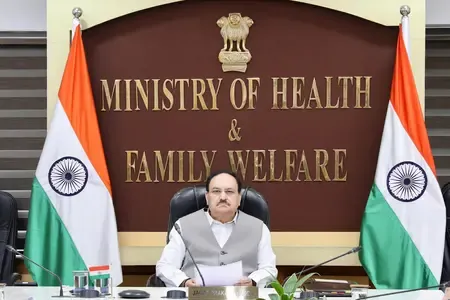
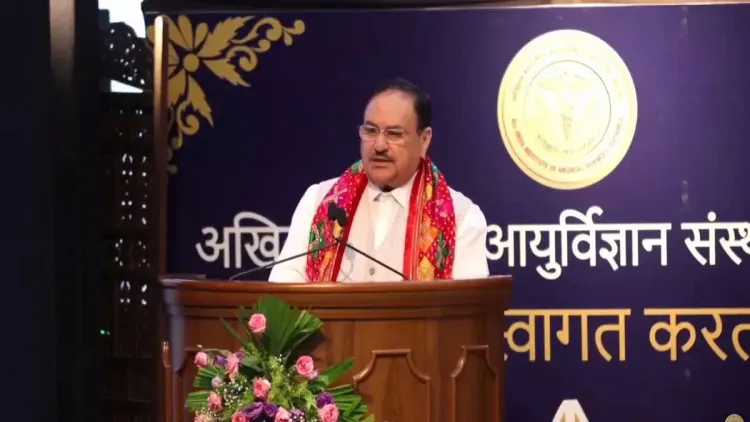
Union Health Minister J. P. Nadda on Tuesday, June 2, 2026, underscored that a healthy India is the bedrock of Prime Minister Narendra Modi's twin visions of Atmanirbhar Bharat and Viksit Bharat, calling on medical students and health professionals to champion excellence, research, and evidence-based practice as indispensable contributors to national development.
Context
Posting in Hindi on X, Nadda stated: 'विकसित भारत का लक्ष्य तभी साकार होगा जब देश की स्वास्थ्य व्यवस्था मजबूत होगी' — 'The goal of a Developed India will be realised only when the country's health system is strong.' He drew a clear line between physical infrastructure and the human capital that ultimately animates it, writing that while the government can provide infrastructure, equipment, and resources, the 'real strength of institutions lies in their human resources.'
The statement positions health not as a welfare obligation alone but as a strategic enabler of India's 2047 development target — a framing that has become a recurring theme in the government's policy communications.
Policy Backdrop
The remarks sit atop a decade-long expansion of medical infrastructure. Between 2014 and 2024, the central government approved the establishment of 22 new AIIMS and over 100 new medical colleges, significantly enlarging both teaching capacity and postgraduate seat availability across the country.
The National Medical Commission Act, 2019 replaced the Medical Council of India and introduced mandates for outcome-based curricula and stronger research promotion — precisely the 'evidence-based research' Nadda invoked. Simultaneously, the Ayushman Bharat programme, launched in 2018, combined health insurance coverage for vulnerable families with a primary-care infrastructure push, creating demand for a larger and better-trained health workforce.
The National Health Policy 2017 had earlier set targets for universal health coverage and called for doubling government health expenditure as a share of GDP — a fiscal commitment that has shaped successive budget cycles and remains a benchmark against which health outlays are measured.
Stakeholders and Impact
Nadda's message is directed most immediately at medical students and healthcare professionals — the workforce that will staff the expanded network of public hospitals, AIIMS campuses, and primary health centres. By emphasising evidence-based research, he signals that the government expects institutions to move beyond clinical service delivery toward generating domestic knowledge and reducing dependence on imported health technologies.
Medical colleges, public health institutions, and regulatory bodies such as the National Medical Commission are implicated as the organisational layer responsible for translating this expectation into curriculum design, faculty incentives, and research funding. The post also reinforces the Atmanirbhar Bharat logic applied to health — a self-reliant ecosystem that encompasses not just medicines and devices but also the science that underpins them.
What's Next
Attention will turn to the Union Budget 2026-27 health outlays, where analysts and health advocates will watch whether allocations for medical education, postgraduate seat expansion, and research infrastructure match the rhetorical emphasis on human capital. The next phase of the Pradhan Mantri Swasthya Suraksha Yojana — which funds AIIMS and upgraded government medical colleges — is also expected to shape how the minister's vision translates into concrete institutional growth.
Any legislative movement on clinical trial regulation or health data governance would further signal how seriously the government intends to build the evidence-generation infrastructure that Nadda's post calls for.
Point of View
He ties health workforce quality directly to India's sovereign development ambitions — a framing that justifies sustained budget prioritisation. The emphasis on evidence-based research is also a subtle nudge toward domestic R&D, consistent with the post-2020 push to reduce import dependence in critical health technologies. Whether this rhetorical alignment translates into measurable policy action will depend on the forthcoming budget and any regulatory movement on medical research governance.
NationPress
20 Sept 2026
Frequently Asked Questions
What did J. P. Nadda say about Viksit Bharat and health?
Nadda said the goal of a Developed India will be realised only when the country's health system is strong, and that medical students and health professionals must drive excellence and evidence-based research.
What is Viksit Bharat and how does health fit into it?
Viksit Bharat is India's national goal of becoming a fully developed nation by 2047 . The government has positioned a strong public health system as a foundational requirement for achieving that target.
What is Atmanirbhar Bharat in the context of health?
Atmanirbhar Bharat, launched in 2020 , includes a push for self-reliance in medicines, vaccines, and medical devices, and has since been extended to encompass domestic health research and evidence generation.
How many new AIIMS has India built under the current government?
The central government approved the establishment of 22 new AIIMS and over 100 new medical colleges between 2014 and 2024 to expand medical education and healthcare capacity.
What is the National Medical Commission and what does it do?
The National Medical Commission , constituted under the NMC Act 2019 , is the statutory body that regulates medical education in India, replacing the older Medical Council of India. It mandates outcome-based curricula and promotes research standards in medical colleges.