HP CM doubles PG doctors' stipend, cuts duty hours to match AIIMS
Synopsis
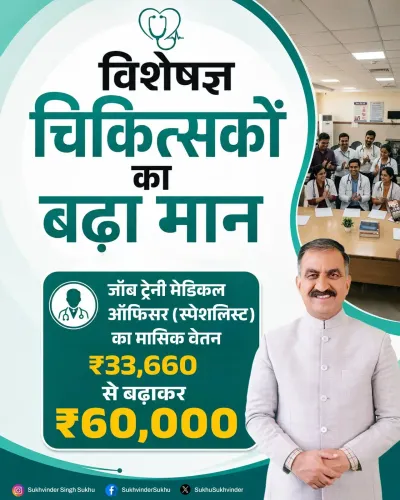
The Himachal Pradesh government doubles PG doctors' monthly stipend from ₹65,000 to ₹1.30 lakh and cuts daily duty hours from 24 to 12, bringing conditions to par with AIIMS Delhi. Student stipends will also rise in the upcoming state budget.
Key Takeaways
PG doctors' stipend in Himachal Pradesh doubled from ₹65,000 to ₹1.30 lakh per month .
Daily duty hours for PG doctors cut from 24 hours to 12 hours .
The new stipend level is explicitly benchmarked to AIIMS, New Delhi .
The government has also pledged a student stipend hike in the upcoming state budget .
The move is aimed at reducing attrition and retaining medical specialists in a hill state with limited tertiary infrastructure.
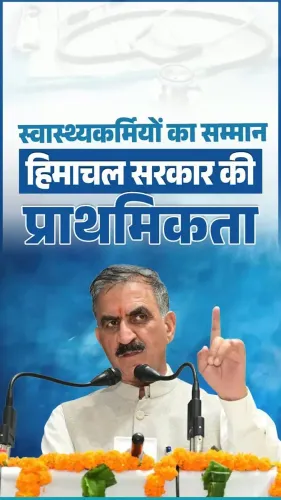
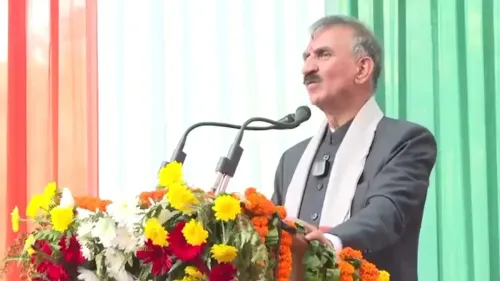
Himachal Pradesh's postgraduate resident doctors will now earn ₹1.30 lakh per month — double the previous ₹65,000 — and work no more than 12 hours a day instead of the punishing 24-hour shifts that had long defined their lives. The Chief Minister's Office of Himachal Pradesh announced the reforms on Monday, November 9, 2026, adding that student stipends across the board will also rise in the next state budget.
The CMO's post, originally in Hindi, states: 'Vidyarthiyon ke hiton ko dhyan mein rakhte hue' — 'Keeping the interests of students in mind' — the government will increase their stipends in the upcoming budget. On PG doctors specifically, the announcement is unambiguous: duty hours halved, stipend doubled, and the new figure benchmarked explicitly to AIIMS, New Delhi.
Why matching AIIMS rates is a bigger deal than it sounds
AIIMS Delhi is India's gold standard for public medical education, and its stipend structure has historically set the ceiling that state governments struggle to meet. For a hill state like Himachal Pradesh — with rugged terrain, limited tertiary infrastructure, and a chronic difficulty retaining specialists — matching that benchmark is a significant retention signal.
Resident doctor burnout and attrition are a documented national problem. States that fail to offer competitive pay and humane hours watch their trained doctors migrate to metros or private practice the moment they qualify. By cutting shifts from 24 to 12 hours, Himachal Pradesh aligns itself with the welfare norms that medical associations have demanded for years.
Student stipends: the next budget as the delivery moment
The CMO's statement pointedly extends the promise beyond PG doctors to students more broadly — a wider constituency. No specific figure was announced for student stipends; the commitment is to the upcoming state budget. That framing is deliberate: it sets a public accountability marker. When the budget is tabled, the stipend line will be watched closely.
India's National Medical Commission Act, 2019 introduced centralised oversight of medical education standards, nudging states toward uniform benchmarks for resident welfare. Himachal Pradesh's move fits squarely within that broader national direction — but the speed and the AIIMS comparison give it a sharper edge than routine compliance.
For a state that often competes quietly against the pull of Delhi and Chandigarh for its own medical talent, parity with AIIMS rates is a statement of ambition. The next budget will tell us whether that ambition has a price tag to match.
Point of View
And competitive pay is one of the few levers available. Halving duty hours simultaneously signals awareness that recruitment alone is not enough; liveable working conditions must follow. The extension of the promise to student stipends in the next budget adds a broader political dimension, turning a health-sector reform into an education-sector commitment ahead of what will be a scrutinised budget cycle. The critical question is implementation: whether the 12-hour duty cap translates into enforceable rosters on the ground, or remains a headline figure.
NationPress
9 Nov 2026
Frequently Asked Questions
What is the new stipend for PG doctors in Himachal Pradesh?
The Himachal Pradesh government has increased the monthly stipend for postgraduate resident doctors from ₹65,000 to ₹1.30 lakh , bringing it to par with AIIMS Delhi rates.
What are the new duty hours for PG doctors in Himachal Pradesh?
PG doctors' daily duty hours have been reduced from 24 hours to 12 hours under the new order announced by the Himachal Pradesh government.
Are Himachal Pradesh PG doctor stipends now equal to AIIMS Delhi?
Yes. The CMO's announcement explicitly states that the revised stipend of ₹1.30 lakh per month is at par with what PG doctors receive at AIIMS, New Delhi.
Will student stipends also increase in Himachal Pradesh?
The Chief Minister's Office has announced that student stipends will be increased in the upcoming state budget, though a specific revised amount has not yet been declared.
Why are Indian states increasing resident doctor stipends?
Indian states have been revising stipends and duty rosters to curb burnout, reduce attrition, and retain trained doctors — particularly in hill and remote areas where competition from metros is high.