What Lies Ahead for Minorities in Bangladesh Amid Rising Islamist Ideology?
Synopsis
As Bangladesh approaches critical elections on February 12, the country's minorities face an uncertain future under a regime that may not recognize their rights. With a resurgence of the controversial Jamaat-e-Islami party, this article explores the implications for society and the struggle for equality in a nation confronting deepening divisions.
Key Takeaways
Minorities in Bangladesh face serious challenges ahead of elections.
The interim government has been criticized for its handling of the situation.
Jamaat-e-Islami's rise is alarming for many citizens.
Recent violence against women highlights societal divisions.
The elections may not provide the hope many seek.
Brussels, Feb 5 (NationPress) With the upcoming elections in Bangladesh scheduled for February 12, the outlook seems increasingly bleak, particularly for minority groups, who may face a regime that fails to treat them as equal citizens.
The interim government, led by Muhammad Yunus, has been criticized for its inability to facilitate a smooth transition. Instead of fostering peace, it has harmed the economy, taken unlawful actions against business entities, permitted violence against minorities, exacerbated social rifts, and ignored the rising Islamist threat, as highlighted in a report published Thursday.
According to a sensational report on US-Bangladesh relations from a well-known international media outlet, the Brussels-based news source 'EU Reporter' disclosed an audio leak where a US diplomat in Dhaka expressed a desire for Jamaat-e-Islami to be considered the country’s “friends.”
While establishing diplomatic relations with emerging political factions is not uncommon, the report points out that Jamaat is notable as Bangladesh’s largest Islamist party, having been designated a terrorist organization by Russia for over two decades.
“Even after losing its electoral registration over ten years ago due to a surge in anti-Hindu violence, Jamaat is currently polling second, just a month before the general elections in Bangladesh. If the US backs Jamaat, it represents a major shift and potentially marks one of the State Department's most significant missteps in recent years,” the report elaborated.
“Emerging from a movement that opposed the creation of Bangladesh and inspired by the Muslim Brotherhood, Jamaat allied itself with Pakistan following the Partition of India. During the Bangladesh War of Independence, they created brutal paramilitary units targeting civilians who opposed independence,” it further noted.
Following the removal of former Prime Minister Sheikh Hasina in 2024, an executive action lifted the ban on Jamaat, and in 2025, a Bangladeshi court restored its political party registration.
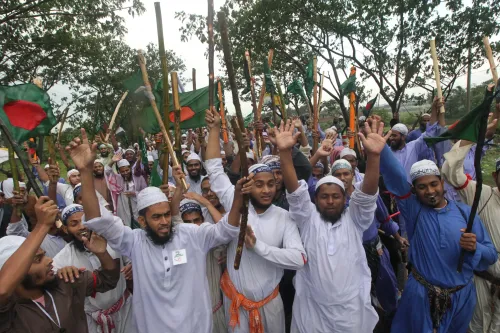
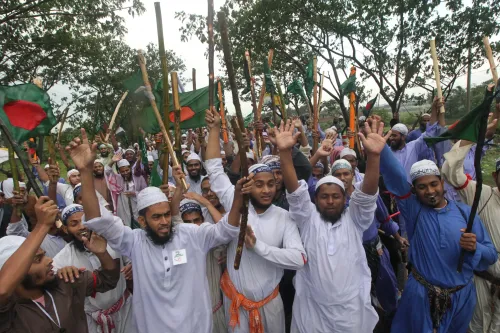
The report indicates that after its revival, Jamaat has solidified its position in Bangladesh’s political landscape, gaining more influence. The growing popularity of Jamaat raises alarms about conservative Islamic values, especially as societal divisions deepen.
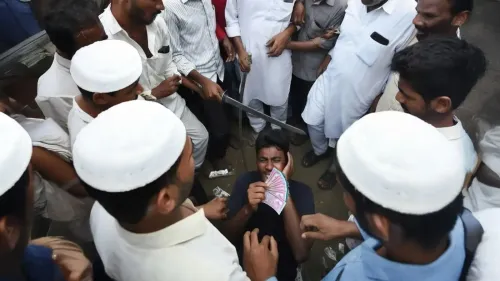
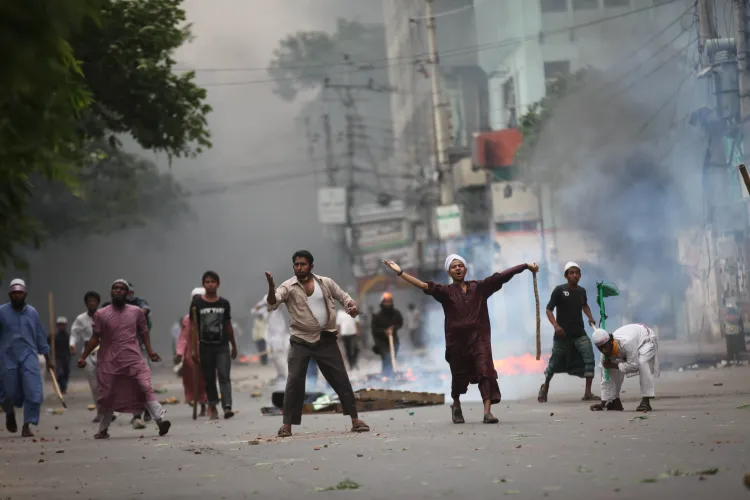
Since the protests in July 2024, the report mentioned that Bangladesh has experienced mob violence against women, the cancellation of girls' sports events, and numerous horrific incidents of sexual violence against women and children throughout the nation.
“For a country that has been celebrated for its female leadership, this regression is profoundly troubling,” it commented.
Furthermore, the report stated, “In a nation now sharply divided along religious lines, grappling with the persistent aftermath of the Rohingya refugee crisis, and navigating deteriorating relations with India, the forthcoming elections may not bring the optimism many are seeking.”
Point of View
It is crucial to recognize the ongoing struggles faced by minorities in Bangladesh. The situation underscores the importance of upholding human rights and ensuring that all citizens are treated equitably, regardless of their background. The rise of extremist ideologies poses a significant threat to the democratic fabric of the nation, and it is imperative that we remain vigilant in advocating for justice and equality.
NationPress
13 Oct 2026
Frequently Asked Questions
What challenges do minorities face in Bangladesh?
Minorities in Bangladesh are facing increasing challenges, including discrimination, violence, and a government that may not recognize their rights as equal citizens.
What is Jamaat-e-Islami's role in Bangladeshi politics?
Jamaat-e-Islami is the largest Islamist party in Bangladesh, and its resurgence has raised concerns about conservative Islamic values and their impact on society.
How has the US responded to Jamaat-e-Islami?
A recent report indicates that a US diplomat expressed a desire for Jamaat-e-Islami to be considered as allies, which has raised alarms regarding US foreign policy in the region.
What events have led to increased violence against women in Bangladesh?
Since the July 2024 demonstrations, Bangladesh has witnessed a surge in mob violence against women, including the cancellation of girls' sports events and cases of brutal sexual violence.
What implications do the upcoming elections have for Bangladesh?
The elections are viewed as critical, with potential impacts on the rights of minorities and the overall political landscape, especially amid rising extremist ideologies.