What’s Inside the ISI Playbook for Bangladesh Elections?
Synopsis
As Bangladesh approaches its crucial elections on February 12, tensions are escalating. With reports of violence and political maneuvering, the stakes are high for both the BNP and Jamaat-e-Islami. Discover the intricate plans involving the NCP and ISI as they aim to shape the electoral outcome in favor of Jamaat amidst rising fears of unrest.
Key Takeaways
Bangladesh elections set for February 12 amid rising violence.
ISI's involvement aims to manipulate electoral outcomes.
BNP and Jamaat-e-Islami are the main contenders.
Increased tensions may affect regional stability.
India closely monitors the situation due to security concerns.
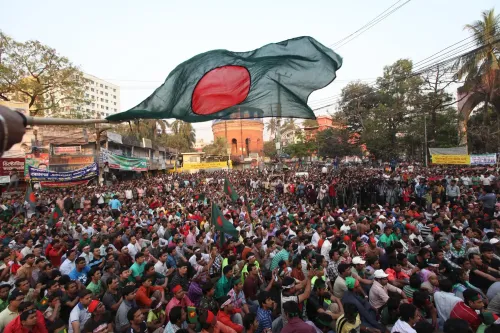
New Delhi, Dec 18 (NationPress) The upcoming elections in Bangladesh are scheduled for February 12, prompting Indian agencies to monitor the situation closely due to escalating reports of widespread violence in the lead-up to these pivotal polls.
An official from the Intelligence Bureau indicated that efforts are underway not only to incite violence within Bangladesh but also to ensure that it extends into India.
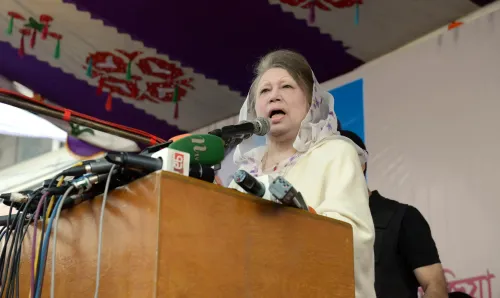
With the Awami League disqualified from participating, the contest is now a direct face-off between the Bangladesh Nationalist Party (BNP) and Jamaat-e-Islami.
Polling data implies a competitive struggle as the support for Jamaat is surging rapidly.
Authorities suggest that the National Citizen Party (NCP) has been tasked with the role of inciting violence.
The ISI of Pakistan aims for Jamaat to take on the role of the 'good cop' while the NCP acts as the 'bad cop' to stir unrest.
Indian officials express alarm at the current state of affairs in Bangladesh.
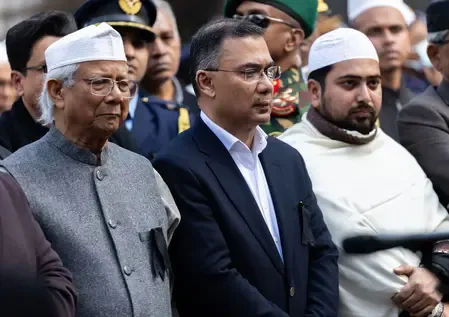
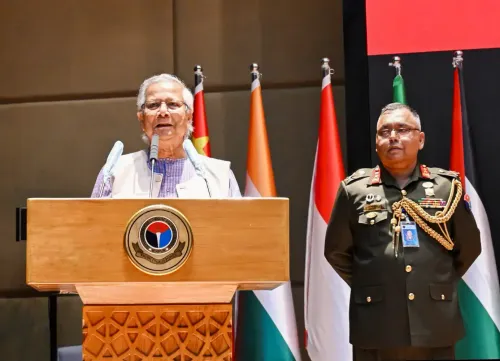
With the collapse of the Sheikh Hasina administration and the appointment of Muhammad Yunus as the interim head, relations between Dhaka and New Delhi have significantly deteriorated. Observers claim Yunus is merely a puppet of Jamaat, with the ISI pulling the strings.
The ISI is displeased with New Delhi’s engagement with BNP leaders, who have also expressed a desire for improved relations with India, causing discomfort in Pakistan.
Under Hasina's leadership, who maintained strong ties with India, the ISI faced operational challenges in Bangladesh. However, the Jamaat-supported Yunus has opened the doors for Pakistan to exert influence.
The ISI fears that a BNP victory would limit its influence, as the party aims to reconcile with India. Previous BNP administrations strained ties when New Delhi accused Bangladesh of harboring extremists threatening the Northeastern states; the BNP is keen to amend this.
Notably, BNP's decision to avoid an alliance with Jamaat, as it had previously, signals their intent to repair relations with India.
Intelligence officials assert that Pakistan will employ all means necessary to foster anti-India sentiment and incite violence leading up to the elections. The goal is to manipulate the polls, creating an atmosphere of fear that favors Jamaat.
The primary strategy is to intimidate BNP supporters, ensuring that only Jamaat voters have the opportunity to cast ballots.
Awami League supporters are likely to abstain, whereas BNP backers are determined to vote, something Jamaat seeks to prevent.
Both Indian and US assessments predict widespread violence in Bangladesh, including targeted attacks on BNP rallies and potential threats to Indian and US nationals.
Officials believe the objective is to create chaos, deterring voters opposed to Jamaat from reaching polling stations.
The elections are crucial not only for the 300 parliamentary seats but also for a national referendum on the proposed July Charter, which aims to implement significant reforms to state institutions.
Another official elaborated that further attempts would be made to instigate anti-India sentiments, which align with Jamaat's largely anti-India base. Provocative rhetoric has intensified since Yunus's takeover.
Recently, a controversy emerged when NCP leader Hasnat Abdullah threatened to isolate the Northeast's 'Seven Sisters' and provide refuge to separatist factions if India attempts to destabilize Bangladesh.
In response, India summoned Bangladesh’s High Commissioner in New Delhi, Muhammad Riaz Hamidullah, for a formal diplomatic protest and also temporarily shut the Indian Visa Application Centre in Dhaka due to security threats from extremist factions.
Officials assert that these maneuvers are part of Pakistan's strategy to instigate anti-India sentiment in Bangladesh. The overarching plan is to sway public opinion towards Jamaat while undermining BNP's influence during the elections.
Point of View
I emphasize the importance of unbiased reporting on the political dynamics in Bangladesh. The upcoming elections are not merely a local affair; they resonate with broader implications for regional stability, particularly concerning India. Our coverage seeks to provide clarity amidst the chaos, ensuring that all voices are heard and the facts presented accurately.
NationPress
19 Sept 2026
Frequently Asked Questions
What is the significance of the upcoming elections in Bangladesh?
The elections on February 12 are crucial as they will determine the political landscape of Bangladesh, particularly amid rising tensions and violence.
What role does the ISI play in the Bangladesh elections?
The ISI aims to influence the electoral outcome by supporting Jamaat-e-Islami and inciting violence through the NCP to manipulate public sentiment.
How does the BNP's strategy differ from Jamaat's?
The BNP seeks to mend relations with India and avoid alliances with Jamaat, contrasting with Jamaat’s more aggressive stance against India.
What are the potential risks of violence during the elections?
Reports suggest that violence could be used to intimidate BNP supporters, potentially skewing the election results in favor of Jamaat.
How is India responding to the situation?
India has expressed concerns by summoning the Bangladeshi High Commissioner and closing its Visa Application Centre in Dhaka due to security threats.