Should Jamaat-e-Islami’s Discriminatory Views on Women Exclude It from Politics in Bangladesh?
Synopsis
As Bangladesh approaches its national elections, the role of Jamaat-e-Islami and its discriminatory attitudes towards women is raising critical questions. Can a party with such regressive views continue to operate within the democratic framework? This article delves into the implications of their stance on women's rights and its potential impact on the country's future.
Key Takeaways
Jamaat-e-Islami's discriminatory stance on women is under scrutiny.
Constitutional provisions prohibit gender discrimination.
Concerns arise about the party’s influence on Bangladesh's democratic future.
Female members of Jamaat accept its leadership stance.
The upcoming national elections could be pivotal for women's rights.
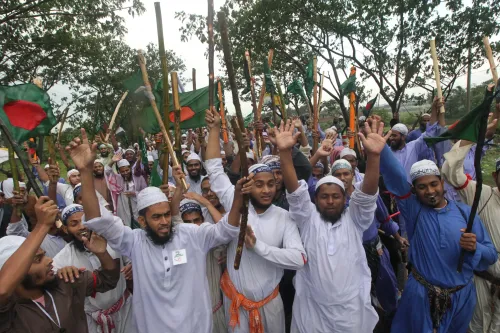
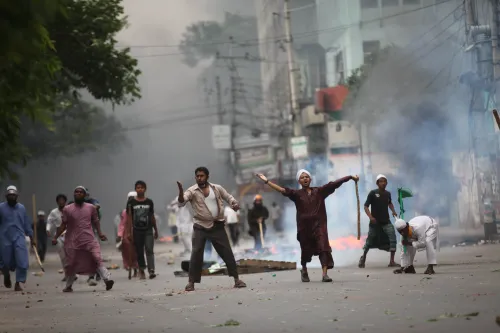
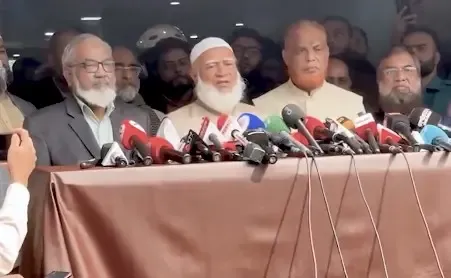
Dhaka, Feb 3 (NationPress) For Bangladesh to evolve into a democratic nation, it is crucial for citizens to critically assess whether a radical political entity like Jamaat-e-Islami, known for its backward stance on women's rights, should be permitted to remain registered and operate within the nation's constitutional and legal boundaries, a report raised on Tuesday. Until such core issues are resolved, it cautioned, it would be reckless to entrust governance to a party with such views.
A report published in Bangladesh's prominent newspaper Prothom Alo highlights that the Proclamation of Independence, the commitment to human dignity in the preamble of the national Constitution, and Article 28 prohibit any political party from engaging in discrimination based on religion, race, gender, or socio-economic status. Nevertheless, it is clear that Jamaat, through its constitution and conduct, treats Muslim women and all non-Muslims as second-class citizens.
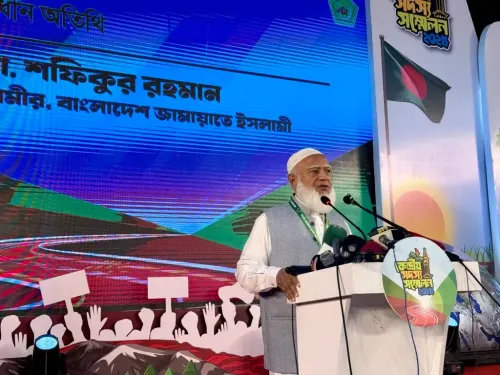
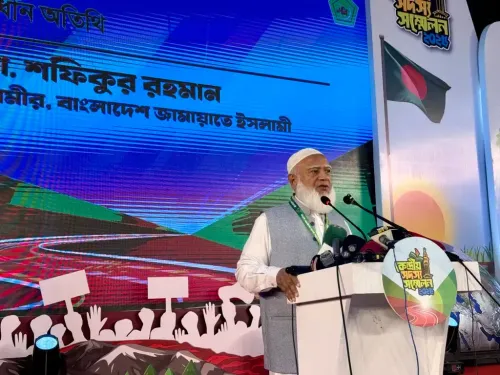
“Instances of Jamaat’s negative perspective towards women can be found in numerous statements made by the Ameer. His assertion that women's working hours ought to be restricted to five hours, coupled with his comments, indicates a desire to confine women to domestic roles. In one instance, he remarked, 'The employer will compensate for five hours, while the government will cover three. Those engaged in domestic work will be revered as 'ratnagarbha' mothers. Should women wish to work eight hours, they will receive recognition',” the report elaborated.
“More recently, during a youth gathering, the Jamaat Ameer made sharply sarcastic and disparaging remarks about women who pursue careers outside the home. He first inquired about the number of unmarried attendees, then provided advice on marriage: ‘From this moment, resolve to bring home a queen, not a laborer. Whoever you choose, treat her as a queen, akin to a rose',” it continued.
The report emphasized that while individuals might hold personal beliefs regarding women's roles in family, society, or the workplace, it questioned whether a political party operating within a state can include constitutional provisions that directly contravene the national constitution.
Interestingly, female members of Jamaat have expressed their acceptance of the party's stance on women's leadership.
“God has decreed in the Holy Quran that men are the guardians of women. We embraced this belief when we accepted our faith. Consequently, women attaining prominent leadership roles is not paramount; what truly matters is whether women's rights are being upheld,” quoted Nurunnisa Siddika, Secretary General of Jamaat's women’s division, in response to inquiries about women's leadership.
With the Bangladesh national elections looming just nine days away, critics caution that Jamaat’s ongoing misogynistic comments and its choice to not field any female candidates for the upcoming elections could steer the nation towards a regressive political trajectory.
Point of View
The issue at hand is whether political entities like Jamaat-e-Islami can reconcile their constitutional provisions with the principles enshrined in Bangladesh's Constitution. The Nation believes in advocating for an inclusive political environment that respects and upholds the rights of all citizens, especially women.
NationPress
26 Sept 2026
Frequently Asked Questions
What is Jamaat-e-Islami's stance on women's rights?
Jamaat-e-Islami has been criticized for its regressive views on women's roles, advocating for limited working hours for women and making derogatory remarks about women in the workforce.
How does the Constitution of Bangladesh protect gender rights?
The Constitution, specifically Article 28, prohibits any form of discrimination based on gender, ensuring that all citizens have equal rights.
What impact could Jamaat’s views have on the upcoming elections?
Critics warn that Jamaat's discriminatory stance and decision not to field female candidates could lead to a regression in political and social progress in Bangladesh.