Why Does Bangladesh Jamaat Insist Women Can't Hold Top Party Roles?
Synopsis
In a controversial statement, Bangladesh Jamaat-e-Islami declares that Islamic principles bar women from top leadership roles within the party. As elections approach, this stance raises questions about women's rights and representation in Bangladesh. Discover the implications of this decision and the ongoing discourse surrounding women's leadership in the political landscape.
Key Takeaways
Women cannot hold top leadership roles in Bangladesh Jamaat-e-Islami due to Islamic principles.
Nurunnisa Siddika advocates for a broader discussion on women's rights and dignity.
Historical context: Bangladesh has had female leadership, but women's issues remain unresolved.
Attacks on female activists highlight ongoing political challenges.
Jamaat emphasizes humane leadership over gender representation.
Dhaka, Feb 2 (NationPress) The Bangladesh Jamaat-e-Islami has asserted that women are not eligible to hold the highest leadership roles within the party, emphasizing that their operations are guided by Islamic principles which prohibit women from serving as ameer.
This statement arises as Bangladesh prepares for elections on February 12.
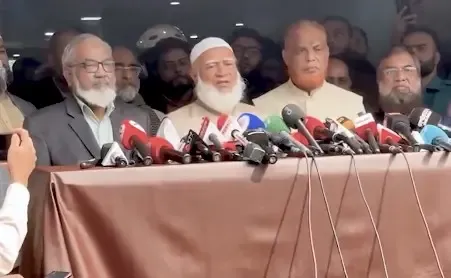
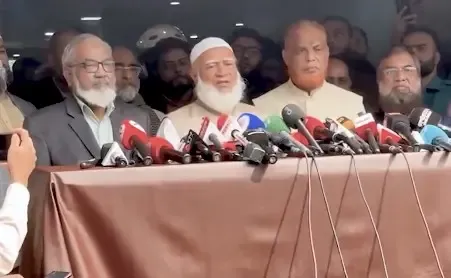
During a press conference at the Election Commission (EC) on Sunday, the party’s Women’s Wing Secretary, Nurunnisa Siddika, articulated that Jamaat-e-Islami functions as an organization rooted in Islamic values, formulating its policies based on its interpretation of Quranic teachings.
“According to the Quran, men are considered the leaders of women, which is viewed as a directive and responsibility in Islam,” she was reported saying by a prominent Bangladeshi newspaper, The Dhaka Tribune.
She further explained that based on this understanding, women are excluded from top leadership roles in any Islamic organization.
Siddika mentioned that the party’s organizational and political activities are conducted in line with these principles and that they remain steadfast in their ideological framework.
When questioned about the lack of female candidates nominated by Jamaat for parliamentary elections, Siddika described it as an “internal organizational decision” made by the party.
She stressed that the broader conversation should not solely focus on women in leadership positions, but rather on whether women’s rights, dignity, and security are sufficiently upheld in society.
“In the last 54 years, Bangladesh has had two female prime ministers for extended periods. Yet, have women’s issues been resolved? Has violence against women diminished? Have women’s rights been secured?” she posed.
Siddika contended that merely placing women in senior leadership positions does not guarantee significant improvements in the lives of women nationwide.
“True change occurs when leadership—regardless of gender—is compassionate and ensures dignity for all,” she asserted, adding that Jamaat prioritizes establishing just and humane leadership over appointing women to the highest roles.
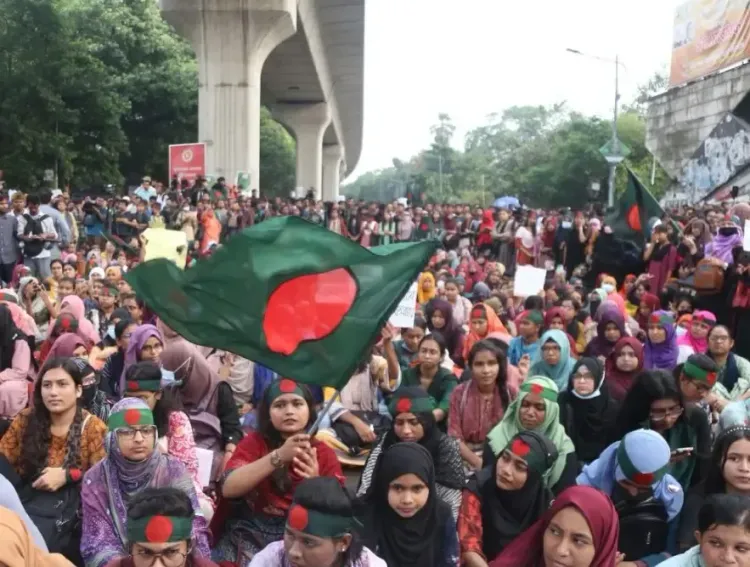
In parallel, Jamaat Women’s Wing chief Habiba Chowdhury remarked that women make up nearly half of Bangladesh’s electorate, yet many have historically been denied the chance to exercise their voting rights.
She reported that at least 15 incidents involving assaults on female Jamaat activists across various districts had been documented for the Election Commission, alleging these incidents stemmed from political retribution.
Earlier on Sunday, a six-member Jamaat delegation, led by Assistant Secretary General Advocate Ahsanul Mahboob Zubair, met with Chief Election Commissioner AMM Nasir Uddin to discuss current issues related to the electoral process.
Point of View
We must acknowledge the complexities surrounding the Bangladesh Jamaat-e-Islami's position on women's leadership. While the party cites Islamic principles, the wider societal implications cannot be ignored. Women's rights and representation are crucial for a thriving democracy, and discussions must continue to ensure that dignity and security for women are prioritized.
NationPress
23 Sept 2026
Frequently Asked Questions
Why does Bangladesh Jamaat-e-Islami oppose women in leadership?
The party claims that Islamic principles prohibit women from holding top leadership positions, stating that men are seen as leaders of women.
What is the response of Jamaat's Women's Wing Secretary?
Nurunnisa Siddika emphasized the party's commitment to its ideological framework and stated that the broader focus should be on ensuring women's rights and security.
How many female prime ministers has Bangladesh had?
Bangladesh has had two female prime ministers over the past 54 years, yet challenges regarding women's rights persist.
What incidents have been reported concerning female Jamaat activists?
At least 15 incidents of attacks on female Jamaat activists have been reported, allegedly due to political vendetta.
What is Jamaat's stance on female candidates in elections?
The party has not nominated any female candidates, citing this as an internal organizational decision.