Is Jamaat-e-Islami's View on Women's Leadership in Bangladesh Regressive?
Synopsis
The article explores the stark contrast between Bangladesh's progress in women’s leadership and Jamaat-e-Islami’s regressive stance on women in power. It delves into the implications of such gender bias on society and governance, raising critical questions about equality and leadership roles.
Key Takeaways
Bangladesh has a history of female leadership.
Jamaat-e-Islami's stance is a significant setback for gender equality.
Gender bias impacts political representation and societal roles.
Childcare responsibilities should be shared by both genders.
Leadership requires skills that are not bound by gender.
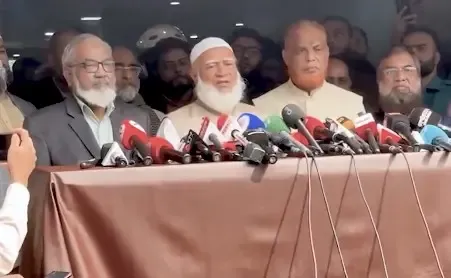
Dhaka, Feb 2 (NationPress) Bangladesh, which has been steered for many years by two prominent female leaders -- former Prime Ministers Sheikh Hasina of the Awami League and the late Khaleda Zia of the Bangladesh Nationalist Party (BNP) -- sharply contrasts with the radical Islamist party Jamaat-e-Islami’s claim that a woman cannot hold the position of party chief or lead the government. This assertion is widely regarded as irrational and profoundly regressive, according to a report released on Monday.
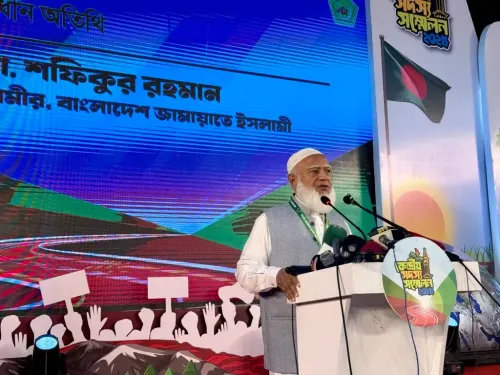
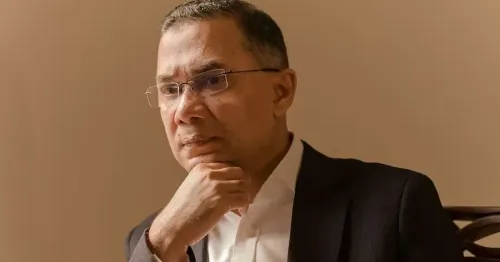
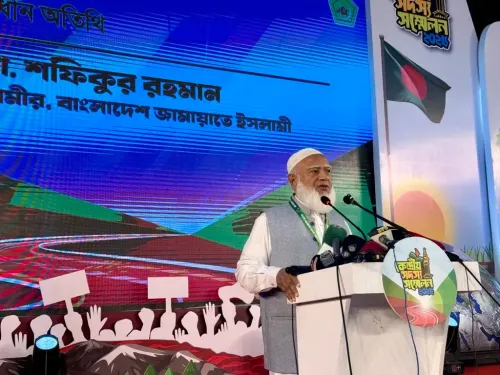
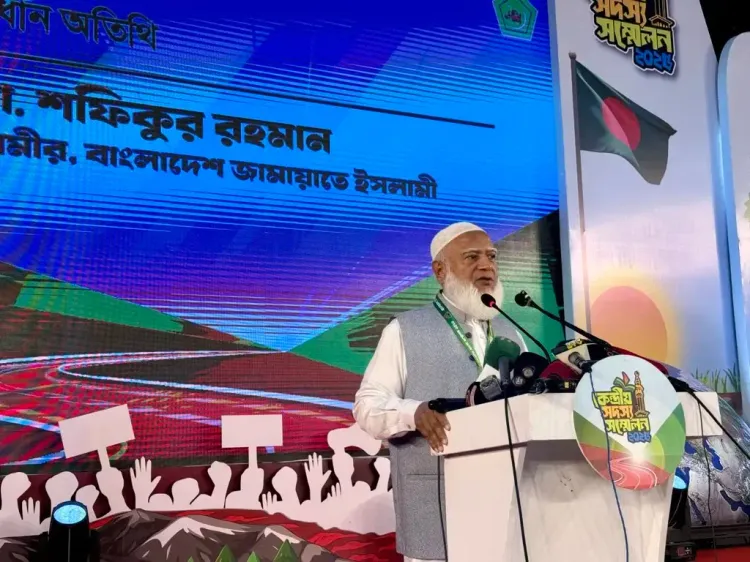
In an article for Bangladesh's top Bengali daily, Prothom Alo, columnist and author Hasan Ferdous highlighted a recent interview with Jamaat leader Shafiqur Rahman where he proclaimed that a woman can never lead his party. Rahman contended that men and women have distinct roles, stating that women are biologically designed to give birth while men are not, attributing this belief to the “Creator who has established this order.”
The party has previously expressed its opposition to any woman serving as head of government or state.
“Breaking down this argument reveals that the underlying message is that women are inferior to men. What men can achieve, women cannot. Men will dominate the leadership of both the party and the nation. Women, according to this view, are best suited for childbirth and child-rearing, thus they should remain in the household. This is considered their appropriate role,” Ferdous argued.
The report noted that Jamaat, along with over 30 other political entities, did not nominate a single female candidate for any of the 300 seats in the upcoming national election on February 12, highlighting their entrenched gender bias.
“When such perspectives form the foundation of state or governmental policy, the repercussions can be starkly observed in today’s Afghanistan. There, citing divine mandate, girls have been prohibited from attending school past the age of 12. Except for a few limited areas, women have been barred from participating in the workforce. They are also restricted from moving freely in public, and even speaking loudly is punishable,” the report stated.
While the Jamaat leader referenced women’s childbearing abilities as a justification, the report emphasized that this biological function is irrelevant to leadership capabilities.
“Leadership necessitates strategic intelligence, management skills, and the capacity to guide a party or a nation calmly during crises. Women are equally competent as men in these domains,” it concluded.
Additionally, the report addressed Jamaat’s recent comments on women's rights, which included promises to implement a five-hour workday for female workers instead of eight to facilitate child-rearing. However, it pointed out, “Child-rearing is not solely a woman’s responsibility; in many families, men must share this duty. The real issue isn't employment; it’s childcare.”
Point of View
I believe that the views expressed by Jamaat-e-Islami reflect a concerning regression in gender equality. It is crucial to uphold and promote the values of equal opportunity for all, regardless of gender, to foster a truly inclusive society.
NationPress
22 Sept 2026
Frequently Asked Questions
What is Jamaat-e-Islami's stance on women's leadership?
Jamaat-e-Islami maintains that women cannot serve as party leaders or heads of government, arguing that men and women have different roles.
How does this compare to the leadership in Bangladesh?
Bangladesh has been led by two female Prime Ministers, showcasing a significant contrast to Jamaat-e-Islami's regressive views.
What are the implications of such views on society?
Such views can hinder progress towards gender equality and impact women's rights negatively, drawing comparisons with extreme cases like Afghanistan.
What did Hasan Ferdous argue about women’s roles?
Ferdous emphasized that the argument against women’s leadership reduces their role to childbearing and domestic duties, which is a limited perspective.
What are Jamaat-e-Islami's recent policies on women's rights?
Jamaat has made promises to reduce work hours for women but fails to recognize that childcare responsibilities should also involve men.