India amends FDI rules to boost e-commerce access for MSMEs, artisans
Synopsis
India has quietly rewritten its FDI rules to let global e-commerce capital flow into sectors long dominated by small producers — handloom, handicrafts, food, footwear. Announced at the BRICS ministerial in Jaipur, the move is less a trade tweak and more a structural bet: that digital platforms, if properly incentivised, can do what decades of government schemes could not — get artisan and farm produce to national and global consumers at scale.
Key Takeaways
Commerce Minister Piyush Goyal announced amended FDI rules on 7 August in Jaipur to facilitate large-scale e-commerce.
The revised framework covers handloom, handicrafts, textiles, footwear, and food products sold online.
The changes aim to expand market access for MSMEs, artisans, farmers, and fishermen .
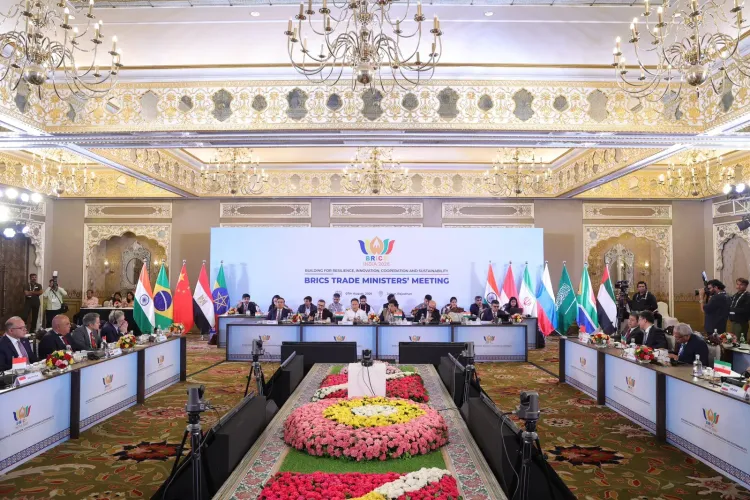
The announcement followed the BRICS Trade and Industry Ministers' Meeting , chaired by India.
BRICS discussions also covered AI and Quantum Computing for industrial growth, and paperless cross-border trade processes.
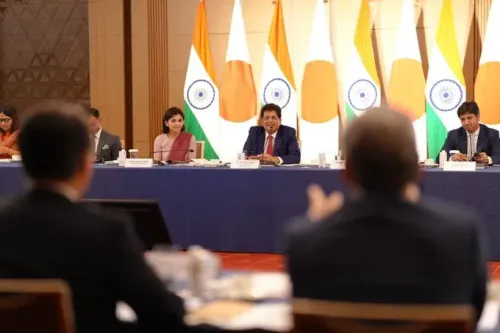
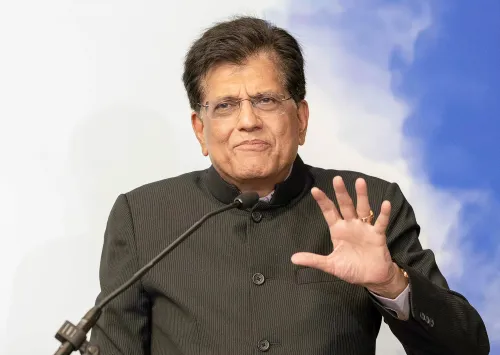
Union Commerce and Industry Minister Piyush Goyal on Friday, 7 August announced that the Centre has amended India's Foreign Direct Investment (FDI) rules to facilitate large-scale e-commerce, opening new market avenues for micro, small and medium enterprises (MSMEs), artisans, farmers, and fishermen. The announcement was made in Jaipur following the BRICS Trade and Industry Ministers' Meeting.
What the FDI Amendment Covers
The revised FDI framework is designed to enable products such as handloom, handicrafts, textiles, footwear, and food items to reach larger domestic and global markets through e-commerce platforms. According to Goyal, the reform directly targets traditional and small-scale producers who have historically lacked access to organised digital retail channels.
'We have recently amended the FDI rules to facilitate large-scale e-commerce for products such as handloom, handicrafts, textiles, footwear and various consumer goods, including food products that are commonly purchased online. These reforms will benefit our farmers, fishermen, artisans and small businesses by expanding their market access,' the Union Minister said.
India's Push at the BRICS Ministerial
Goyal's remarks followed two days of deliberations at the BRICS ministerial meetings in Jaipur. The Industry Ministers' meeting on Thursday, chaired by India, focused on generating employment through emerging technologies. Discussions centred on Artificial Intelligence (AI) and Quantum Computing as accelerators of industrial growth across BRICS nations.
The Commerce Ministers' meeting on Friday addressed measures to strengthen trade flows among BRICS countries, improve MSME access to finance, and simplify cross-border business procedures. Ministers also emphasised greater adoption of digital technologies to make trade processes paperless and improve regulatory efficiency.
Why It Matters for MSMEs
India's MSME sector employs an estimated 11 crore people and contributes significantly to exports, yet many small producers remain locked out of organised e-commerce due to structural and regulatory barriers. The FDI rule changes are intended to attract platform investment that can absorb these producers at scale — a stated priority of the Centre under its broader digital trade agenda.
Notably, this move comes as India holds the BRICS chair and is actively positioning itself as a champion of MSME-inclusive trade frameworks within multilateral groupings. The e-commerce FDI revision signals a shift from treating digital commerce as a consumer-facing market to recognising it as a supply-side enabler for small producers.
What Comes Next
The Centre is expected to issue detailed operational guidelines on the amended FDI rules. Industry bodies and MSME associations are likely to seek clarity on eligibility criteria for platforms and producers. The discussions at the BRICS ministerial are also expected to feed into a broader roadmap for MSME financing and digital trade cooperation among member nations.
Point of View
But the devil will be in the operational guidelines. Past e-commerce FDI frameworks have struggled with definitional ambiguity — what qualifies as a marketplace versus an inventory-led model — and small producers have often been the collateral damage of those disputes. If the revised rules genuinely lower the barrier for artisans and farmers to access platform infrastructure, that is a meaningful shift. But without enforceable producer-protection clauses and transparent eligibility criteria, the reform risks benefiting platform aggregators more than the MSMEs it is meant to serve. India's BRICS chairmanship gives this announcement diplomatic visibility; the harder test is domestic implementation.
NationPress
22 Sept 2026
Frequently Asked Questions
What FDI rule changes did India announce for e-commerce?
India has amended its Foreign Direct Investment rules to facilitate large-scale e-commerce for products including handloom, handicrafts, textiles, footwear, and food items. The changes are designed to help MSMEs, artisans, farmers, and fishermen access wider domestic and global markets through e-commerce platforms.
Who announced the FDI e-commerce amendment and where?
Union Commerce and Industry Minister Piyush Goyal announced the amendment on 7 August in Jaipur, speaking to the media after the BRICS Trade and Industry Ministers' Meeting.
How does this affect MSMEs and small producers?
The revised FDI framework is intended to attract platform investment that can connect small producers — including traditional artisans, farmers, and fishermen — with a much larger consumer base, both domestically and globally, through organised e-commerce channels.
What was discussed at the BRICS ministerial meetings in Jaipur?
The BRICS Industry Ministers' meeting on Thursday, chaired by India, focused on job creation through AI and Quantum Computing. Friday's Commerce Ministers' meeting addressed strengthening trade flows, improving MSME access to finance, simplifying cross-border procedures, and adopting digital technologies to make trade paperless.
What happens next after this FDI amendment?
Detailed operational guidelines on the amended FDI rules are expected from the Centre. MSME associations and industry bodies are likely to seek clarity on eligibility criteria for platforms and producers, while BRICS discussions are expected to contribute to a broader MSME financing and digital trade roadmap.