Is Jamaat's Perspective on Women Provoking Outrage in Bangladesh?
Synopsis
The remarks by Jamaat-e-Islami leader Shafiqur Rahman equating women’s work to prostitution have ignited fierce backlash across Bangladesh. This dehumanizing rhetoric raises important questions about women’s roles in society and the political implications of such views.
Key Takeaways
Shafiqur Rahman's remarks degrade various professions.
Women constitute a numerical majority in Bangladesh.
The backlash is a response to a perceived attack on women's dignity.
Jamaat’s views raise critical social and political questions.
Women's contributions are vital for family sustenance.
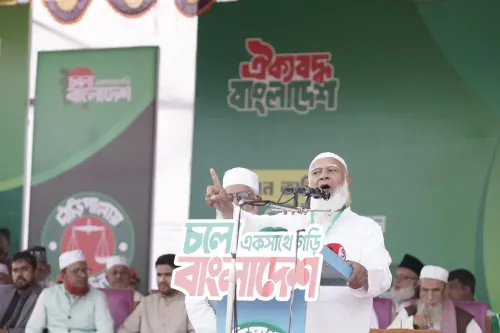
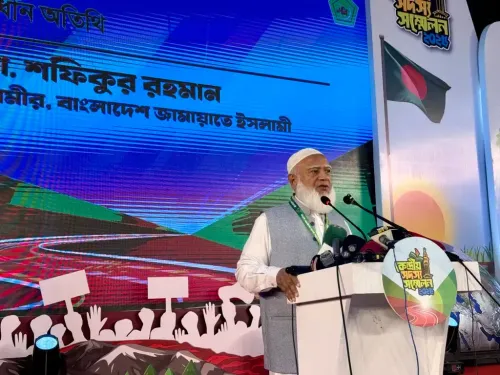
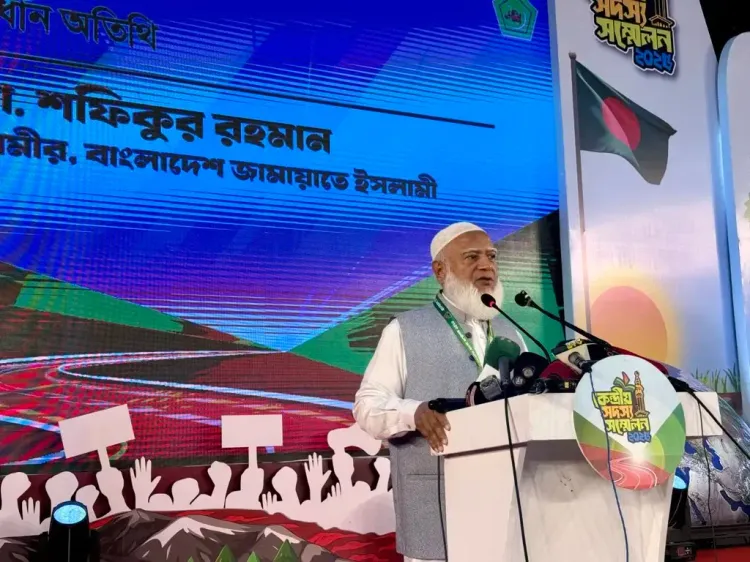
Dhaka, Feb 3 (NationPress) Leader of Bangladesh Jamaat-e-Islami, Shafiqur Rahman’s recent comments on social media that compare women’s employment outside the home to prostitution are not only a conservative viewpoint but also dehumanizing. This rhetoric diminishes professionals such as teachers, garment workers, doctors, nurses, journalists, police officers, and civil servants to a singular, degrading category, as pointed out in a recent report.
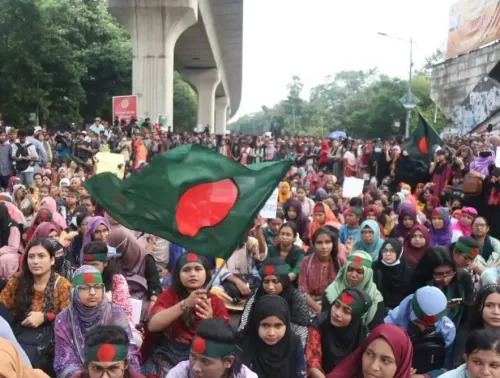
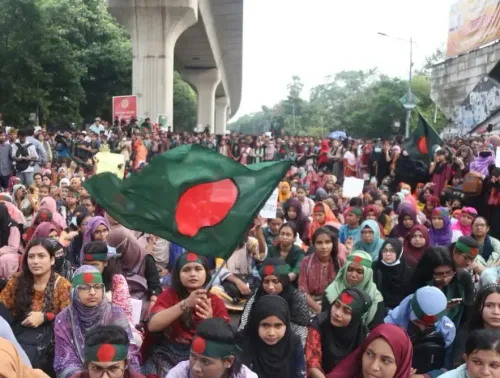
As reported by 'Time of Bangladesh', in a nation where women constitute a numerical majority, such language is perceived as a direct attack on mothers, daughters, sisters, and grandmothers alike. The subsequent outrage was genuine, reflecting a visceral reaction from individuals whose lives and those of the women they rely on are dismissed as “morally corrupt.”
The report emphasized that Jamaat’s firm stance against women in leadership roles, claiming that “Allah did not permit this,” along with the assertion that women’s involvement in public life signifies decay or “another form of prostitution,” resonates deeply as it reveals the party’s treatment of over half of the nation’s populace.
The party’s assertion that the contentious post was the result of hacking fails to tackle the more significant issue at hand. The uproar did not stem merely from one offensive comment or poorly timed post. It arose because the views expressed are in line with Shafiqur Rahman’s previous statements, including a recent interview with Al Jazeera where he categorically rejected the idea of women leading his party or the state.
During that time, senior Jamaat leaders openly supported these remarks. The only notable difference between the interview and the X post lies in wording: the interview avoided the term ‘prostitution,’ while the post utilized it directly. This choice of language is what escalated a familiar ideological position into a national controversy.
Highlighting the extensive political ramifications, the report asserts Jamaat’s ambition for electoral legitimacy and eventual governance raises critical questions about the safety and rights of women under a party that perceives their presence in public life as fundamentally immoral.
In Bangladesh, where social welfare is limited and many families depend on women’s income—often as the primary or sole earners—Jamaat’s stance appears particularly alarming.
From garment factories to rural clinics, from classrooms to overseas labor markets, women’s contributions are essential for sustaining households. If Shafiqur Rahman’s views were to be put into practice, the consequences would be catastrophic. Families would face income loss, children would sink deeper into poverty, and the already fragile social safety net would disintegrate further. Mere moral rhetoric does not provide solutions to the pressing question of who would provide for these families.
Point of View
It is crucial to approach this issue with a balanced perspective. The dehumanization of women through such rhetoric not only undermines their contributions but also poses significant social and political implications. It is essential for the discourse to focus on empowerment and equality rather than degradation.
NationPress
24 Sept 2026
Frequently Asked Questions
What did Shafiqur Rahman say about women's work?
Shafiqur Rahman equated women's work outside the home with prostitution, which has been widely criticized as dehumanizing.
How did the public respond to his remarks?
The public's response was a visceral reaction, identifying the comments as an attack on women and their roles in society.
What are the implications of Jamaat's stance on women in leadership?
Jamaat's position raises concerns about the safety and rights of women in the political and social landscape of Bangladesh.
Why is women's work important in Bangladesh?
Women's labor is crucial for many families, often serving as primary breadwinners in a society with limited social welfare.
What would be the consequences of implementing Rahman's views?
Implementing Rahman's views could lead to devastating consequences, including increased poverty and income loss for families.