Goyal marks GeM's 10 years as digital procurement milestone
Synopsis
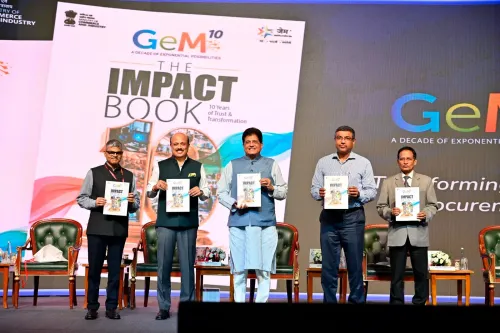
Union Commerce Minister Piyush Goyal marked GeM's 10th anniversary on 10 August 2026, hailing the digital procurement platform's decade-long impact on transparency, MSME inclusion, women entrepreneurship, and India's Atmanirbhar Bharat mission.
Key Takeaways
GeM was launched on 9 August 2016 under the Ministry of Commerce and Industry as India's end-to-end digital public procurement platform.
Minister Piyush Goyal credited GeM with making government procurement 'more transparent, inclusive and digital' over 10 years .
The platform has expanded access for MSMEs , registered startups, local sellers, and women entrepreneurs to government contracts.
GeM is positioned as a structural pillar of both the Atmanirbhar Bharat and Viksit Bharat policy frameworks.
The platform reduced discretionary decision-making in purchases, acting as a check on procurement-level corruption.
Key metrics to watch include growth in transaction volumes and the share of orders going to MSMEs and women-led enterprises.
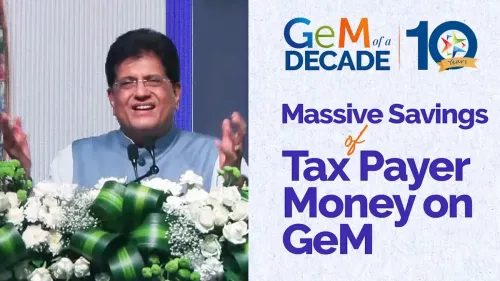
Ten years after a quiet pilot launch changed how India's government shops, Union Commerce and Industry Minister Piyush Goyal marked the anniversary of the Government e-Marketplace (GeM) on 10 August 2026, calling the platform a cornerstone of a self-reliant India and crediting it with opening government contracts to a new generation of small businesses, startups, and women entrepreneurs.
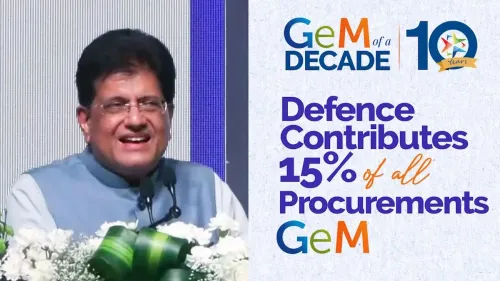
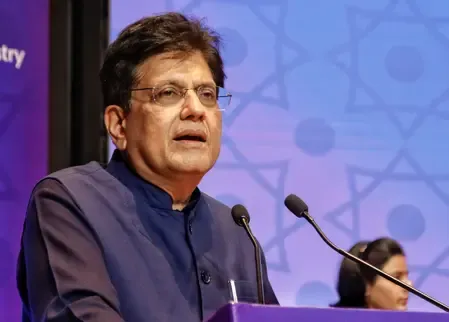
Posting on X in Hindi, Goyal wrote that 'GeM's 10 years have made government procurement more transparent, inclusive and digital,' adding that the platform has 'given new opportunities to MSMEs, startups, local sellers and women entrepreneurs' and delivered 'new momentum to Atmanirbhar Bharat' — the self-reliant India mission. He described the #10YearsofGeM journey as 'a symbol of the strong foundation of Viksit Bharat' — developed India.
From a 2016 pilot to the spine of public procurement
GeM was formally launched on 9 August 2016 under the Ministry of Commerce and Industry as a direct response to long-standing criticism of India's manual, opaque tendering system. The idea was straightforward but radical: replace paper-and-discretion with an end-to-end digital marketplace where any registered vendor could bid for government contracts and any buyer agency could compare prices in real time. A decade on, the platform sits at the intersection of three of the government's signature reform agendas — Digital India, Make in India, and Atmanirbhar Bharat.
The procurement reform plugged directly into the Atmanirbhar Bharat framework, which mandates preferential treatment for domestic and small-scale suppliers in public spending. By digitising the discovery and bidding process, GeM stripped away the informal gatekeeping that had historically kept MSMEs — Micro, Small and Medium Enterprises — locked out of lucrative government contracts. The same logic extended to women-led enterprises and registered startups, categories that struggle to compete when procurement runs on relationships rather than rules.
Why MSMEs and women entrepreneurs are the real headline
The political salience of Goyal's post lies less in the anniversary itself and more in who he chose to spotlight. MSMEs account for the vast majority of India's employment and a significant share of exports, yet their access to government business has historically been limited by compliance burdens and information asymmetry. A digital marketplace with standardised product categories, transparent pricing, and direct payment rails changes that calculus fundamentally. The explicit mention of women entrepreneurs signals the government's intent to use procurement policy as a lever for economic inclusion — a theme that has grown louder across multiple ministries in recent years.
The Digital India programme that underpinned GeM's architecture also reduced discretionary decision-making at the purchase level — a structural check on petty corruption that manual systems routinely enabled. That governance dividend, quiet but compounding over 10 years, is arguably the platform's most durable contribution.
What the next chapter of GeM looks like
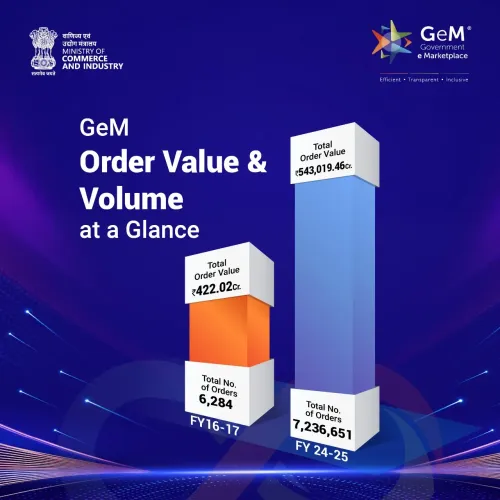
The anniversary is as much a forward signal as a backward look. Watchers of India's procurement landscape will track whether transaction volumes continue their upward trajectory, whether the share of orders flowing to MSMEs and women-led firms deepens, and whether new policy mandates extend GeM's reach to additional ministries, state governments, and public-sector undertakings. Each expansion widens the vendor pool and, in theory, drives further price discovery and savings for the exchequer.
A platform that began as a pilot to clean up government shopping has, over a decade, become infrastructure for India's broader ambition of a transparent, digitally governed economy. The next ten years will test whether it can scale that promise to every tier of government.
Point of View
Broadening its political appeal beyond fiscal hawks. The emphasis on digital transparency also quietly rebuts persistent criticism that government contracting remains opaque. Whether the anniversary prompts concrete new mandates — expanded GeM coverage, higher MSME procurement targets — or remains symbolic will be the real measure of the moment.
NationPress
24 Sept 2026
Frequently Asked Questions
What is GeM and when was it launched?
GeM, or the Government e-Marketplace, is India's official online platform for public procurement. It was formally launched on 9 August 2016 under the Ministry of Commerce and Industry to replace manual tendering with a transparent digital marketplace.
How does GeM benefit MSMEs?
GeM gives MSMEs direct, equal access to government tenders without the informal gatekeeping of traditional procurement. Standardised product categories, transparent pricing, and digital payment rails lower the entry barrier for small businesses competing for government contracts.
What did Piyush Goyal say about GeM's 10th anniversary?
Minister Piyush Goyal said GeM's 10 years have made government procurement 'more transparent, inclusive and digital,' and that the platform has given new opportunities to MSMEs, startups, local sellers, and women entrepreneurs while advancing the Atmanirbhar Bharat mission.
What is the connection between GeM and Atmanirbhar Bharat?
Atmanirbhar Bharat mandates preferential treatment for domestic and small-scale suppliers in government spending. GeM operationalises this by making it easier for Indian MSMEs and local vendors to discover and win government contracts, directly supporting the self-reliant India goal.
What should we watch for in GeM's next phase?
Key indicators include growth in total transaction volumes, the share of procurement flowing to MSMEs and women-led enterprises, and any new government mandates extending GeM's coverage to additional ministries, state governments, or public-sector undertakings.