Can a Woman Ever Lead Bangladesh's Jamaat-e-Islami Party?
Synopsis
In a controversial statement, the leader of Bangladesh Jamaat-e-Islami argues against female leadership, citing biological and religious reasons. As the February elections near, the absence of female candidates raises questions about gender representation in politics. Can the political landscape change, or is this a reflection of deep-seated cultural beliefs?
Key Takeaways
Shafiqur Rahman believes women cannot lead due to religious and biological reasons.
The upcoming elections will feature no women candidates from Jamaat-e-Islami.
Only 4.24% of candidates are women in the February elections.
Gender-based violence is a significant barrier to women's political participation.
The political landscape reflects deep cultural norms regarding gender roles.
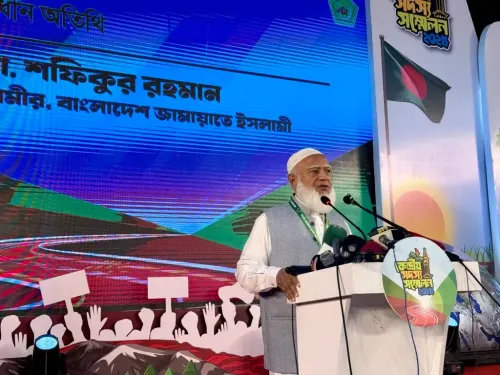
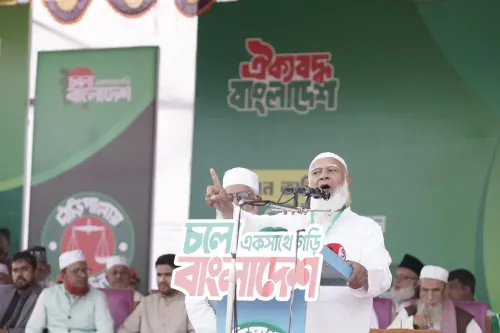
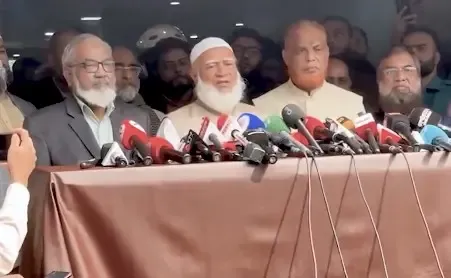
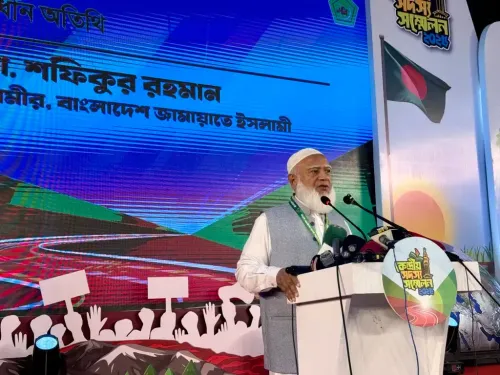
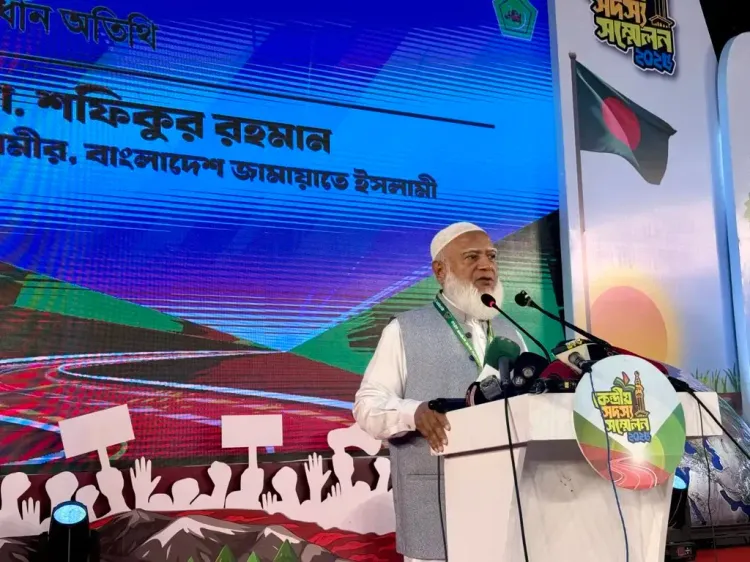
Dhaka, Jan 30 (NationPress) The Ameer of Bangladesh Jamaat-e-Islami, Shafiqur Rahman, has proclaimed that a woman cannot hold the position of party chief due to religious obligations and biological constraints.
In an interview with Al Jazeera, when questioned about the potential for a female leader, Shafiqur Rahman firmly stated, "It’s not possible. This is because Allah created everyone with distinct roles. A man cannot bear children, and thus cannot fulfill certain responsibilities."
He elaborated that men also cannot breastfeed, underlining the God-given differences between genders. He concluded, "What Allah has created, we cannot alter."
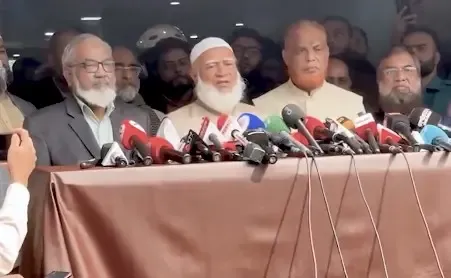
When prompted about the representation of women in the upcoming elections in Bangladesh, he indicated that not a single woman would be contesting on behalf of Jamaat-e-Islami, attributing this to timing and the prevailing political culture.
He remarked, "You won’t notice a significant number of women in other parties either, as this reflects the cultural context of Bangladesh. However, we are preparing for change."
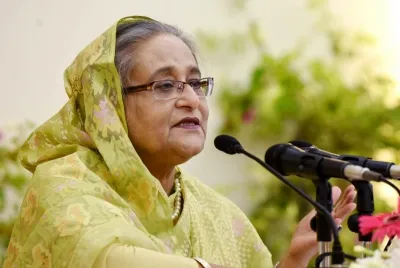
While discussing past instances of female leadership in Bangladesh, such as the Prime Ministership of Sheikh Hasina and Khaleda Zia, Shafiqur Rehman reiterated his position, asserting, "Even many countries globally do not find this feasible. This is the reality of the world."
The upcoming 13th Parliamentary elections, scheduled for February 12, 2024, are notable for the absence of the Awami League and the low representation of women candidates.
According to reports, the interim government led by Muhammad Yunus has banned the Awami League, leading to questions regarding the legitimacy of the elections. Additionally, increasing lawlessness and intolerance towards women under Yunus's administration have contributed to the lack of female candidates, as noted in an article by Eurasia Review.
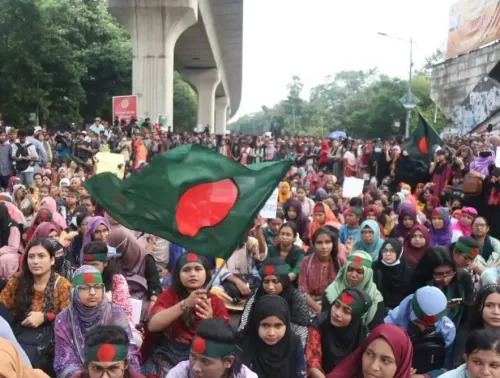
Although women have historically held the right to vote and have produced two female Prime Ministers, the current election sees a stark decrease in women's representation. Senior journalist P K Balachandran pointed out that of the 51 registered political entities contesting, over 30, including Jamaat-e-Islami, have not nominated any women candidates. Out of 2,568 nomination papers filed, only 109 were submitted by women, representing a mere 4.24%.
Following revisions, 1,981 candidates are now in the running, with only 76 females, accounting for just 3.84% of the total. The Election Commission reports 64.81 million male voters and 62.87 million female voters registered.
Among the 51 parties, few have included women in their nominations. The Bangladesh Nationalist Party (BNP) nominated women for 15 constituencies, but only 11 were validated. Other parties have also nominated a limited number of women.
The rise in gender-based violence has been cited as a reason for women's retreat from electoral politics. Dr. Fauzia Moslem, head of the Bangladesh Mahila Parishad, attributes this to the heightened rhetoric from radical groups aiming to restrict women's participation in society.
Point of View
I believe it’s crucial to address the implications of Shafiqur Rahman's remarks. His statements reflect a broader cultural stance on gender roles within Bangladeshi politics. While the absence of women candidates raises concerns about representation, it also opens the door for discussions on the need for reform in our political landscape. It's essential to balance respect for cultural values with the push for greater inclusivity in governance.
NationPress
24 Sept 2026
Frequently Asked Questions
Why did Shafiqur Rahman claim women cannot lead Jamaat-e-Islami?
Shafiqur Rahman cited religious obligations and biological limitations as reasons for his stance that women cannot hold leadership positions in the party.
What was the response regarding women candidates in the upcoming elections?
Rahman stated that Jamaat-e-Islami would not have any women contesting in the elections, attributing this to the cultural context of Bangladesh.
How many women candidates are participating in the February elections?
Out of 2,568 nomination papers, only 109 were filed by women, which is about 4.24% of the total.
What is the overall political climate regarding women's representation?
The political atmosphere shows a significant lack of female candidates across multiple parties, highlighting cultural and systemic barriers.
What impact does gender-based violence have on women's participation in politics?
Increased gender-based violence has been linked to women's reluctance to engage in active electoral politics, as reported by various sources.