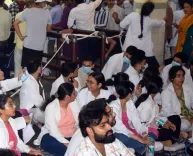
What Happened to Bangladesh's Political Landscape Dominated by Women?
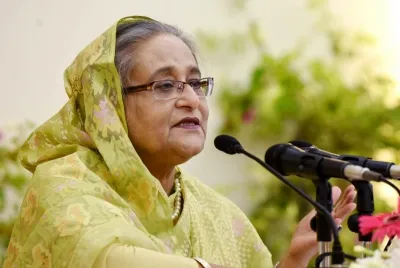
Synopsis
As Bangladesh heads into its first elections post-2024's turmoil, a striking absence of female political representation is evident. This article explores the implications of this shift, the rise of extremism, and how the legacy of two powerful women leaders has faded. The political landscape faces critical changes, raising concerns about the nation's future.
Key Takeaways
Political void in Bangladesh as women leaders are absent.
Less than 4% of candidates are women.
Rise of extremism threatens women's empowerment.
Former leaders Zia and Hasina's legacies are fading.
Political parties are favoring male candidates.
New Delhi, Feb 8 (NationPress) Bangladesh, despite facing challenges in various sectors, has long been characterized by a unique aspect — the political scene was largely shaped by two prominent female leaders.
As the nation approaches its elections, the first since the violent upheaval of 2024, an unexpected void has emerged in its political landscape, with both iconic women leaders absent — Khaleda Zia has passed away, and Sheikh Hasina is currently in exile.
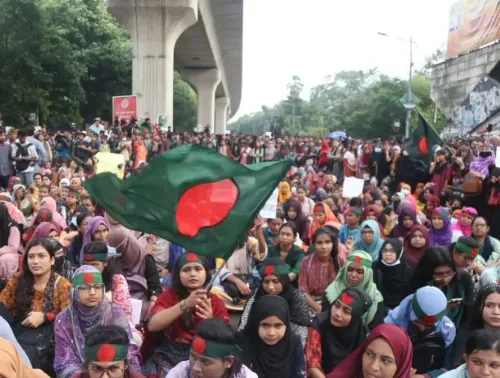
Once celebrated as a pioneer of women's empowerment in South Asia, the country is now grappling with a rise in extremism and radical ideologies.
Today, the political environment is almost entirely devoid of female candidates, largely due to intimidation and threats from radical groups.
Reports indicate that women comprise less than four percent of the candidates — of the 1,981 individuals contesting for 300 parliamentary seats, merely 76 are women.
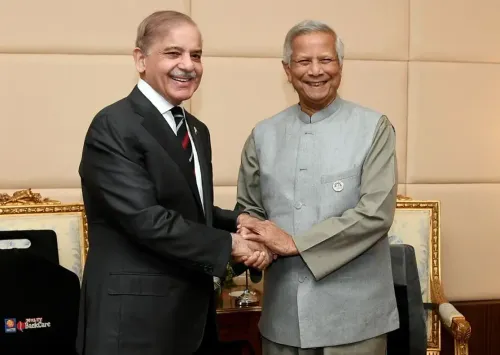
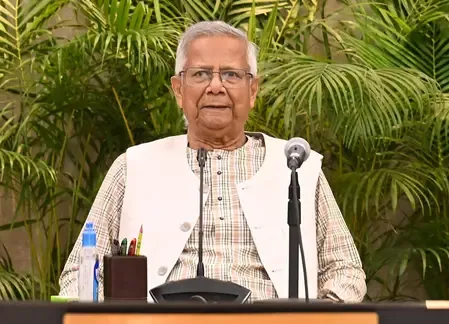
Observers express concern regarding the diminishing role of women in politics, which is crucial for maintaining the liberal essence of the nation, especially as new reports suggest fundamentalists are gaining an upper hand under the current interim government led by Muhammad Yunus.
The participation of women has drastically decreased, as most political parties now favor male candidates for their nominations.
While women's representation in Bangladeshi politics remains limited, the years from 1991 to 2024 were marked by the leadership of two formidable women — Sheikh Hasina and Khaleda Zia.
Zia passed away in December 2025 after leading the Bangladesh Nationalist Party (BNP) for forty years and serving as prime minister three times, while Sheikh Hasina was ousted following the July 2024 uprising after having served five terms.
Many political analysts claim that women are being silenced and marginalized, as the influence of Islamist factions has grown in the post-Hasina political environment.
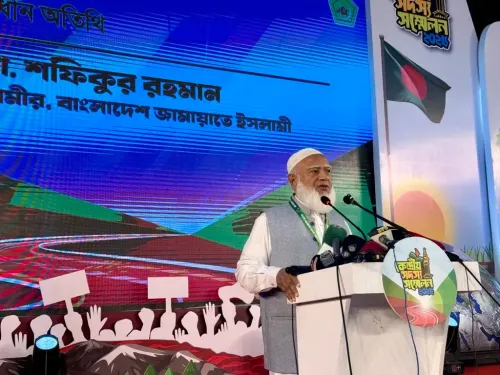
Jamaat-e-Islami, the most significant Islamist party, is seen as a primary contributor to this oppressive trend, having not nominated a single woman.
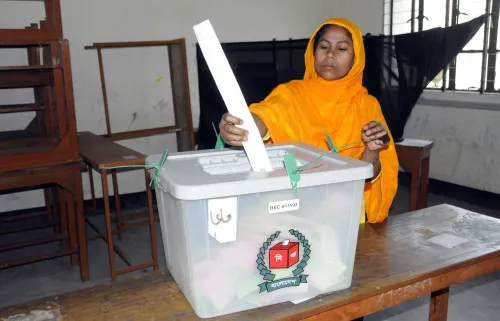
For over three decades, Bangladesh was among the few nations globally to be led by women; however, the upcoming elections on February 12 will reflect an almost entirely male-dominated governance.
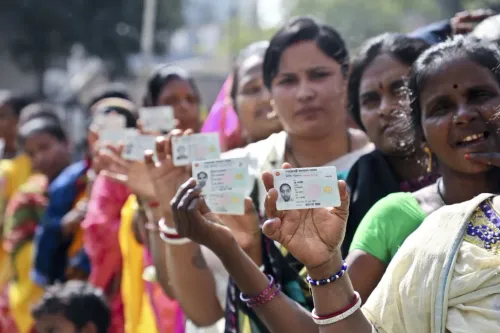
“I once took pride in having two prominent women leaders, but now it feels like they have been pushed aside. Women leaders are being marginalized,” stated a first-time voter in Bangladesh.
Notably, the South Asian country with a population of approximately 170 million elects 300 lawmakers to its Parliament, with an additional 50 seats reportedly reserved for women and other categories.
Point of View
It is essential to recognize the drastic changes in Bangladesh's political scene, particularly regarding women's representation. The decline in female participation is alarming and requires immediate attention. This trend poses a threat to the foundational liberal values of the country. We must remain vigilant to ensure that the voices of women are not silenced in the political arena.
NationPress
20 Sept 2026
Frequently Asked Questions
What factors led to the decline of female political representation in Bangladesh?
The decline is attributed to rising extremism, intimidation from radical elements, and a shift in political party dynamics favoring male candidates.
How has the leadership of women in Bangladesh changed over the years?
For over three decades, Bangladesh was led by two prominent women, Sheikh Hasina and Khaleda Zia, but recent political upheavals have marginalized their influence.
What is the current status of female candidates in the upcoming elections?
Women constitute less than four percent of the candidates, with only 76 out of 1,981 individuals contesting for parliamentary seats being female.
What impact does the absence of women in politics have on Bangladesh?
The lack of female representation may threaten the country's liberal values and lead to increased radicalization in the political landscape.
What is the significance of the February 12 elections?
These elections are crucial as they will shape the future governance of Bangladesh, which is currently dominated by male candidates.