How Did Jamaat's Chief Spark Controversy with Misogynistic Remarks?
Synopsis
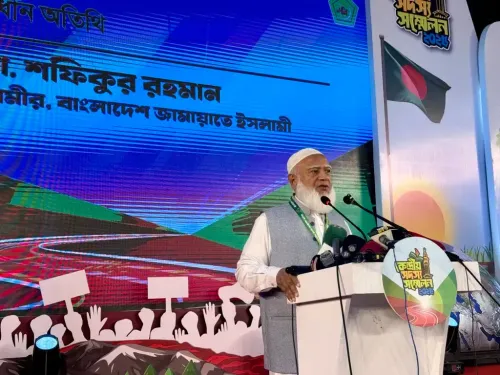
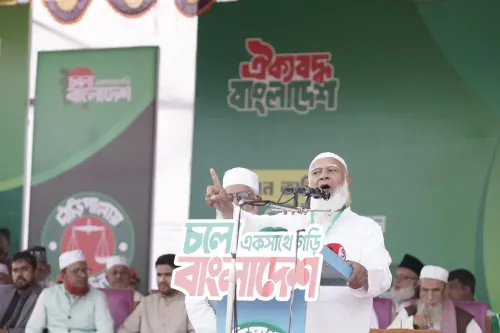
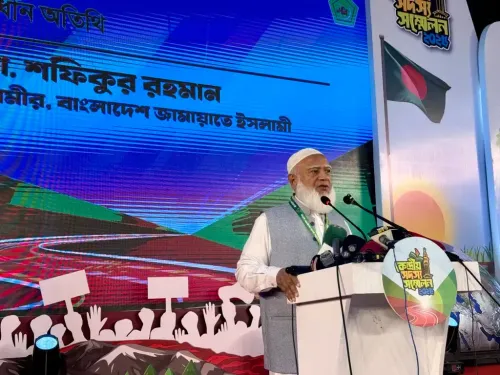
The recent controversial remarks made by Jamaat-e-Islami leader Shafiqur Rahman have ignited a fierce backlash in Bangladesh. His statements about women and modernity have sparked debates about misogyny, accountability in digital spaces, and the party's political strategies as the nation approaches its elections.
Key Takeaways
Shafiqur Rahman's remarks sparked significant backlash.
Claims of hacking raise questions about accountability.
The incident highlights the political landscape ahead of elections.
Critics argue the need for gender equality in politics.
Public response reflects broader societal attitudes towards women.
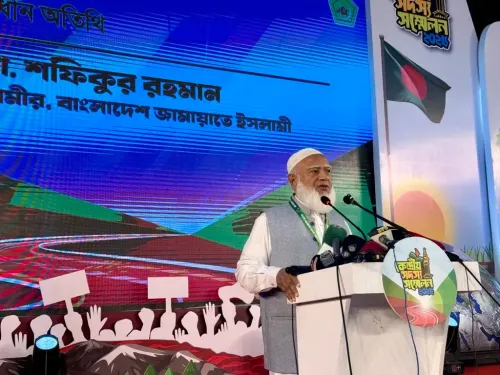
Dhaka, Feb 2 (NationPress) The leader of Bangladesh's radical Islamist party, Jamaat-e-Islami, Shafiqur Rahman, ignited a wave of backlash following a recent post on his social media account on platform X. He stated that women forced out of their homes under the guise of modernity face risks of exploitation, moral degradation, and insecurity, labeling this situation as “another form of prostitution,” according to a report released on Monday.
Shortly after, the party claimed that Rahman's account had been compromised, denying his participation in the post. This assertion raised suspicions about the authenticity of the alleged hacking—whether it was a true security breach or a strategy to distance Rahman from the ensuing backlash.
The incident unfolds as Jamaat seeks to rehabilitate its public image ahead of the upcoming February elections. It brings to light the issue of accountability in digital arenas, where claims of hacking frequently act as a defensive mechanism. As social media increasingly influences public perception, delving into the circumstances surrounding this incident could provide deeper insights into the political maneuvers within Bangladesh's tense landscape,” as noted in a report by 'Diplotic'.
In response, online users—ranging from Awami League supporters to secular activists and advocates for women’s rights—dismissed the hacking explanation and criticized Rahman’s comments. Many labeled Jamaat as hypocritical, recalling its previous alliance with the Bangladesh Nationalist Party (BNP), headed by former Prime Minister Khaleda Zia.
This controversy has intensified scrutiny of Jamaat-e-Islami’s views on women and gender equality, with opponents contending that such remarks, intentional or not, reveal deeply ingrained attitudes that conflict with constitutional rights and democratic principles,” as reported by Northeast News.
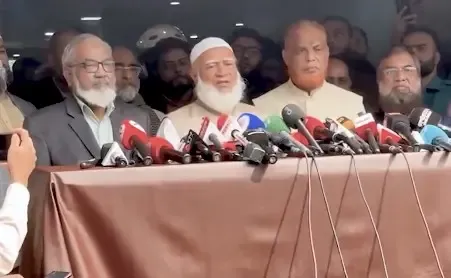
Additionally, Mahdi Amin, spokesperson for the BNP Election Steering Committee, questioned Rahman's assertion that his verified account had been hacked following the widely reproached post. Speaking at a press conference at the BNP office in Gulshan, Dhaka, he remarked that the hacking claim surfaced nearly nine hours after the post went viral and public outrage had already begun.
“The claim arose long after the post circulated and criticism ensued. If a verified account of a significant political figure is hacked, the immediate responsibility is to inform the public to prevent confusion,” The Daily Star cited Amin.
He emphasized that the delay in reporting the hack itself casts doubt on the credibility of the explanation.
“Only after public uproar did the hacking narrative emerge. During that time, numerous posts appeared from the Jamaat chief’s Facebook account, yet not a single one alerted that his X account had been breached,” he added.
With the national elections in Bangladesh just ten days away, critics warn that Jamaat’s ongoing misogynistic rhetoric and the absence of women candidates in the forthcoming elections could lead the nation down a regressive political trajectory.
Point of View
It is essential to remain neutral while reporting. The situation surrounding Shafiqur Rahman and his party emphasizes the ongoing tensions in Bangladesh's political landscape. The discourse on gender equality and the treatment of women remains a critical issue that could shape the upcoming elections significantly.
NationPress
3 Oct 2026
Frequently Asked Questions
What did Shafiqur Rahman say?
Shafiqur Rahman claimed that women pushed out of their homes in the name of modernity face exploitation, moral decay, and insecurity, equating it to another form of prostitution.
What was the reaction to his comments?
His comments were met with widespread condemnation from various groups, including women's rights advocates and political opponents.
Did Jamaat-e-Islami confirm or deny the hacking claim?
Jamaat-e-Islami initially claimed that Rahman's account had been hacked, but this assertion has been met with skepticism.
What are the implications for the upcoming elections?
Critics warn that Jamaat's continued misogynistic remarks and lack of women candidates could hinder progress towards gender equality and negatively impact the political climate.
How does this event reflect on the political landscape in Bangladesh?
This event highlights ongoing issues related to gender equality and the political strategies employed by parties in a charged electoral atmosphere.