Bangladesh: Jamaat's Ambiguous Strategy Amid Islamist Revival Sparks Concerns
Synopsis
In the wake of Bangladesh's 'Gen-Z' revolution, the Islamist party Jamaat-e-Islami has emerged as a surprising contender for political power. With a shift in strategy and a focus on broader issues, the party's future remains uncertain as it navigates internal divisions and an unclear agenda.
Key Takeaways
Jamaat-e-Islami's resurgence marks a significant shift in Bangladesh politics.
The party is focusing on broader issues rather than solely Islamist rhetoric.
Internal divisions pose challenges for Jamaat's future.
Strategic alliances with Gen-Z revolutionaries have altered Jamaat's political landscape.
The party's vague agenda raises questions about its true intentions.
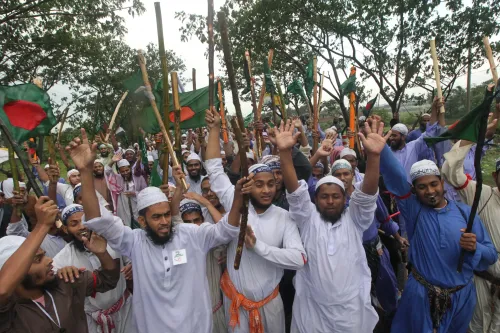
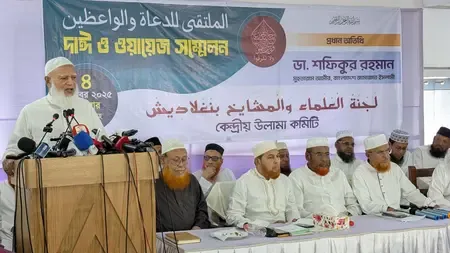
Dhaka, March 14 (NationPress) The most surprising development following Bangladesh's August 2024 'Gen-Z' revolution has been the resurgence of Islamism. Some observers now predict that the radical Islamist party, Jamaat-e-Islami, could become the nation’s leading opposition after capturing a third of the votes in the February 12 elections, as detailed in a recent report.
This student-led movement successfully removed former Prime Minister Sheikh Hasina, under whose tenure Jamaat was outlawed.
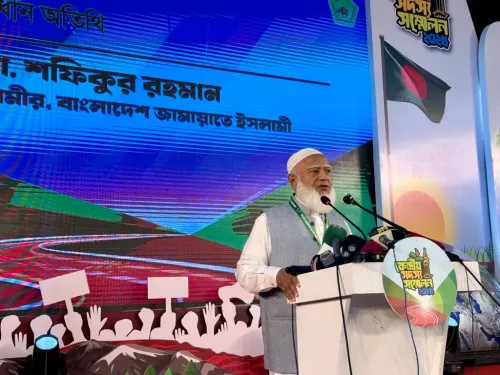
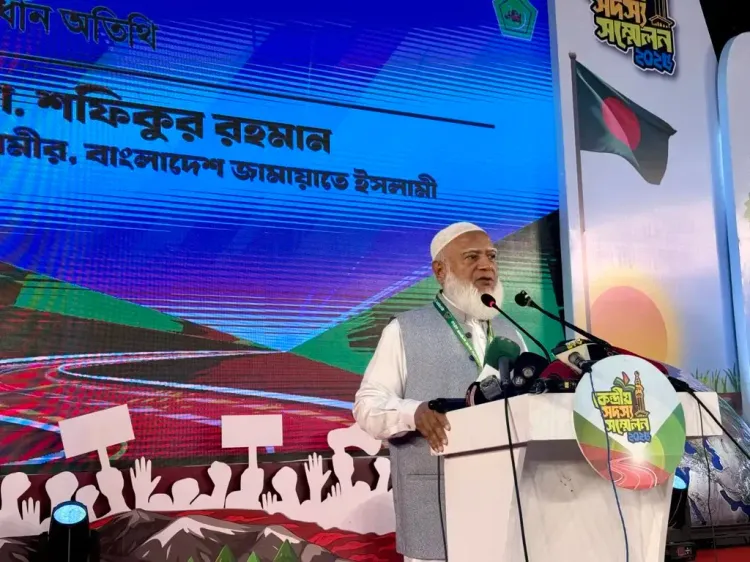
The Economist highlighted that Jamaat’s resurgence stems from a strategic shift, moving beyond its conventional Islamist focus. Under the leadership of Shafiqur Rahman, the party downplays its religious affiliations and positions itself as an anti-establishment force. Jamaat also carries a historical burden; during Bangladesh’s liberation war in 1971, it opposed independence from Pakistan. Despite being over 90% Muslim, Bangladesh has a rich tradition of moderate Islam and secular governance.
The report indicates that Jamaat’s tactical maneuvering was evident in campus politics, where its student wing dominated major student union elections in 2025.
Instead of focusing on religious rhetoric, the party’s campus organizers conducted study sessions, established welfare initiatives, repaired dormitory amenities, and most notably, organized a ‘hijab rally’ at Dhaka University, attracting many women who do not share Islamist views. “The Islamic headscarf has evolved into a trendy, countercultural symbol of identity,” the report pointed out.
Furthermore, the report noted that Jamaat entered an electoral alliance with the fledgling party of the Gen-Z revolutionaries, leading to a migration of its prominent candidates. In the elections, only six students succeeded in winning parliamentary seats. Nevertheless, Jamaat underwent a significant political transformation, aligning with a popular uprising.
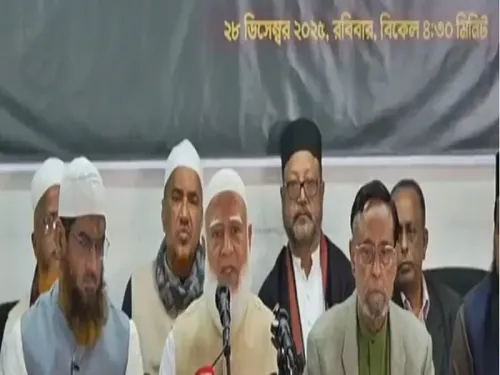
A challenge that lies ahead for Jamaat is the division between moderates and hardliners, exacerbated by the unpredictable nature of its leader, Rahman.
“When he deviates from the script, Rahman can incite protests among Bangladeshi women, as evidenced by his comments that biological roles like breastfeeding hinder women's potential as political leaders—an unexpected statement in a nation with a history of female Prime Ministers,” the report observed.
Highlighting the ambiguity of the party’s agenda, it stated, “Jamaat aspires to victory in the upcoming election. When questioned about its plans, Rahman responds with generic center-right rhetoric: supporting businesses, aligning education with market demands, and tightening control over corrupt or partisan officials. Rahman asserts that Sharia, to which Jamaat claims allegiance, embodies 'justice, welfare, and the limitation of power.' Such nebulous principles are challenging to contest, which may be the intention. What vision for Bangladesh Jamaat truly envisions remains uncertain.”
Point of View
It's essential to recognize the complexity of Jamaat-e-Islami's resurgence in Bangladesh's political arena. This development reflects shifting public sentiments and the intricate balance of power among various factions. A thorough understanding of these dynamics is crucial for assessing the future trajectory of the nation.
NationPress
19 Sept 2026
Frequently Asked Questions
What triggered the resurgence of Jamaat-e-Islami in Bangladesh?
The resurgence of Jamaat-e-Islami can be attributed to the unexpected outcomes of the August 2024 'Gen-Z' revolution, which saw the Islamist party re-emerge as a significant political force, capturing a substantial portion of the votes in the February elections.
How has Jamaat-e-Islami altered its strategy?
Jamaat has shifted its focus from traditional Islamist rhetoric to broader issues, presenting itself as an anti-establishment party under the leadership of Shafiqur Rahman.
What challenges does Jamaat-e-Islami face moving forward?
The party faces internal divisions between moderates and hardliners, compounded by the unpredictable behavior of its leader, which may impact its cohesion and future strategies.
What is Jamaat's stance on Sharia law?
Jamaat claims that its interpretation of Sharia focuses on principles of justice, welfare, and power limitation, although its agenda remains vague and open to interpretation.
How has Jamaat's student wing performed in recent elections?
Jamaat's student wing achieved significant success in student union elections in 2025, winning all major positions and showcasing their influence on campus politics.