Is Bangladesh's Jamaat-e-Islami Transitioning to a Major Opposition Role?
Synopsis
The political landscape of Bangladesh is undergoing a significant shift as the Jamaat-e-Islami party makes a strong return. With its recent gains in the national election, Jamaat is positioning itself as a formidable opposition force, raising pertinent questions about its future influence.
Key Takeaways
Jamaat-e-Islami has returned to the political stage with significant gains.
The party is advocating for constitutional reforms through the new Parliament.
Concerns persist regarding its controversial past.
The recent elections marked a historic comeback for Jamaat.
Political dynamics in Bangladesh are shifting, potentially affecting governance.
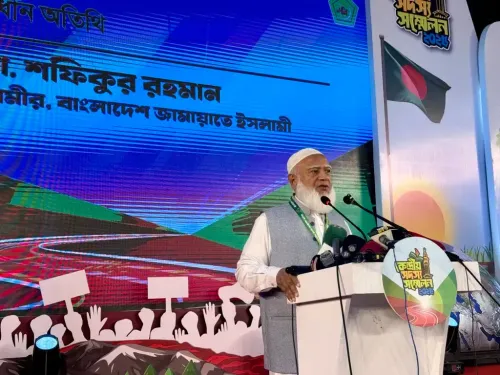
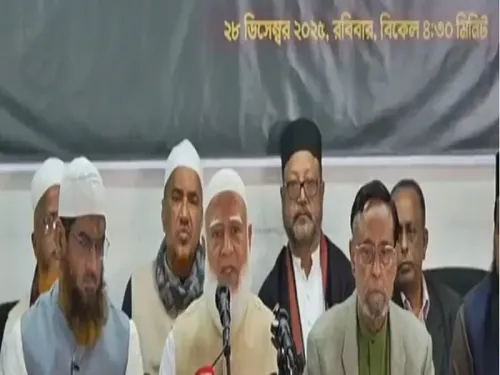
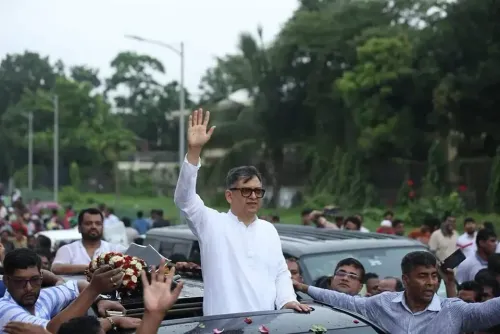
New Delhi, Feb 18 (NationPress) A revitalized Bangladesh Jamaat-e-Islami is making its political presence felt, particularly evident from its assertive stance on urgent constitutional reforms while expressing discontent towards the newly-established government led by BNP's Tarique Rahman.
In June of last year, Bangladesh's largest Islamic party regained its registration after being banned for over a decade by the Awami League government under Prime Minister Sheikh Hasina.
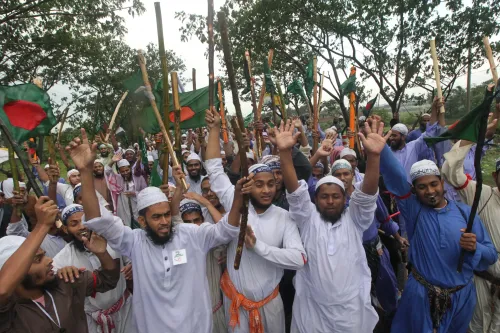
This resurgence comes after a tumultuous history, with the party previously facing legal challenges and political marginalization due to its opposition to Bangladesh’s independence in 1971 and the wartime actions of some leaders.
Some analysts view Jamaat’s return to parliamentary politics as a reintegration into the mainstream political arena, while others express concern over the normalization of a party with a contentious history.
The Islamist party has proposed that the new Parliament act as a constituent assembly to amend the constitution of Bangladesh, advocating extensive changes outlined in the “July Charter”, a series of constitutional reforms suggested by the Muhammad Yunus-led interim administration following the 2024 uprising. This initiative seeks to transform key institutions, fortify checks and balances, and redefine governance rules regarding executive power, the judiciary, and electoral processes.
A proposed Constitutional Reform Council was intended to oversee and execute the amendments and the broader reform agenda.
However, Rahman’s Bangladesh Nationalist Party (BNP), which is hesitant about the Charter, insists on adhering to existing constitutional provisions, highlighting that there is no legal basis for a “Constitutional Reform Council.”
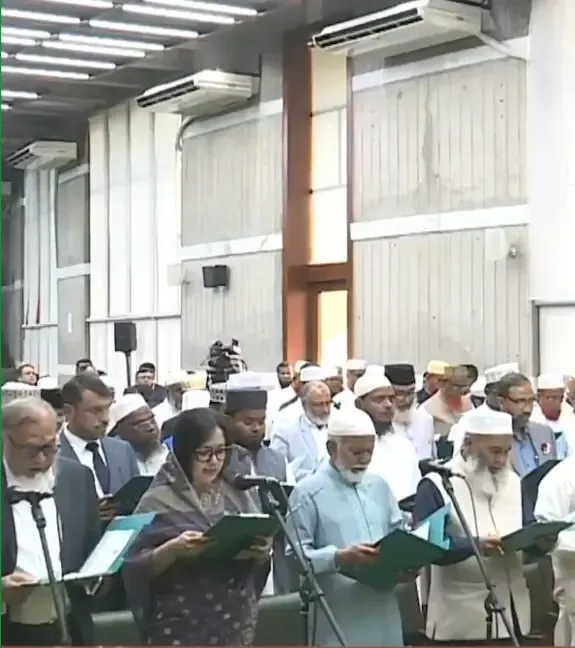
Additionally, Bangladesh’s Chief Election Commissioner (CEC) lacks the authority to administer an oath for such a body; the CEC was responsible for administering the oath of office to MPs on Tuesday.
While the Jamaat has not formed a government, it has made substantial gains in both vote share and parliamentary seats in the recent election. Its assertive approach and renewed engagement with student politics have raised alarms among analysts and opponents, indicating that the party could emerge as a significant and disruptive force in Bangladesh's political landscape.
In the 13th national election, Jamaat marked a historic comeback from the fringes, with official results showing the party achieving its highest vote share and seat count to date, securing 31.76 percent of the votes and winning 68 seats.
This impressive outcome has elevated Jamaat from a marginal player to the main opposition party in parliament.
According to Soumya Bandopadhyay, Consulting Editor for Bangladesh’s Prothom Alo newspaper, “The Jamaat has effectively expanded its influence in regions adjacent to India, particularly among populations that migrated from India after partition, where the BNP has historically struggled. Yet, both parties previously faced challenges due to the Awami League’s stronghold.”
“Currently, political opportunities are opening up for Jamaat in divisions like Khulna, Rajshahi, and Rangpur,” he added.
Referencing historical data, the journalist noted that Jamaat previously achieved its “best results” in 1991, winning 18 seats with 12 percent of the vote. In 1996, however, its seat count fell to three, with a vote percentage of nine.
In both 2001 and 2008, when Jamaat allied with the BNP, it secured 17 seats with a four percent share in the former and two wins with five percent in the latter, which has now dramatically increased to around 32 percent.
Overall, the BNP-led coalition claimed 212 seats, followed by the Jamaat-led coalition with 77 seats, from the 297 parliamentary seats for which results were announced. Elections were held for 299 seats in the Bangladesh Parliament due to a candidate's death, with a court subsequently blocking results publication for Chattogram-3 and Chattogram-8.
The National Citizen Party (NCP), established by a faction of the 2024 youth protestors, aligned with Jamaat and secured third place, winning six out of the thirty seats contested. Fifty additional members were nominated to Parliament based on the votes garnered by political parties across 300 constituencies. NCP leader Nahid Islam, aged 27, also won, becoming one of the youngest MPs in the newly formed parliament.
Point of View
Our editorial stance remains aligned with the nation’s interests. While the Jamaat's resurgence raises questions regarding its past, it also highlights the shifting political landscape which requires careful monitoring. The focus should be on fostering democratic values and ensuring stability in governance.
NationPress
27 Sept 2026
Frequently Asked Questions
What is the current situation of Jamaat-e-Islami in Bangladesh?
Jamaat-e-Islami has re-emerged as a significant political player in Bangladesh, having regained its registration and made substantial gains in the recent national elections.
How has Jamaat-e-Islami changed its political strategy?
The party is advocating for immediate constitutional reforms and seeking to position itself as a major opposition force against the BNP-led government.
What are the implications of Jamaat's gains in the elections?
Jamaat's increased vote share and parliamentary seats suggest a potential shift in the balance of power, raising concerns about its influence in future political activities.
What was the historical significance of Jamaat's previous election results?
Historically, Jamaat had its best results in 1991, but faced significant declines in subsequent years. Its recent performance marks a notable comeback.
Is there concern over Jamaat's past actions?
Yes, the party’s controversial history and opposition to Bangladesh’s independence in 1971 remain points of contention among critics and analysts.