AP CM Naidu Signs MoUs to Explore Lithium, Gallium in Kadapa Basin
Synopsis
Andhra Pradesh signed two MoUs on 12 August 2026 — with CSIR-NGRI for lithium and gallium exploration in the Kadapa Basin's Vempalle area, and with IIT (ISM) Dhanbad's TEXMIN for mining research and skill development — as CM Chandrababu Naidu deepens the state's push into India's critical-minerals supply chain.
Key Takeaways
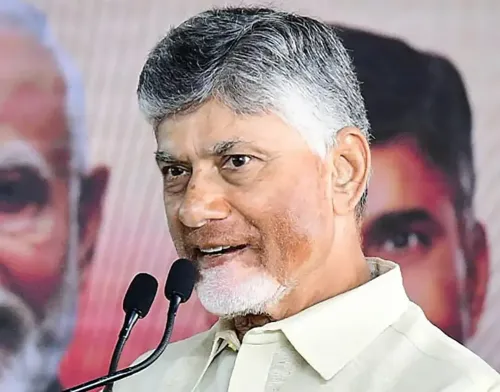
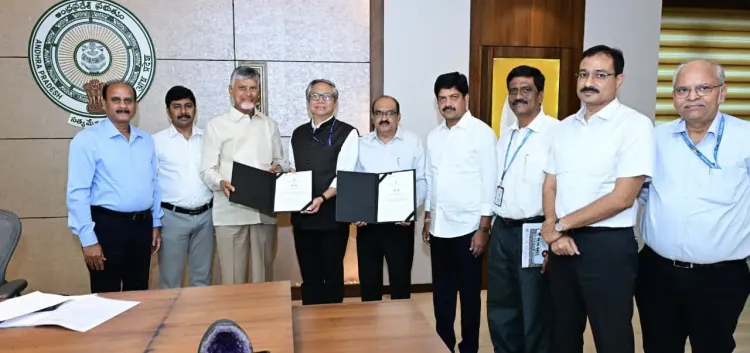
Chief Minister Nara Chandrababu Naidu presided over two MoU signings on 12 August 2026 focused on critical minerals.
CSIR-NGRI and the AP Mines and Geology Department will conduct large-scale exploration for lithium and gallium deposits near Vempalle in the Kadapa Basin .
A second MoU between IIT (ISM) Dhanbad / TEXMIN and the Mines Department covers research, technology transfer, and skill development in the mining sector.
Mines Minister Kollu Ravindra and senior officials from all partner institutions attended the signing ceremony.
The agreements align with India's National Mineral Policy 2019 goal of reducing import dependence on critical minerals essential for EVs and semiconductors.
Key next steps include field survey timelines, potential Geological Survey of India involvement, and eventual block auctions under the national critical minerals framework.
Andhra Pradesh is staking a claim in the global critical minerals race. The Chief Minister's Office of Andhra Pradesh announced on Wednesday, 12 August 2026 that the state has signed two landmark agreements to accelerate the search for lithium and gallium deposits in the Vempalle area of the Kadapa Basin — minerals that power everything from electric vehicle batteries to semiconductor chips.
What Was Signed, and Who Signed It
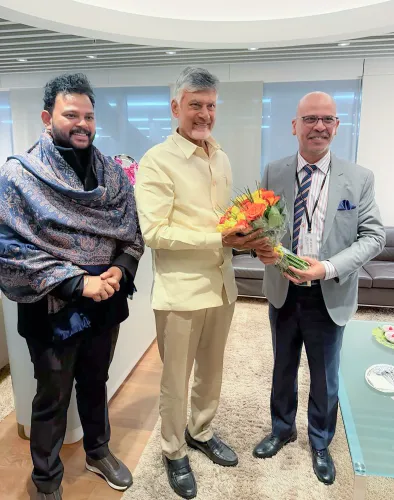
Chief Minister Nara Chandrababu Naidu presided over the signing of two separate memoranda of understanding. The first was inked between the CSIR–National Geophysical Research Institute (NGRI), a premier Hyderabad-based earth-sciences body, and the state's Department of Mines and Geology — committing both parties to wide-scale geophysical exploration of lithium and gallium deposits around Vempalle. The second MoU paired IIT (ISM) Dhanbad and its mining-sector technology incubator TEXMIN with the state Mines Department, targeting research, technology transfer, and skill development across Andhra Pradesh's mining sector.
Mines Minister Kollu Ravindra and senior officials from the Mines Department and both institutions were present at the event.
Why Kadapa Basin, and Why Lithium and Gallium
The Kadapa Basin in southern Andhra Pradesh is a well-studied sedimentary formation long associated with limestone and other mineral resources. Its deeper geology, however, has drawn fresh interest as India hunts for domestic sources of critical minerals it currently imports at scale. Lithium is the cornerstone of rechargeable battery technology — indispensable for electric vehicles and grid storage. Gallium is a strategic metal essential for semiconductors, 5G components, and defence electronics, with global supply heavily concentrated in a handful of countries.
India's National Mineral Policy 2019 already flagged the need for scientific exploration and reduced import dependence. The Andhra agreements are a direct state-level response to that national imperative, channelling the geophysical expertise of NGRI and the mining-technology depth of IIT (ISM) Dhanbad into a single coordinated push.
The Broader Pattern: States as Critical-Mineral Frontlines
Andhra Pradesh is not alone. Across India, mineral-rich states have been signing MoUs with national research institutions to fast-track geophysical surveys — part of a broader federal-state collaboration framework that has intensified through the early 2020s. What distinguishes the Kadapa move is the pairing of exploration science (NGRI) with industrial capability-building (IIT-ISM/TEXMIN) in the same policy moment, signalling that the state is thinking beyond discovery toward processing and workforce readiness.
For Chandrababu Naidu — a Chief Minister who has consistently positioned Andhra Pradesh as a technology and investment destination — securing a place in India's critical-minerals supply chain fits squarely within his administration's economic narrative.
The next milestones to watch: field survey timelines under the NGRI MoU, any subsequent involvement of the Geological Survey of India, and whether identified deposits eventually reach the block-auction stage under the national critical minerals framework. The ground beneath Vempalle may hold answers that matter far beyond Andhra Pradesh's borders.
Point of View
The state is signalling an intent to capture value beyond raw extraction. For Chandrababu Naidu, whose political brand is built on technology-led development, anchoring AP in the critical-minerals supply chain is also an economic-narrative move ahead of continued investment outreach. Whether the MoUs translate into commercially viable deposits will depend on the pace and depth of field surveys — but the institutional framework is now in place.
NationPress
13 Aug 2026
Frequently Asked Questions
What minerals is Andhra Pradesh exploring in the Kadapa Basin?
Andhra Pradesh is exploring for lithium and gallium deposits in the Vempalle area of the Kadapa Basin, following an MoU signed between CSIR-NGRI and the state Mines and Geology Department on 12 August 2026.
What is CSIR-NGRI and what role will it play?
CSIR–National Geophysical Research Institute (NGRI) is a Hyderabad-based premier research body under CSIR specialising in earth sciences and mineral exploration. Under the new MoU, it will conduct wide-scale geophysical surveys to identify lithium and gallium deposits near Vempalle in the Kadapa Basin.
What is the IIT ISM Dhanbad TEXMIN agreement about?
The MoU between IIT (ISM) Dhanbad — through its mining-sector technology incubator TEXMIN — and the AP Mines Department covers research, technology transfer, and skill development for Andhra Pradesh's mining sector.
Why are lithium and gallium considered critical minerals for India?
Lithium is essential for rechargeable batteries used in electric vehicles and grid storage, while gallium is a strategic metal used in semiconductors, 5G components, and defence electronics. India currently imports both at scale, and domestic exploration is a national priority under the National Mineral Policy 2019 .
Who attended the MoU signing in Andhra Pradesh?
Chief Minister Nara Chandrababu Naidu presided over the signing. Mines Minister Kollu Ravindra , senior officials from the AP Mines and Geology Department, and representatives from CSIR-NGRI and IIT (ISM) Dhanbad / TEXMIN were also present.