Kishan Reddy Chairs Mining Agencies Review Meet in Bengaluru
Synopsis
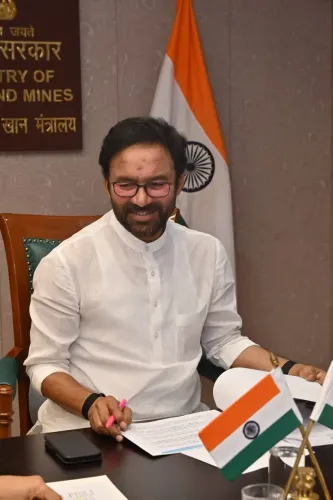
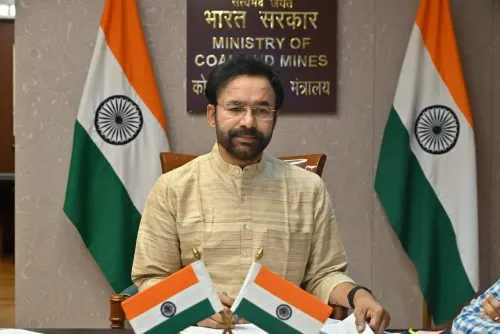
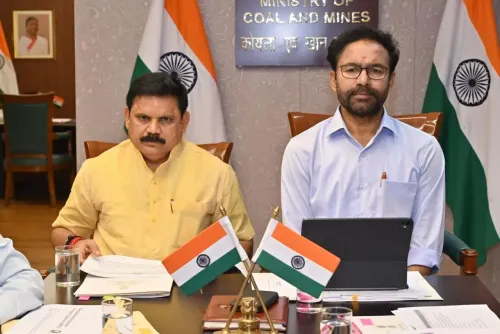
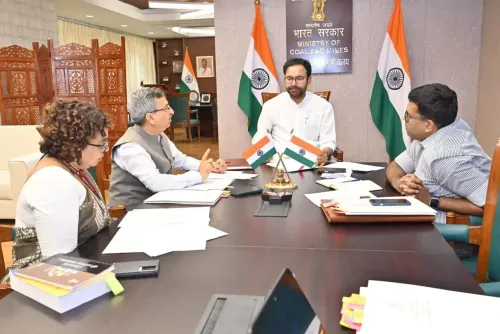
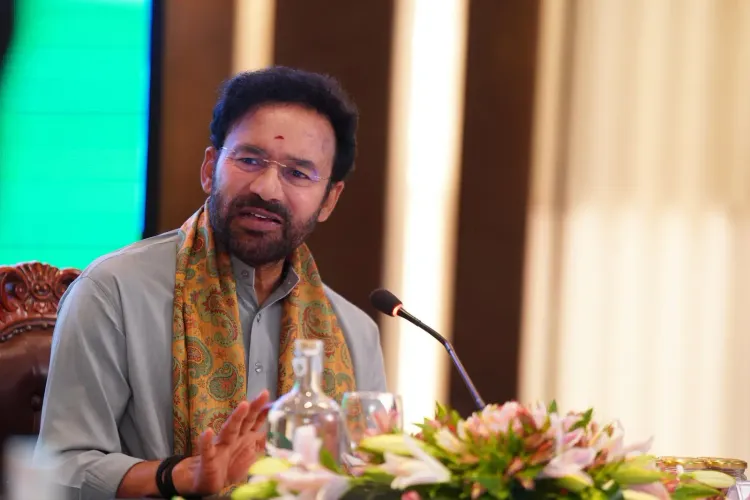
Union Mines Minister G. Kishan Reddy chaired a review meeting in Bengaluru on 24 May 2026 with officials from GSI, NIRM, IBM and BGML, focusing on project progress and resolving operational bottlenecks in mineral exploration across states.
Key Takeaways
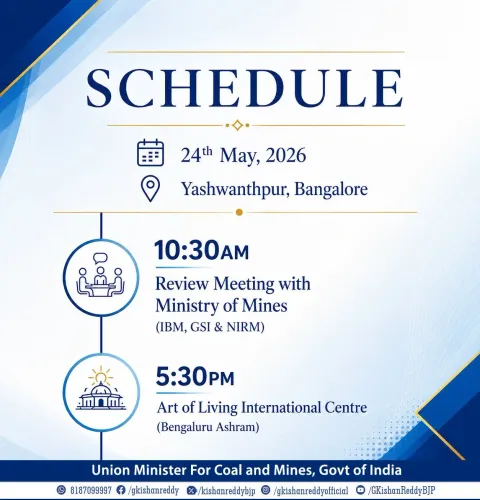
Kishan Reddy chaired the inter-agency review meeting in Bengaluru on 24 May 2026 .
Four central bodies were represented: Geological Survey of India , National Institute of Rock Mechanics , Indian Bureau of Mines , and Bharat Gold Mines Limited .
Discussions centred on progress of ongoing projects and 'operational bottlenecks' in exploration activities spanning multiple states.
The meeting aligns with the National Mineral Policy 2019 and MMDR Amendment Act 2021 goals of faster domestic mineral exploration.
Outcomes may feed into the Ministry of Mines outcome budget and potential revisions to exploration rules.
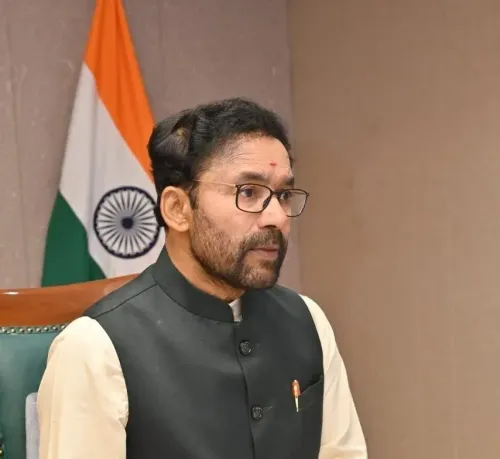
Union Coal and Mines Minister G. Kishan Reddy on Sunday, 24 May 2026, chaired a high-level review meeting in Bengaluru with senior officials from four key central mining and geological agencies, examining the progress of ongoing field projects and identifying operational bottlenecks hampering exploration activities across multiple states.
Context
The meeting brought together officials from the Geological Survey of India (GSI), the National Institute of Rock Mechanics (NIRM), the Indian Bureau of Mines (IBM), and Bharat Gold Mines Limited (BGML) — all bodies operating under the Ministry of Mines. Bengaluru serves as a functional hub for several of these organisations, making it a natural venue for consolidated inter-agency consultations.
The minister reviewed the status of ongoing projects and held 'detailed discussions on addressing operational bottlenecks being faced by the agencies in exploration and other activities being undertaken across various states,' according to his post on X.
Policy Backdrop
The meeting fits squarely within the administrative framework established by the National Mineral Policy 2019, which prioritised faster exploration timelines, technology adoption and greater private participation in the sector. The Mines and Minerals (Development and Regulation) Amendment Act, 2021 further streamlined lease transfers and extended validity periods to accelerate both production and exploration activity.
The National Mineral Exploration Trust, set up in 2015, has been the principal funding vehicle for regional and detailed exploration projects. Removing procedural and operational bottlenecks at the agency level is central to translating these policy commitments into measurable outcomes on the ground.
The broader push sits within the government's Atmanirbhar Bharat agenda, which seeks to augment domestic mineral reserves — particularly critical and energy-transition minerals — to reduce import dependence and support manufacturing expansion.
Stakeholders and Impact
GSI, the country's premier geological mapping body operating since 1851, conducts baseline surveys that underpin all downstream exploration decisions. NIRM provides specialised geotechnical and rock-mechanics research that directly informs safe and efficient mine design, while IBM is the statutory regulator overseeing mining-plan approvals, inspections and mineral conservation across the country.
BGML, a Karnataka-based public-sector undertaking historically associated with gold mining, was also represented, signalling that its operational and exploration agenda was on the minister's review table. State mining departments and exploration contractors who rely on central agency support stand to benefit from any resolution of the bottlenecks discussed.
The federal character of mineral administration means that progress — or delays — at the central agency level has a direct cascading effect on state governments seeking technical clearances and exploration data to auction and develop mineral blocks.
What's Next
Follow-up actions arising from the review are likely to surface in the Ministry of Mines outcome budget or its annual performance report. State-level coordination meetings and potential amendments to exploration rules or procedural guidelines are the near-term instruments through which any agreed corrective steps would be formalised.
With India's mineral exploration pipeline under sustained policy pressure to deliver faster results, the Bengaluru meeting signals that the ministry intends to maintain direct ministerial oversight over agency-level execution — a posture that will be tested by how swiftly the identified bottlenecks are resolved.
Point of View
Kishan Reddy signals that bottleneck resolution is a ministerial priority rather than a bureaucratic routine — a posture that carries weight in agencies accustomed to operating at their own pace. The inclusion of BGML alongside technical bodies like GSI and NIRM suggests the minister's oversight extends to PSU operational health, not just exploration policy. In the larger arc of India's critical-mineral strategy and Atmanirbhar Bharat, the speed at which these bottlenecks are cleared will be a practical test of whether policy intent translates into exploration output.
NationPress
22 Oct 2026
Frequently Asked Questions
Why did Kishan Reddy visit Bengaluru for a mining meeting?
Bengaluru is a functional base for several central mining agencies including NIRM and BGML, making it a practical venue for a consolidated inter-agency review. Minister Kishan Reddy chaired the meeting on 24 May 2026 to assess project progress and address operational bottlenecks in exploration.
What is the Geological Survey of India and what does it do?
The Geological Survey of India (GSI) is India's premier geological mapping and mineral exploration agency, established in 1851. It operates under the Ministry of Mines and produces baseline geological data that supports downstream exploration and mineral block auctions.
What is the National Institute of Rock Mechanics (NIRM)?
NIRM is a research institute under the Ministry of Mines that specialises in rock mechanics, ground control and geotechnical studies. Its work directly informs safe mine design and is used by mining projects across India.
What is Bharat Gold Mines Limited (BGML)?
Bharat Gold Mines Limited is a Karnataka-based public-sector undertaking historically engaged in gold mining operations. It falls under the Ministry of Mines and was among the agencies represented at the Bengaluru review meeting.
What are the key mining policy reforms that this meeting relates to?
The meeting relates to the National Mineral Policy 2019, which prioritised faster exploration and technology adoption, and the MMDR Amendment Act 2021, which streamlined lease transfers. The National Mineral Exploration Trust, set up in 2015, funds the exploration projects whose progress was reviewed.