CM Dhami Salutes Narendra Singh Negi's Folk Legacy
Synopsis
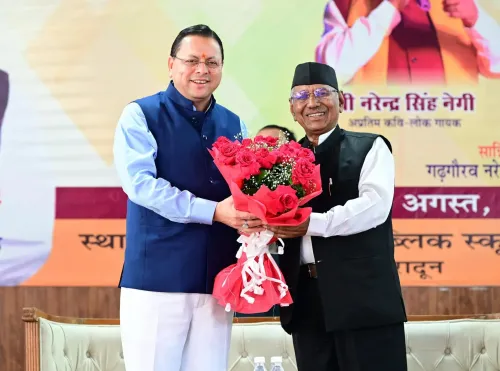
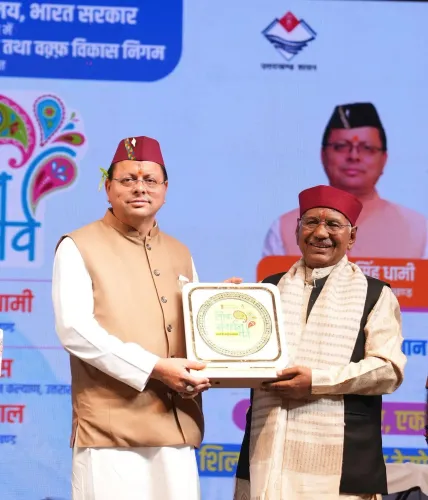
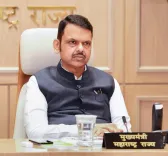
Uttarakhand CM Pushkar Singh Dhami praised folk legend Narendra Singh Negi on 12 August 2026, calling the state's folk culture its 'soul and identity' and crediting Negi with giving it national and international recognition through decades of Garhwali and Kumaoni music.
Key Takeaways
CM Pushkar Singh Dhami posted a tribute to folk artist Narendra Singh Negi on 12 August 2026 .
Dhami described Uttarakhand's folk songs, languages, arts, and traditional instruments as 'living symbols of rich cultural heritage.' He credited Negi with giving voice to the everyday life, nature, struggle, and social concerns of Uttarakhand's people.
Negi is celebrated for his work in Garhwali and Kumaoni languages, with national and international reach.
The tribute reflects a broader pattern of Himalayan state governments affirming regional cultural identities through public recognition of folk artists.
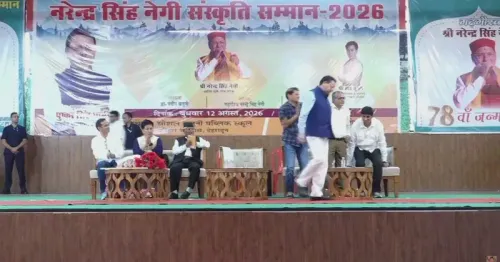
Uttarakhand's mountains have long carried their own voice — and Chief Minister Pushkar Singh Dhami wants the world to know whose voice that is. On Wednesday, 12 August 2026, Dhami took to X to pay tribute to legendary folk artist Narendra Singh Negi, calling Uttarakhand's folk culture 'the soul and identity' of the state.
In his post, Dhami wrote: 'उत्तराखंड की लोक संस्कृति हमारी आत्मा और पहचान है' — 'Uttarakhand's folk culture is our soul and our identity.' He described folk songs, folk languages, folk arts, and traditional instruments as 'living symbols of our rich cultural heritage,' before singling out Negi for giving voice to the everyday life, nature, struggle, sensibilities, and social concerns of the people of Uttarakhand through his songs and music.
Narendra Singh Negi: The Man Who Sang the Mountains
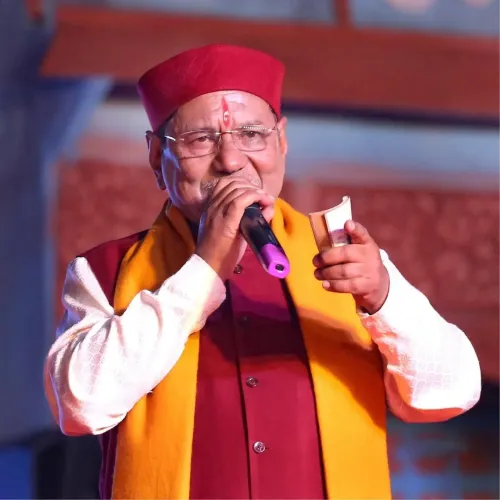
Narendra Singh Negi is among the most celebrated folk singer-composers to emerge from the Garhwal region of Uttarakhand. His body of work spans decades and spans subjects — from the rhythms of village life and the grandeur of the Himalayas to the social pressures facing hill communities and the quiet grief of migration. His songs in Garhwali and Kumaoni have found audiences far beyond the state's borders, earning him recognition on national and international stages.
Dhami credited Negi with giving Uttarakhand's folk culture 'invaluable contribution' in securing that national and international recognition — a rare acknowledgement of how one artist's sustained work can carry an entire region's identity outward into the world.
Why Himalayan Folk Identity Is a Political Priority
Dhami's tribute is not an isolated gesture. Across Uttarakhand and other Himalayan states, there is a steady, deliberate effort by governments to document and promote indigenous languages, music forms, and performing arts — communities that have long worried about cultural erosion as younger generations migrate to cities. For a state whose distinct Garhwali and Kumaoni identities sit at the heart of its political and social fabric, affirming those roots is both cultural policy and political common ground.
Chief ministers across India regularly use social media to honour regional performers who achieve wider recognition — but the specificity of Dhami's tribute, naming Negi's themes of 'struggle, sensibilities, and social concerns,' signals genuine regard for the depth of the artist's contribution, not just his fame.
When a state's folk tradition finds a voice that travels — from a village in Pauri Garhwal to a stage far beyond — that is the moment culture becomes heritage. Narendra Singh Negi has been that voice for decades. Dhami's tribute ensures the record says so, loudly.
Point of View
Dhami frames folk culture not as nostalgia but as living civic expression. This also signals that cultural preservation — particularly of indigenous Garhwali and Kumaoni traditions — is likely to remain a visible plank of the Uttarakhand government's public communication ahead of any electoral cycle.
NationPress
13 Aug 2026
Frequently Asked Questions
Who is Narendra Singh Negi?
Narendra Singh Negi is a celebrated Uttarakhand folk singer-composer known for his songs in Garhwali and Kumaoni languages, reflecting themes of Himalayan village life, nature, migration, and social issues. He is widely regarded as one of the most influential voices in the folk music of the Garhwal region.
Why did CM Dhami pay tribute to Narendra Singh Negi?
CM Pushkar Singh Dhami paid tribute to Negi on 12 August 2026 via X, crediting the folk artist with giving Uttarakhand's folk culture national and international recognition through decades of songs that captured the life, nature, and social concerns of the state's people.
What did Dhami say about Uttarakhand's folk culture?
Dhami called Uttarakhand's folk culture 'our soul and identity,' describing folk songs, folk languages, folk arts, and traditional instruments as 'living symbols of our rich cultural heritage.'
What languages does Narendra Singh Negi sing in?
Narendra Singh Negi primarily sings in Garhwali and Kumaoni, the two major regional languages of Uttarakhand, which are spoken in the Garhwal and Kumaon divisions of the Himalayan state respectively.
Is there a government scheme to preserve Uttarakhand's folk traditions?
The Uttarakhand government has expressed intent to promote indigenous languages, music, and performing arts, and state-level cultural festivals and awards for folk musicians are areas to watch — though no specific new scheme was announced in this post.