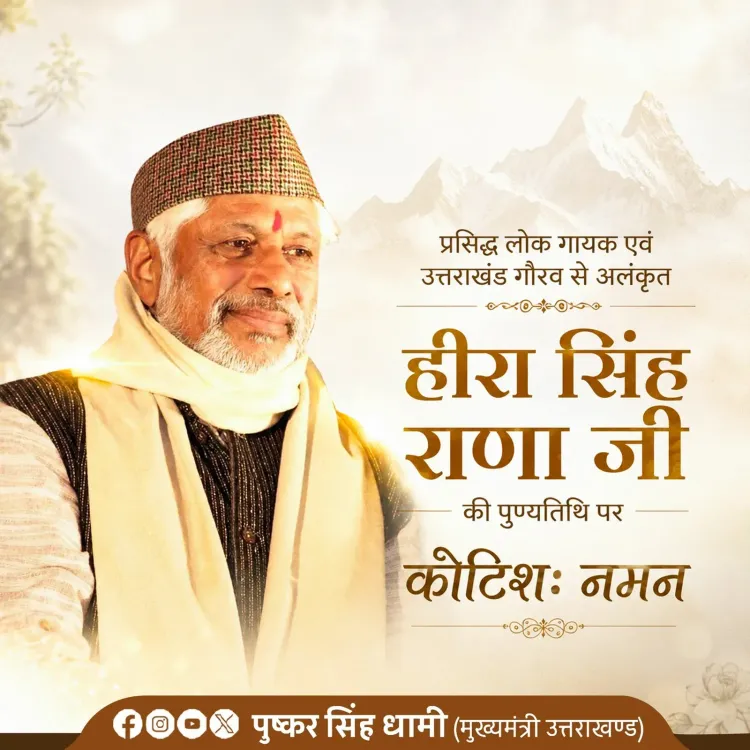
CM Dhami pays tribute to folk legend Heera Singh Rana
Synopsis
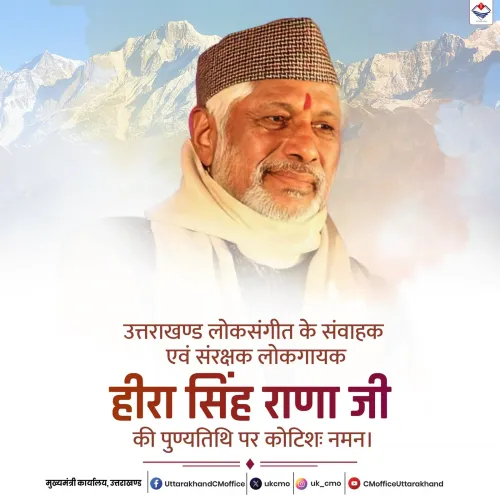
Uttarakhand Chief Minister Pushkar Singh Dhami paid tribute to folk legend Heera Singh Rana on his death anniversary, calling his compositions an invaluable cultural heritage that gave global recognition to Garhwali and Kumaoni traditions.
Key Takeaways
CM Pushkar Singh Dhami paid tribute to folk singer Heera Singh Rana on his death anniversary on 13 June 2026 .
Rana is credited with giving global visibility to Uttarakhand's folk culture, traditions, and regional languages through his music.
Dhami described Rana's compositions as 'an invaluable heritage of our cultural legacy,' not merely music.
Uttarakhand has supported folk music preservation through its Department of Culture since statehood in 2000 .
The tribute reflects a broader state pattern of using cultural commemorations to reinforce Himalayan heritage identity.
Cultural organisations may watch for follow-up announcements such as awards, archival projects, or folk festival programming tied to Rana's legacy.
Uttarakhand Chief Minister Pushkar Singh Dhami on Saturday, 13 June 2026 paid homage to renowned folk singer Heera Singh Rana on his death anniversary, honouring the artist's lifelong contribution to preserving and promoting the folk culture, languages, and traditions of Uttarakhand.
Context
Dhami's post, written in Hindi, offered a heartfelt tribute: 'Kotishaha naman' (salutations a crore times) to Rana, describing him as the artist who gave global recognition to Uttarakhand's folk culture, traditions, regional languages, and the sentiments of its people through his songs and melodious voice. The Chief Minister added that Rana's compositions are 'not merely music, but an invaluable heritage of our cultural legacy.'
Heera Singh Rana spent decades performing and recording Garhwali and Kumaoni folk songs, carrying the oral and musical traditions of the Himalayas to audiences across India and beyond. His work is widely credited with bringing mainstream visibility to the distinct linguistic and artistic identities of Uttarakhand's two major cultural regions.
Policy Backdrop
Since Uttarakhand was carved out as a separate state in 2000, successive state governments have sought to institutionalise support for folk music and regional languages through the Department of Culture. Documentation drives, folk festivals, and performance grants have been recurring instruments of this cultural policy.
At the national level, bodies such as the Sangeet Natak Akademi have long recognised intangible cultural heritage — including folk music traditions from the Himalayan belt — as central to India's pluralistic identity. Uttarakhand governments have consistently aligned state-level commemorations with this broader framework of cultural preservation.
Stakeholders and Impact
Folk musicians, cultural organisations, and language-preservation groups across Garhwal and Kumaon regard figures like Rana as foundational to their advocacy for greater official recognition of regional languages and artistic forms. Public tributes by sitting Chief Ministers carry symbolic weight for these communities, signalling continued state interest in their heritage.
For the Uttarakhand government, such commemorations also serve a broader political and cultural purpose: reinforcing the state's identity as a custodian of Himalayan traditions at a time when migration and urbanisation pose long-term challenges to the transmission of folk knowledge.
What's Next
Cultural observers and folk-music associations in Uttarakhand will watch whether the tribute translates into concrete announcements — such as state cultural awards, archival projects, or folk festival programming — that reference Heera Singh Rana's legacy in the months ahead. June has historically seen cultural commemorations in the state coincide with broader heritage promotion initiatives.
The continuity of such recognition, from political leadership to institutional support, will determine how effectively Uttarakhand's intangible musical heritage is documented and transmitted to younger generations.
Frequently Asked Questions
Who was Heera Singh Rana?
Heera Singh Rana was a celebrated Uttarakhand folk singer who spent decades popularising Garhwali and Kumaoni songs, traditions, and oral heritage across India and internationally.
Why did CM Dhami pay tribute to Heera Singh Rana?
Uttarakhand Chief Minister Pushkar Singh Dhami paid tribute on Heera Singh Rana's death anniversary, recognising his unparalleled contribution to preserving and promoting Uttarakhand's folk culture and regional languages.
What did CM Dhami say about Heera Singh Rana's compositions?
Dhami said Rana's compositions are 'not merely music, but an invaluable heritage of our cultural legacy,' and that his contribution to folk culture preservation will always be remembered.
What is the significance of Garhwali and Kumaoni folk music?
Garhwali and Kumaoni folk music forms the cultural backbone of Uttarakhand's two major regions, preserving oral traditions, regional languages, and community histories that are central to the state's Himalayan identity.
How does Uttarakhand support its folk music heritage?
Since its formation as a state in 2000, Uttarakhand has supported folk music through its Department of Culture via documentation drives, folk festivals, and performance grants, aligned with national bodies like the Sangeet Natak Akademi.