CM Dhami launches 'Mountain Melodies', honours Tai Tugung
Synopsis
Chief Minister Pushkar Singh Dhami released an English translation of Narendra Singh Negi's folk songs and presented the Sanskriti Samman-2026 to Arunachal playwright Tai Tugung at Dehradun, while unveiling a sweeping set of cultural welfare measures for Uttarakhand's artists and writers.
Key Takeaways
'Mountain Melodies of Narendra Singh Negi' , an English translation of the folk legend's songs, was released by CM Dhami at Dehradun on 12 August 2026 .
The Narendra Singh Negi Sanskriti Samman-2026 was awarded to Arunachal Pradesh actor and playwright Tai Tugung , whose film Sangi Mai was screened at the Cannes Film Festival .
Monthly pensions for elderly and economically vulnerable folk artists and writers have been doubled from Rs 3,000 to Rs 6,000 , benefiting 180 artists .
Since 2022 , publication grants have been extended to 102 local authors ; 275 cultural troupes and 226 solo artists have been registered under a simplified listing process.
The Dirghkalin Sahitya Sevi Samman (launched 2025 ) carries a prize of Rs 5 lakh ; the new Sahitya Bhushan Puraskar is set at Rs 5,51,000 .
The state government aims to establish Uttarakhand as a national centre for literature and culture, beyond its identity as a tourism destination.
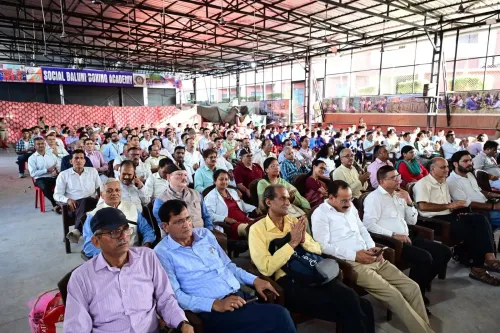
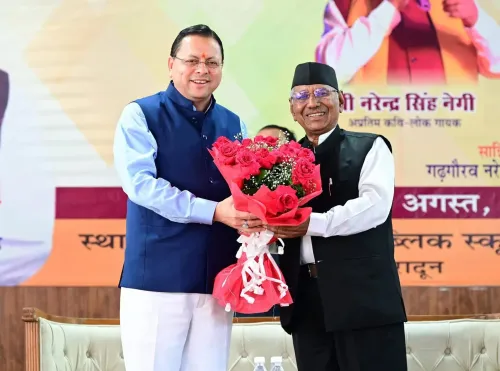
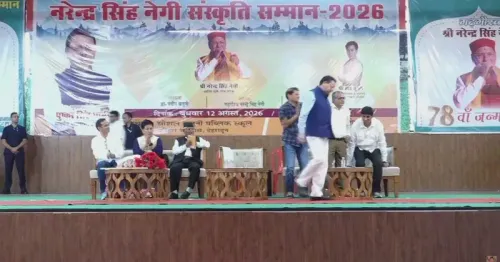
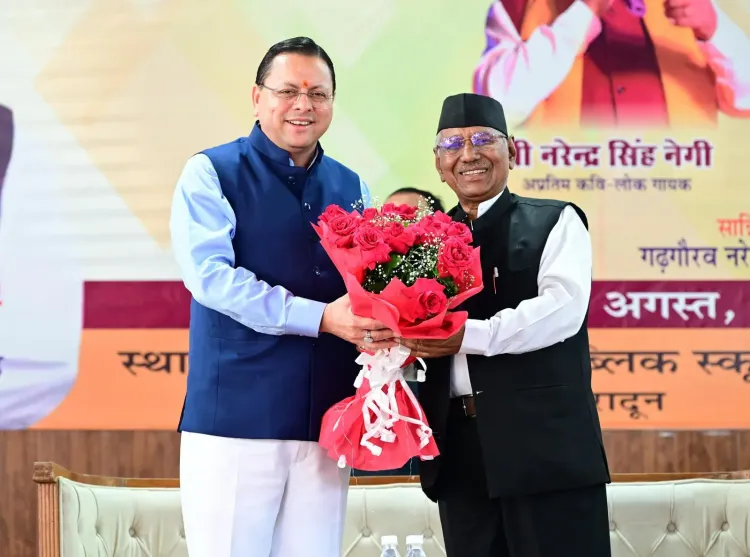
A folk singer's birthday became a statement of cultural policy. On Wednesday, 12 August 2026, Chief Minister Pushkar Singh Dhami attended the Narendra Singh Negi Sanskriti Samman Samaroh at Social Baluni School, Haridwar Bypass, Dehradun — an evening that combined a literary launch, a cross-Himalayan honour, and a detailed account of the Uttarakhand government's expanding cultural welfare architecture.
A birthday, a book, and a bridge to Arunachal
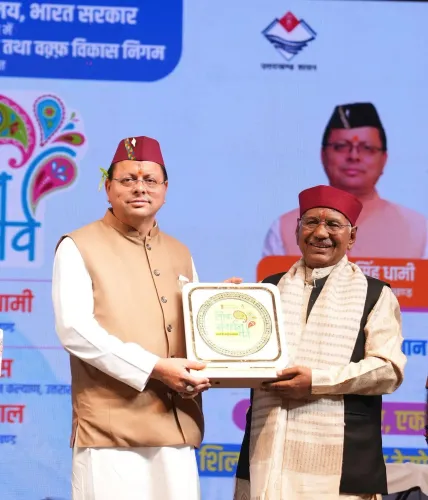
The centrepiece of the evening was the release of 'Mountain Melodies of Narendra Singh Negi', an English translation of the legendary Garhwali folk singer's songs. Dhami described the volume as 'an important initiative for the preservation of Uttarakhand's folk language and folk culture', one he believes will introduce future generations to Negi's decades-long musical journey and carry the state's cultural heritage into a global frame.
Narendra Singh Negi, widely regarded as the voice of Uttarakhand's mountains, has spent a career documenting the region's everyday life, its landscapes, its struggles and its social conscience through song. Dhami called him 'a pioneer of Uttarakhand's folk culture who has earned the state a distinctive reputation at the national and international level through his music.'
The second major moment of the evening crossed state lines. The Narendra Singh Negi Sanskriti Samman-2026 — an award dedicated to outstanding contributions to culture, literature, art and social concerns across Himalayan states — was conferred on Tai Tugung, a celebrated actor, theatre practitioner and playwright from Arunachal Pradesh. Tugung has worked in the Nyishi language and Arunachali Hindi, and his play Lapya and film Sangi Mai — screened at the Cannes Film Festival — were cited as landmarks of his creative journey. The award signals a conscious effort by the Uttarakhand government to build cultural solidarity across the Himalayan belt, not just celebrate its own heritage.
The welfare numbers behind the ceremony
Beyond the symbolism, Dhami used the platform to lay out a detailed policy ledger. The state has simplified the registration process for folk performers, listing 275 cultural troupes and 226 solo artists to give them both performance platforms and employment. Traditional instrument players — including those who play the dhol-damaun, the percussion backbone of Uttarakhand's ritual music — receive free instruments and costumes annually.
The monthly pension for elderly and economically vulnerable folk artists, writers and authors who have dedicated their lives to folk arts and literature has been doubled from Rs 3,000 to Rs 6,000, with 180 artists currently drawing the enhanced amount. Since 2022, publication grants have been extended to 102 authors. Six-month training workshops run through the traditional guru-shishya (master-apprentice) model aim to pass these arts to the next generation before they fade.
New literary prizes and a bigger ambition
The state's literary prize ecosystem has also expanded. In 2025, the government launched the Dirghkalin Sahitya Sevi Samman with a cash award of Rs 5 lakh for long-service literary contributors. The Uttarakhand Sahitya Gaurav Samman has so far recognised 57 writers across Hindi and other languages. A new Sahitya Bhushan Puraskar carries a prize of Rs 5,51,000.
Dhami framed all of this within a larger goal: positioning Uttarakhand not only as a tourism destination but as 'a national centre for literature and culture'. He credited Prime Minister Narendra Modi's guidance as the foundation for the state government's sustained push on folk language preservation, performing arts and cultural heritage.
When a folk singer's birthday can anchor a policy address of this scope, the mountains are clearly speaking — and the government is listening closely enough to translate.
Point of View
The state is consciously projecting Uttarakhand's cultural identity beyond its borders, building Himalayan solidarity that carries both symbolic and electoral resonance. The doubling of artist pensions and the expansion of literary prizes fit a broader BJP-governed-state pattern of institutionalising cultural welfare to consolidate support among artists and intellectuals. What will matter next is whether the new prize structures and pension increases are funded consistently in subsequent budgets, or remain headline announcements.
NationPress
27 Sept 2026
Frequently Asked Questions
What is the book 'Mountain Melodies of Narendra Singh Negi' about?
'Mountain Melodies of Narendra Singh Negi' is an English translation of the celebrated Garhwali folk singer Narendra Singh Negi's songs, released by the Uttarakhand government to promote the state's folk heritage at a national and global level.
Who is Tai Tugung and why did he receive the Narendra Singh Negi Sanskriti Samman-2026?
Tai Tugung is a prominent actor, theatre practitioner and playwright from Arunachal Pradesh known for work in the Nyishi language and Arunachali Hindi. He received the award for his outstanding contributions to folk culture through his play 'Lapya' and film 'Sangi Mai', which was screened at the Cannes Film Festival.
What is the Narendra Singh Negi Sanskriti Samman?
It is an annual award instituted by the Uttarakhand government in the name of folk legend Narendra Singh Negi, given to individuals who have made notable contributions to culture, literature, art and social concerns in Himalayan states.
What welfare measures has the Uttarakhand government announced for folk artists?
The state has doubled monthly pensions for elderly and economically vulnerable folk artists and writers from Rs 3,000 to Rs 6,000, provides free instruments and costumes to traditional musicians, and has registered 275 cultural troupes and 226 solo artists under a simplified listing process.
What new literary prizes has the Uttarakhand government introduced?
The state launched the Dirghkalin Sahitya Sevi Samman in 2025 with a prize of Rs 5 lakh, and introduced the Sahitya Bhushan Puraskar carrying Rs 5,51,000. The Uttarakhand Sahitya Gaurav Samman has already honoured 57 writers across multiple languages.