CM Dhami Hosts Writers' Dialogue at Mukhya Sevak Sadan
Synopsis
Uttarakhand Chief Minister Pushkar Singh Dhami hosted prominent state writers and publishers at Mukhya Sevak Sadan in Dehradun on 26 July 2026 for the 'Lekhkon Se Samvad' programme, discussing the societal role of literature and honouring their creative contributions.
Key Takeaways
CM Pushkar Singh Dhami hosted the 'Lekhkon Se Samvad' ('Dialogue with Writers') event on 26 July 2026 at Mukhya Sevak Sadan, Dehradun .
Prominent Uttarakhand writers and publishers were welcomed, honoured, and engaged in discussion on literature and society.
Participants shared introductions to their own works and published books during the gathering.
The event aligns with a broader pattern of BJP-led state governments using intimate official-venue dialogues to engage cultural communities.
Uttarakhand Sahitya Akademi , active since the state's formation in 2000 , provides the institutional backdrop for such literary outreach.
Potential follow-up measures may include expanded support for regional publishing and replication of the format in other districts.
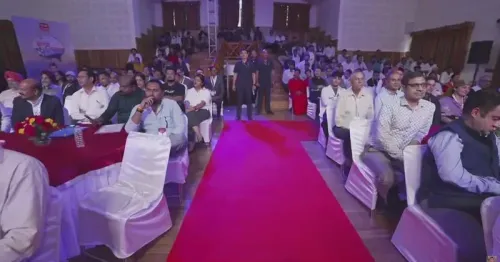
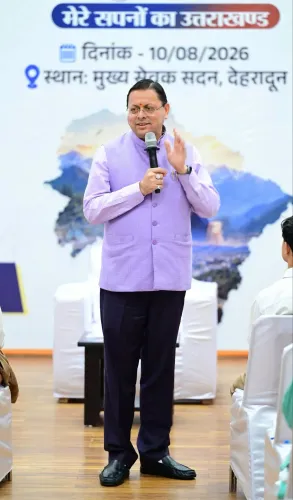
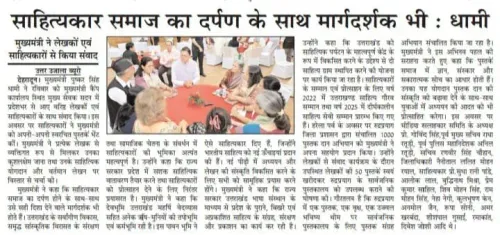
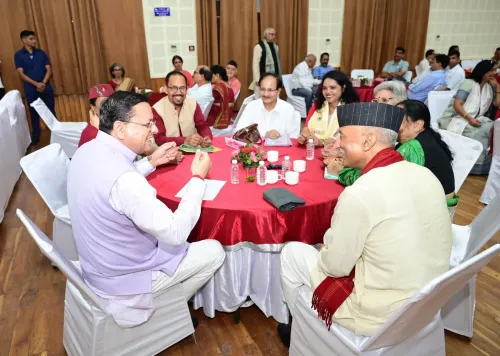
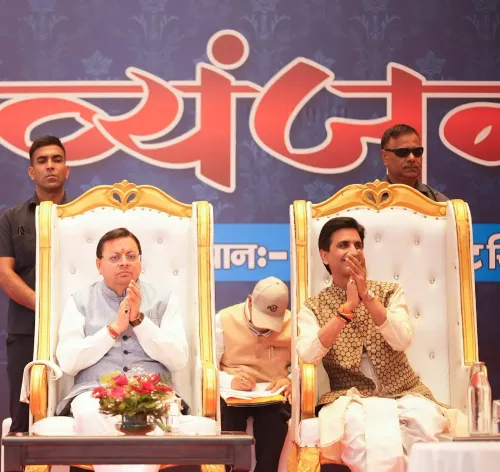
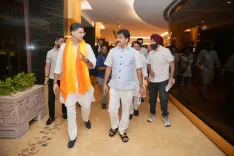
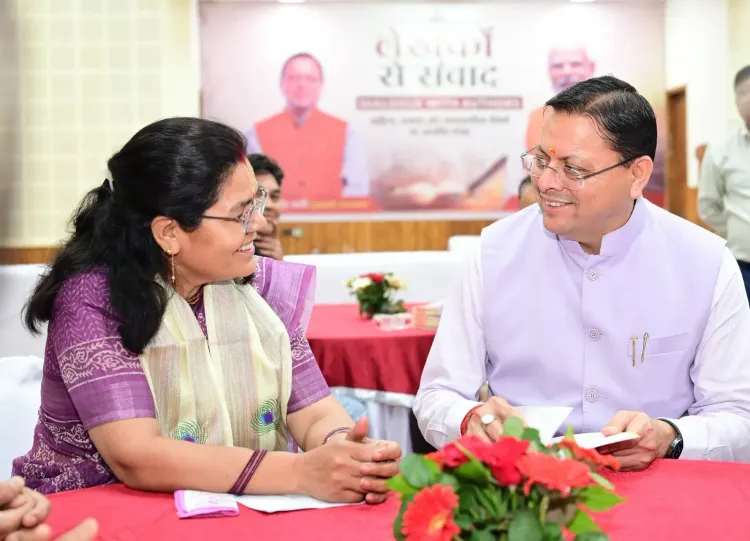
Uttarakhand Chief Minister Pushkar Singh Dhami on Sunday, 26 July 2026, hosted a literary gathering titled 'Lekhkon Se Samvad' ('Dialogue with Writers') at the Mukhya Sevak Sadan in Dehradun, bringing together prominent writers and publishers from across the state for an intimate discussion on literature, creativity, and the role of books in society.
Context
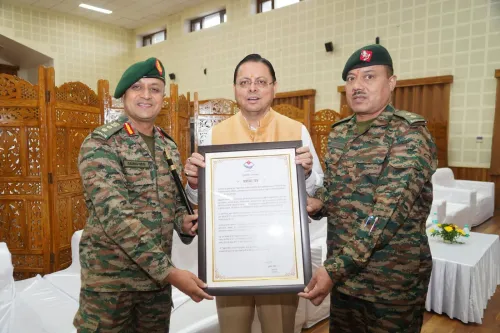
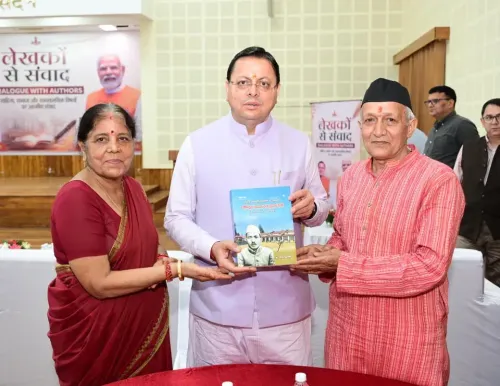
The event, held at the Chief Minister's official residence-cum-venue, saw CM Dhami personally welcome and honour the attending literary figures. According to his post on X, participants shared introductions to their works and published books, while a 'meaningful discussion' (sarthak charcha) was held on the place of literature and creative writing in shaping society.
The Chief Minister described the interaction as 'aatmiya samvad' — an affectionate, heartfelt exchange — underlining the informal, collegial tone the administration sought to strike with the state's cultural community.
Policy Backdrop
Uttarakhand has maintained a dedicated Sahitya Akademi since its formation as a separate state in 2000, which regularly organises programmes to recognise writers and support regional-language publishing. Mukhya Sevak Sadan has served as a recurring venue for such outreach events under successive governments.
Across India, state administrations — particularly those led by the BJP — have increasingly used intimate literary dialogues at official residences to engage cultural figures without large-scale public expenditure. The format signals institutional recognition of authors and publishers while keeping the interaction direct and personal.
Stakeholders and Impact
Writers and publishers based in Uttarakhand stand to benefit from the visibility and direct access to the Chief Minister that such an event provides. For smaller regional publishers in a Himalayan state with a relatively modest market, official acknowledgement can translate into greater institutional support, including potential inclusion in government library procurement schemes or literary award nominations.
The gathering also carries significance for the preservation of Garhwali and Kumaoni linguistic traditions, both of which have active but resource-constrained literary communities. Events of this kind often serve as a platform for authors writing in regional languages to raise concerns about translation support and publication funding.
What's Next
Observers will watch whether Sunday's dialogue leads to concrete follow-up measures — such as enhanced funding for the Uttarakhand Sahitya Akademi, new literary awards, or expanded government procurement of locally published books. The administration may also consider replicating the 'Lekhkon Se Samvad' format in other districts, broadening outreach to writers outside Dehradun. If translated into policy action, the event could mark a meaningful step in the state's cultural-preservation agenda ahead of the next electoral cycle.
Point of View
CM Dhami is deploying a low-cost, high-visibility cultural gesture that serves dual purposes: reinforcing the BJP's 'cultural nationalism' brand and building goodwill among an influential, if small, community of literary opinion-shapers. The choice of an intimate format over a large public event suggests a deliberate effort to signal genuine engagement rather than ceremonial optics. This fits a wider arc in which BJP-governed states have sought to position themselves as custodians of regional cultural heritage — a narrative with particular resonance in Uttarakhand, where Garhwali and Kumaoni literary identities remain politically salient. Whether the dialogue translates into substantive policy — funding, awards, procurement — will determine its lasting significance.
NationPress
26 Oct 2026
Frequently Asked Questions
What is the 'Lekhkon Se Samvad' programme held by CM Dhami?
'Lekhkon Se Samvad' means 'Dialogue with Writers' — an event hosted by Uttarakhand Chief Minister Pushkar Singh Dhami at Mukhya Sevak Sadan, Dehradun, on 26 July 2026, where prominent state writers and publishers were honoured and engaged in discussion on literature and its role in society.
Where is Mukhya Sevak Sadan located?
Mukhya Sevak Sadan is the official residence and event venue of the Uttarakhand Chief Minister, located in Dehradun, the state capital.
Why did CM Pushkar Singh Dhami meet writers and publishers?
CM Dhami met writers and publishers to honour their contributions to literature, discuss the societal role of books and creative writing, and engage directly with Uttarakhand's literary community in an informal, collegial setting.
What is the Uttarakhand Sahitya Akademi?
The Uttarakhand Sahitya Akademi is a state body established after Uttarakhand's formation in 2000 that regularly organises programmes to recognise writers and support regional-language publishing, including in Garhwali and Kumaoni.
Will there be follow-up support for Uttarakhand writers after this event?
No specific commitments have been announced yet, but observers expect potential follow-up measures such as enhanced Sahitya Akademi funding, new literary awards, or expanded government book procurement, as well as possible replication of the dialogue format in other districts.