CM Dhami Meets Writers, Announces 50-Book Gift to Rudraprayag Library
Synopsis
Chief Minister Pushkar Singh Dhami convened a dialogue with senior writers at Dehradun on 26 July 2026, announced plans for two literary villages to boost literary tourism, and pledged a personal donation of 50 books to Rudraprayag's public library under the Harela festival book drive.
Key Takeaways
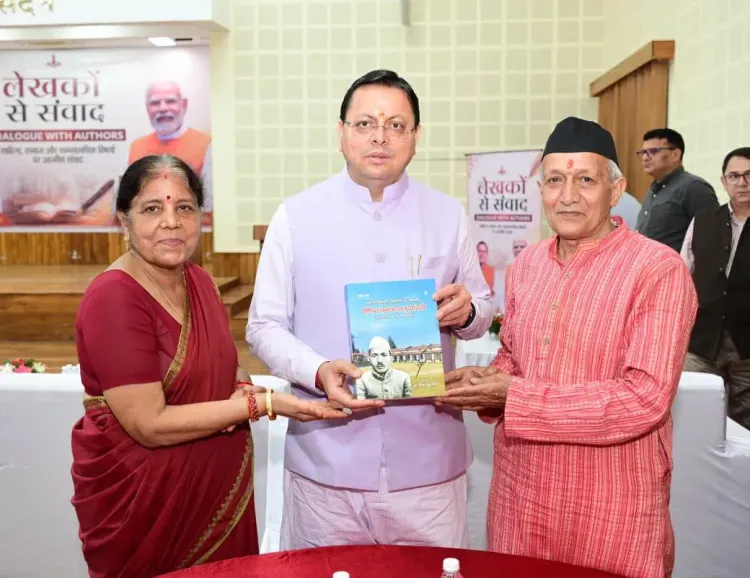
CM Pushkar Singh Dhami hosted senior writers from across Uttarakhand at Mukhya Sevak Sadan, Dehradun on 26 July 2026 under the 'Lekhkon se Samvad' programme.
The Chief Minister personally announced the purchase of 50 books from attending authors to donate to the Rudraprayag public library .
The state is working on establishing two Sahitya Grams (literary villages) to develop Uttarakhand as a literary tourism destination.
Literary awards Uttarakhand Sahitya Gaurav Samman (launched 2022 ) and Dirghkalin Sahitya Sevi Samman (launched 2025 ) are active recognition mechanisms for writers.
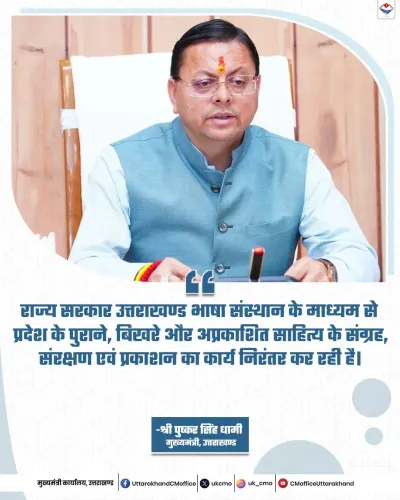
The Uttarakhand Bhasha Sansthan is engaged in collecting, preserving, and publishing old and unpublished regional literary works.
The '1000 Pustak Daan Abhiyan' in Rudraprayag , themed 'Ek Pustak, Ek Vriksh, Ek Ujjwal Bhavishy' , is being run on the occasion of the Harela festival .
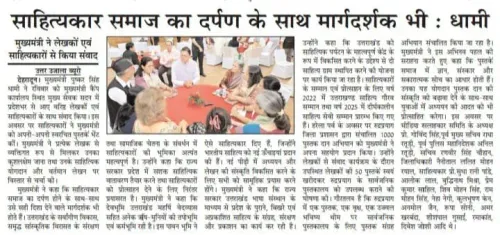
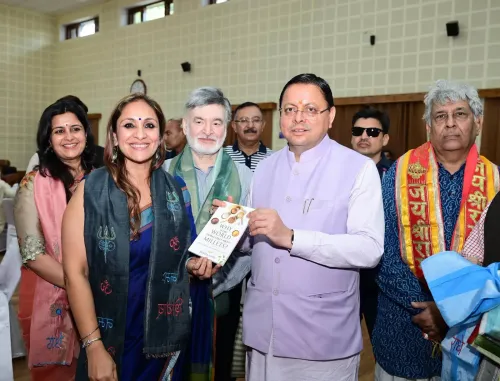
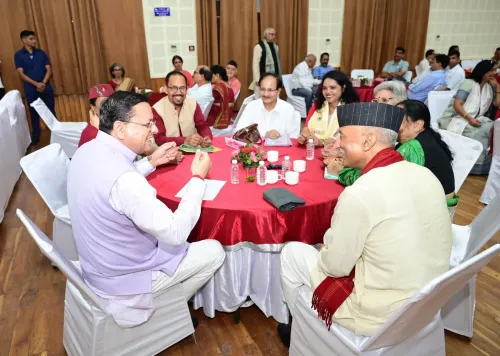
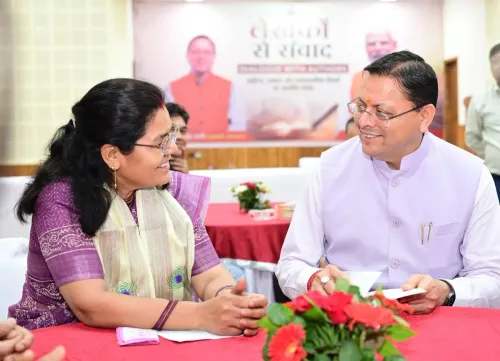
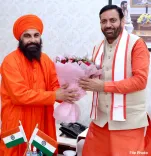
The Chief Minister's Office of Uttarakhand announced on Sunday, 26 July 2026 that Chief Minister Pushkar Singh Dhami held a dialogue with senior writers and literary figures from across the state at Mukhya Sevak Sadan, the Chief Minister's Camp Office in Dehradun. At the event, titled 'Lekhkon se Samvad' ('Dialogue with Writers'), authors personally presented Dhami with copies of their self-authored books, and the Chief Minister engaged each writer individually on their literary contributions and current work.
Context
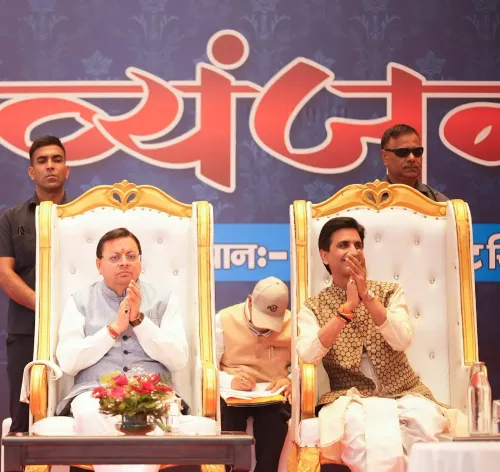
Speaking at the gathering, CM Dhami said that 'sahityakar samaj ka darpan hone ke saath-saath use sahi disha dene wale margdarshak bhi hote hain' — ('writers are not only a mirror of society but also guides who give it the right direction'). He underscored the role of literary figures in Uttarakhand's all-round development, preservation of its rich cultural heritage, and promotion of social awareness. The Chief Minister also noted that Devbhoomi Uttarakhand has historically been the land of sages including Maharishi Vedvyas, and has produced writers who have elevated Indian literature to new heights.
Policy Backdrop
The state government has been building a formal architecture of literary recognition since 2022, when it launched the 'Uttarakhand Sahitya Gaurav Samman' to honour writers for their contributions to regional literature. In 2025, a second award — the 'Dirghkalin Sahitya Sevi Samman' (Long-Term Literary Service Award) — was introduced to recognise sustained service to the literary field. The Uttarakhand Bhasha Sansthan, the state's nodal language body, has been tasked with collecting, preserving, and publishing old, scattered, and unpublished literary works from the region. Uttarakhand was carved out as a separate state in 2000 with an explicit emphasis on safeguarding its distinct Himalayan linguistic and cultural identity, and these programmes build directly on that founding intent.
Sahitya Grams and the Rudraprayag Initiative
CM Dhami disclosed that the state government is working on a plan to establish two Sahitya Grams (literary villages) with the aim of developing Uttarakhand as a significant centre of literary tourism. He stressed the need for collective effort to build a culture of reading and writing among the younger generation. At the event, Dhami announced that he would personally purchase 50 books from the authors present and donate them to the public library in Rudraprayag district. This gesture was made in support of the '1000 Pustak Daan Abhiyan' (1,000 Book Donation Drive) being run by the Rudraprayag district administration on the occasion of the Harela festival, under the theme 'Ek Pustak, Ek Vriksh, Ek Ujjwal Bhavishy' ('One Book, One Tree, One Bright Future').
Stakeholders and Impact
The event was attended by a broad cross-section of Uttarakhand's literary and administrative establishment. Those present included Prof. Govind Singh, Chairman of the Media Advisory Committee; former Chief Secretary Smt. Radha Raturi; former Director General of Police Shri Anil Raturi; Secretary Shri Ranveer Singh Chauhan; DM Nainital Shri Lalit Mohan Rayal; and writers including Prof. Sudha Rani Pandey, Shri Buddhinath Mishra, Shri Prem Kumar Sahil, Sushri Neha Negi, and Shri Kulbhushan Ken, among many others. The initiative directly benefits Uttarakhand's active writing community and, through the book donation drive, extends its reach to young readers in districts such as Rudraprayag.
What's Next
The government's stated commitment to establishing the two Sahitya Grams will be a key marker to watch, with land notification and budget allocation expected to surface in the coming assembly session. The expansion of district-level book donation drives — modelled on the Rudraprayag campaign — and the next cycle of the Sahitya Gaurav Samman and Dirghkalin Sahitya Sevi Samman awards will indicate how seriously the state scales its cultural policy ambitions. If the literary village concept materialises, Uttarakhand could position itself alongside states like Himachal Pradesh and Rajasthan as a destination where heritage tourism and literary culture reinforce each other.
Point of View
The Chief Minister converts a literary gathering into a visible act of governance. The twin-award architecture and the Sahitya Gram concept signal that Uttarakhand is consciously trying to replicate the cultural-tourism playbook that hill states have used to diversify beyond pilgrimage revenue. The broader arc here is one of state-building through soft power — using literary identity to reinforce Uttarakhand's distinct cultural claim two-and-a-half decades after statehood.
NationPress
25 Oct 2026
Frequently Asked Questions
What is the 'Lekhkon se Samvad' programme in Uttarakhand?
'Lekhkon se Samvad' ('Dialogue with Writers') is an initiative by the Uttarakhand government in which Chief Minister Pushkar Singh Dhami meets senior authors and literary figures from across the state to discuss their work and the government's literary policies.
What is the Uttarakhand Sahitya Gaurav Samman?
The Uttarakhand Sahitya Gaurav Samman is a state literary award launched in 2022 to formally recognise the contributions of writers and authors from Uttarakhand to Indian literature.
What is the 1000 Pustak Daan Abhiyan in Rudraprayag?
The '1000 Pustak Daan Abhiyan' is a book donation drive run by the Rudraprayag district administration on the occasion of the Harela festival, themed 'One Book, One Tree, One Bright Future', aimed at building up the district's public library collection.
What are Sahitya Grams in Uttarakhand?
Sahitya Grams are planned literary villages that the Uttarakhand government intends to establish to develop the state as a centre of literary tourism, blending cultural heritage with visitor experiences.
What does the Uttarakhand Bhasha Sansthan do?
The Uttarakhand Bhasha Sansthan is the state's nodal body for collecting, preserving, and publishing old, scattered, and unpublished literary and linguistic works from the Uttarakhand region.